
Try to remember the last time you felt good. Not only physically, but in your mind, in your relationships and in your ability to make it through the day without a weight on your chest that you can’t explain.
If it seems like a long time ago, you are not alone. And if you are reading this because someone you love seems to be struggling, quietly or loudly, that matters too.
Mental health isn’t a luxury. It’s not a trendy word, a fluffy idea, or something that concerns only a select few. It’s the basic foundation of all aspects of your functioning as a human being. Knowing about the importance of mental health is the first step towards treating it with the seriousness it deserves and towards getting mental health help that can make a real difference.
This guide will not only help you understand what you mean by “mental health,” but also why it is essential to your health, your relationships, your career, and your life, and what you do when you or someone you love needs more than just willpower.
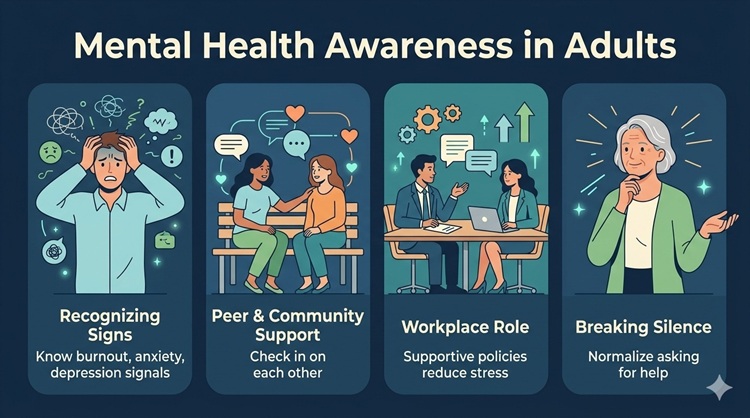
Defining the Importance of Mental Health
Mental health is not simply the absence of a mental illness. It is the active presence of well-being, resilience, and the ability to function in daily life.
The World Health Organization (WHO) defines mental health as a state of well-being in which a person realizes their own abilities, can cope with the normal stresses of life, can work productively and fruitfully, and is able to contribute to their community.
By that definition, mental health is not a fixed trait you either have or lack. It is a dynamic state that fluctuates throughout life, influenced by biology, relationships, environment, trauma, loss, and the accumulation of stressors that life brings in ways no one fully anticipates.
The Centers for Disease Control and Prevention (CDC) puts it plainly: mental health is closely linked to physical health. It affects how we think, feel, and act. It determines how we handle stress, relate to others, and make choices. At every stage of life, from childhood and adolescence through adulthood, mental health shapes the quality of the life we are able to live.
When it is good, almost everything else is more manageable. When it is not, almost everything else suffers.
The Importance of Mental Health for Your Body
Your Mind and Body Are Not Separate
Mental health profoundly affects physical health, and the science on this is no longer debatable. Poor mental health does not just feel bad. It does measurable physiological damage to the body over time.
The CDC confirms that depression increases the risk for many chronic physical conditions, including diabetes, heart disease, and stroke. The connection runs in both directions: chronic physical illness also elevates the risk of developing a mental health condition, creating a cycle that, once established, is very difficult to break without professional intervention.
Here is what untreated mental health conditions do to the body:
- Cardiovascular system: Chronic stress and depression dysregulate the hypothalamic-pituitary-adrenal (HPA) axis and autonomic nervous system, driving elevated inflammation, high blood pressure, and increased cardiovascular risk. Research from Emory University found that this dysregulation produces adverse downstream effects, including metabolic abnormalities and increased systemic vascular resistance
- Immune system: Prolonged psychological stress suppresses immune function, making the body more vulnerable to infections, slower wound healing, and increased susceptibility to illness
- Sleep: Mental health conditions disrupt sleep architecture, particularly REM sleep, which is essential for cellular repair, memory consolidation, and emotional regulation
- Endocrine system: Chronic stress elevates cortisol, which affects metabolism, reproductive health, bone density, and the body’s inflammatory response
- Digestive system: The gut-brain connection is well established. Anxiety and depression are directly linked to IBS, chronic nausea, appetite disruption, and other gastrointestinal problems
- Longevity: Studies show that people with severe, untreated mental health conditions live 10 to 25 years less than those without them
Research Finding: The CDC notes that approximately 1 in 5 U.S. adults lives with a mental health condition and that addressing mental health needs alongside physical health needs improves overall health outcomes substantially.
Call or reach out online today. Mental health treatment is not something to put off until things get worse. The best time to get support is now.
100% Confidential Support is Available 24/7
No matter what you’re going through, you’re not alone. Our dedicated team is here to provide a safe, judgment-free space where you can talk openly and honestly. Whether you need emotional support, resources, or just someone to listen.
We’re here for you—completely confidential and always respectful of your privacy. Call us today!
The Importance of Mental Health for Relationships
Untreated Mental Health Strains Every Relationship You Have
Mental health shapes how you show up for the people you love. It shapes your ability to listen, to give, to repair conflict, to tolerate discomfort, and to stay present when things get hard.
When mental health suffers, relationships absorb the impact. People in the grip of depression often withdraw, become emotionally unavailable, and struggle to give or receive warmth in the ways their relationships need. Anxiety can make a person controlling, avoidant, or perpetually on edge in ways that exhaust partners, children, and friends. Trauma responses can create cycles of push-pull dynamics that confuse and hurt the people closest to us, even when we love them deeply.
Untreated mental health conditions also significantly increase the risk of relationship breakdown. Research from Headspace found that 71% of employees whose mental health suffered due to work stress experienced a personal relationship ending as a direct result. The cascade effect is real: mental health does not just affect one person in isolation. It affects families, friendships, parenting, and the emotional texture of home life.
Clinical Insight: Research published in the Indian Journal of Psychiatry confirms that higher mental health and well-being are associated with greater work productivity, increased creativity, improved physical health, and more positive interpersonal relationships. The inverse is equally true.
Contact Solutions Healthcare
Battling with Drug and Alcohol Addition? Remember, you are not alone and we are here to help you!
The Importance of Mental Health at Work
Poor Mental Health Is a Leading Workplace Problem
Mental health and professional functioning are deeply interconnected. And the data in recent years has made this impossible to ignore for individuals, families, and employers alike.
The American Psychological Association found that 77% of workers reported experiencing work-related stress in the past month. The Society for Human Resource Management found that 45% of employees feel emotionally drained from their work, and 51% feel completely used up by the end of the workday. A separate survey found that 77% of employees whose mental health was suffering said it had negatively impacted their physical health as well.
The effects of poor mental health on work performance are broad and compounding:
- Reduced concentration and difficulty making decisions
- Decreased productivity and quality of output
- Increased absenteeism and presenteeism, showing up in body but not in mind
- Higher rates of conflict and relationship difficulty with colleagues
- Greater likelihood of job loss, which compounds financial stress and deepens the mental health spiral
- Increased risk of workplace accidents and errors
The economic toll is staggering. Mental health issues cost the U.S. an estimated $282 billion annually in lost productivity, healthcare costs, and related impacts.
For individuals, the professional consequences of untreated mental illness are often the first visible sign that something has crossed a line. Noticing that pattern, in yourself or in someone you love, is important information.

The Importance of Mental Health for Young People
Mental Health Crises Are Starting Earlier Than Ever
The importance of mental health for children and adolescents cannot be overstated. The patterns established in youth, how a young person learns to cope with stress, manage emotions, and navigate relationships, lay the groundwork for mental health across an entire lifetime.
According to NAMI, 50% of all lifetime mental illnesses begin by age 14, and 75% begin by age 24. These are not statistics about rare conditions. They describe the ordinary reality of millions of young people growing up right now.
When mental health conditions go unrecognized and untreated in young people, the consequences accumulate. Academic failure, social isolation, increased substance use, self-harm, and suicidal ideation are all more likely in young people whose mental health needs are not being addressed.
Early recognition and early access to care genuinely change outcomes. The sooner symptoms are identified and treated, the shorter the trajectory of suffering and the stronger the foundation for adult well-being.
Warning signs in young people include:
- Sudden changes in academic performance or attendance
- Withdrawal from friends, family, and activities they once enjoyed
- Persistent sadness, irritability, or mood instability lasting more than two weeks
- Sleep changes, significant appetite shifts, or unexplained physical complaints
- Expressions of hopelessness, worthlessness, or statements about not wanting to be here
- Increased use of alcohol, cannabis, or other substances
If you see these signs in a young person, take them seriously. “It is just a phase” is not a clinical assessment.
The Importance of Mental Health and Substance Use
Mental Illness and Addiction Are Deeply Intertwined
One of the most important and often overlooked aspects of the importance of mental health is its relationship to substance use. The two are closely linked, and in many cases, one drives the other.
Many people who develop substance use disorders are attempting to manage the symptoms of an underlying, undiagnosed, or undertreated mental health condition. Alcohol numbs anxiety. Cannabis blunts the edges of depression. Opioids provide temporary relief from the emotional pain of trauma. In the short term, these patterns can feel like solutions. Over time, they become problems layered on top of the original problem.
The National Institute on Drug Abuse (NIDA) reports that among adults with mental illness, 18.2% also have substance use disorders. And among adults with substance use disorder, the vast majority have co-occurring mental health conditions. Treating only one without addressing the other almost always results in relapse.
This is why integrated care that treats both simultaneously, called dual diagnosis treatment, is so critical. It addresses what is actually happening in a person’s life rather than managing symptoms in isolation.
Clinical Note: People with mental illness are significantly more vulnerable to developing substance use disorders. When both are present, evidence-based integrated treatment that addresses both conditions within the same program consistently produces better outcomes than sequential or separate treatment approaches.
100% Confidential Support is Available 24/7
No matter what you’re going through, you’re not alone. Our dedicated team is here to provide a safe, judgment-free space where you can talk openly and honestly. Whether you need emotional support, resources, or just someone to listen.
We’re here for you—completely confidential and always respectful of your privacy. Call us today!
Warning Signs Your Mental Health Needs Attention
Most people wait years before seeking help for a mental health condition. You do not have to.
Recognizing the warning signs early gives you and your family far more options. These signs do not mean you are broken or beyond help. They mean your mind is asking for the same kind of attention your body would receive if something was physically wrong.
Signs that mental health needs professional support :
- Persistent sadness, emptiness, or hopelessness lasting more than two weeks
- Anxiety or worry that feels impossible to control and interferes with daily life
- Withdrawing from people, activities, and responsibilities you once valued
- Significant changes in sleep or appetite without a clear physical cause
- Difficulty thinking clearly, concentrating, or making decisions
- Mood swings that feel extreme, unpredictable, or difficult to manage
- Increasing use of alcohol or substances to cope with emotions
- Thoughts of self-harm, suicide, or feeling like a burden to others
- Paranoia, hallucinations, or losing track of what is real
- A persistent feeling that something is wrong, even if you cannot name what
If someone you love is showing these signs, the most helpful thing you can do is stay present, avoid minimizing what they are experiencing, and gently but clearly encourage them to speak with a professional.
How Mental Health Conditions Are Treated
Effective mental health treatment exists, and it works. The most important variable in outcomes is access to the right level and type of care, matched to the individual’s specific needs.
Evidence-based therapies are the foundation of mental health treatment:
- Cognitive Behavioral Therapy (CBT) helps identify and restructure the thought patterns driving emotional distress. It has one of the strongest evidence bases of any psychotherapy and is effective across a wide range of conditions
- Family therapy strengthens the relational system around the individual and addresses the ways mental health affects the whole family unit
- Group therapy provides community, shared perspective, and peer accountability that individual therapy alone cannot replicate
- Acceptance and Commitment Therapy (ACT) builds psychological flexibility and helps people live meaningfully even in the presence of difficult thoughts and emotions
Levels of care are matched to symptom severity:
Level of Care | Best For |
Residential Treatment | Severe symptoms requiring 24-hour immersive support |
Intensive Outpatient Program (IOP) | Structured care with flexibility to maintain home life |
Outpatient Treatment | Ongoing therapy for stabilized individuals |
Aftercare Services | Long-term support to sustain recovery and prevent relapse |
Dual Diagnosis Program | Integrated treatment for co-occurring mental health and substance use |
Medication management alongside therapy is appropriate for many conditions. The right combination depends on a thorough clinical assessment, individual history, and ongoing monitoring by a qualified prescriber.
Comprehensive therapy that addresses the biological, psychological, and social dimensions of mental health, rather than targeting only one dimension, consistently produces the most durable results.
100% Confidential Support is Available 24/7
No matter what you’re going through, you’re not alone. Our dedicated team is here to provide a safe, judgment-free space where you can talk openly and honestly. Whether you need emotional support, resources, or just someone to listen.
We’re here for you—completely confidential and always respectful of your privacy. Call us today!
How to Support Someone Struggling with Mental Health
If someone you love is struggling, your instinct to help is one of the most valuable things they have. Here is how to translate that instinct into something genuinely useful.
Do:
- Listen without immediately trying to fix or minimize
- Say clearly and directly that you are there and that their struggles are real
- Offer specific, practical help such as making a phone call together, driving them to an appointment, or sitting with them while they look up options
- Educate yourself about what they are experiencing so your responses come from understanding, not fear
- Seek support for yourself, because supporting someone in crisis is emotionally taxing and you deserve care too
Avoid:
- Telling them to “think positive,” “push through,” or “try harder.”
- Framing their condition as a choice or a character weakness
- Issuing ultimatums you are not prepared to follow through on
- Waiting for a crisis to get worse before taking action
- Assuming that because they seem okay sometimes, they are okay
Family therapy is one of the most powerful tools available for families navigating a loved one’s mental health struggles. It provides a structured space to improve communication, set healthy boundaries, and learn how to support without enabling or burning out.
Get Mental Health Support at Solutions Healthcare
If you or someone you love is ready to take mental health seriously, Solutions Healthcare is here to help. Located in DeLand, Florida, with treatment centers serving Central Florida and surrounding communities, Solutions Healthcare provides exceptional behavioral healthcare grounded in evidence-based, individualized care.
Their comprehensive addiction treatment programs and mental health services span the full continuum of care, from residential treatment for those who need immersive, around-the-clock support to intensive outpatient programs and outpatient treatment for those rebuilding their lives with structured, ongoing clinical support.
For those navigating both mental health and substance use, Solutions Healthcare’s dual diagnosis program treats both conditions simultaneously, with a clinically integrated team that understands the complexity of co-occurring disorders. Their comprehensive therapy includes CBT, ACT, group therapy, and family therapy, along with aftercare services that support sustained recovery long after formal treatment ends.
Most major insurance plans are accepted, and the admissions process is confidential and available 24/7.
Call (386) 866-3600 or reach out online today. Mental health treatment is not something to put off until things get worse. The best time to get support is now.
FAQs
Why is mental health important?
Mental health is important because it affects every dimension of life, including physical health, relationships, work performance, parenting, and lifespan. The CDC confirms that mental health is closely linked to physical health and that unaddressed mental health conditions increase the risk of chronic diseases, including diabetes, heart disease, and stroke. Good mental health is not just the absence of illness. It is the foundation that allows you to function, connect, and thrive.
How does mental health affect physical health?
Mental health conditions like depression and chronic stress trigger measurable physiological changes including elevated inflammation, disrupted cortisol regulation, suppressed immune function, sleep disruption, and increased cardiovascular risk. People with severe, untreated mental health conditions have an average life expectancy 10 to 25 years shorter than those without. Addressing mental health proactively is one of the most impactful things a person can do for their physical health.
What are the signs that someone needs mental health support?
Signs include persistent sadness or hopelessness lasting more than two weeks, significant anxiety that interferes with daily functioning, withdrawal from relationships and activities, sleep or appetite changes, difficulty concentrating, mood instability, increasing substance use, and any thoughts of self-harm or suicide. These are signs that professional support is needed, not signs of weakness or failure.
How common are mental health conditions in the United States?
According to the CDC, approximately 1 in 5 U.S. adults lives with a mental health condition. NAMI reports that 23.4% of U.S. adults experienced mental illness in 2024, totaling 61.5 million people. Among young adults aged 18 to 25, the rate is even higher at 32.2%. Mental health conditions are among the most prevalent health issues in the country.
What is the relationship between mental health and substance use?
The relationship is significant and bidirectional. Many people develop substance use disorders while attempting to manage undiagnosed or undertreated mental health conditions. At the same time, substance use worsens and can trigger underlying mental health conditions. Among adults with mental illness, 18.2% also have substance use disorders. Integrated dual diagnosis treatment addressing both simultaneously produces substantially better outcomes.
Does mental health affect children and teenagers?
Yes, profoundly. NAMI reports that 50% of all lifetime mental illnesses begin by age 14, and 75% begin by age 24. Mental health conditions in young people affect academic performance, social development, family functioning, and long-term wellbeing. Early identification and treatment are critical and significantly improve outcomes.
What is the difference between mental health and mental illness?
Mental health refers to overall emotional, psychological, and social wellbeing. Mental illness refers to diagnosed conditions such as depression, anxiety disorders, bipolar disorder, or schizophrenia. A person can have good mental health habits and still develop a mental illness. A person can have a mental illness and still experience periods of strong mental health. The two concepts are related but not identical.
Can mental health conditions be treated effectively?
Yes. Evidence-based treatments, including Cognitive Behavioral Therapy (CBT), Dialectical Behavior Therapy (DBT), Acceptance and Commitment Therapy (ACT), and medication management, are effective for a wide range of mental health conditions. The level of care, from residential to outpatient, is matched to the individual’s specific needs. Most people who receive appropriate, sustained treatment experience significant improvement.
Why do people avoid getting mental health treatment?
The most common barriers include stigma, lack of awareness that what they are experiencing is treatable, cost and insurance concerns, uncertainty about how to access care, and fear of judgment. In reality, mental health treatment is covered under most insurance plans under the Mental Health Parity and Addiction Equity Act, and effective, compassionate care is available. Speaking with a treatment center’s admissions team is often the fastest way to understand what is available and covered.
How does mental health affect relationships and family life?
Mental health conditions affect the ability to communicate, stay emotionally present, manage conflict, and show up consistently for loved ones. Depression, anxiety, trauma, and other conditions can strain partnerships, disrupt parenting, and create tension across the family system. Family therapy is one of the most effective ways to address both the individual’s mental health and its impact on the relational unit as a whole.
What is dual diagnosis treatment and why does it matter?
Dual diagnosis treatment is integrated care for people who have both a mental health condition and a substance use disorder. Because the two are so frequently co-occurring and mutually reinforcing, treating only one almost always leads to relapse in the untreated condition. Dual diagnosis programs provide a clinically coordinated approach that addresses both conditions simultaneously within the same treatment team and environment.
When should someone seek professional mental health treatment?
Seek professional help when symptoms have persisted for two or more weeks, when they are interfering with work, relationships, or daily functioning, when substances are being used to cope, when thoughts of self-harm or suicide are present, or when you or someone you love simply recognizes that what is happening is beyond what self-care and willpower can address..