
Perhaps you’ve made several attempts to quit before. Perhaps you have even attempted and failed to return. That doesn’t mean that you failed. It implies that you are a human being and that requiring to give up any regular habit is not only a matter of will.
If you are reading this because weed is no longer something you want to do but something you need to do, you’ve already done the hard part.
How to quit smoking weed starts with a clear plan: set a quit date, remove paraphernalia, identify personal triggers, and line up support beforehand. Withdrawal symptoms like irritability, anxiety, and sleep trouble typically begin 1 to 3 days after stopping, peak within the first week, and improve significantly within 2 to 4 weeks. Choosing between quitting cold turkey or tapering off depends on how much and how often someone has been using.
Let’s take a moment to learn how to quit smoking weed, the changes your body and mind undergo throughout the process and signs you need to seek professional help.
How To Quit Smoking Weed Step By Step
Quitting smoking weed works best with a clear plan that includes a set quit date, a strategy for cravings, and support lined up before you start. Going in without preparation is one of the biggest reasons attempts don’t stick.
- Pick a quit date and give yourself enough time to prepare, without pushing it so far out that motivation fades
- Remove paraphernalia like pipes, bongs, and any remaining product from your space
- Tell someone you trust so you have accountability and support built in from day one
- Identify your personal triggers, whether that’s stress, boredom, or specific people or places
- Plan replacement habits for the moments you’d normally reach for weed
- Prepare for withdrawal symptoms so they don’t catch you off guard
- Line up support, whether that’s a therapist, support group, or treatment program
The best predictor of success when quitting a substance like marijuana is how much planning goes into the process beforehand, rather than the specific method chosen.
FACT: Cannabis withdrawal commonly begins within three days and peaks during the first week after quitting.
What is Cold Turkey Or Tapering Off Weed
Both cold turkey and tapering off can work, and the right choice depends on how much and how often you’ve been using. Neither approach is universally better than the other.
Cold turkey means stopping all use at once. It creates a clear, decisive break, though it often brings more intense withdrawal symptoms in the first week.
Tapering means gradually reducing use over days or weeks before stopping completely. This can ease withdrawal severity, especially for people with heavier, long-term use, though it requires more discipline to stick to the plan.
Heavier or longer-term users often do better tapering, while people with lighter or more occasional use sometimes find cold turkey more manageable. There’s no wrong answer here, only what actually works for you.
100% Confidential Support is Available 24/7
No matter what you’re going through, you’re not alone. Our dedicated team is here to provide a safe, judgment-free space where you can talk openly and honestly. Whether you need emotional support, resources, or just someone to listen.
We’re here for you—completely confidential and always respectful of your privacy. Call us today!
Marijuana Side Effects
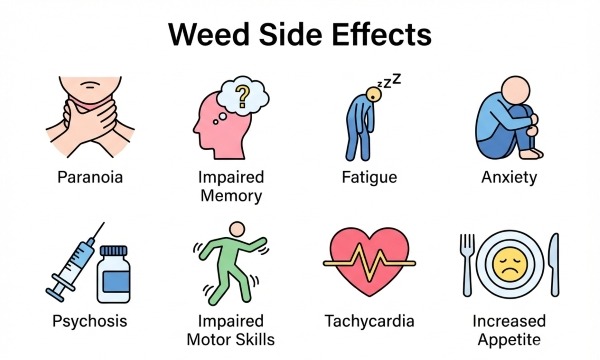
Marijuana side effects range from mild and temporary to more significant with regular, heavy use. Knowing what weed actually does to your body can decide to quit feel more concrete.
Short-term side effects include:
- Increased heart rate
- Dry mouth and red eyes
- Impaired coordination and slowed reaction time
- Anxiety or paranoia, especially at higher doses
- Increased appetite
Effects linked to regular, heavy use include:
- Respiratory irritation, especially from smoking
- Memory and concentration difficulties
- Increased risk of anxiety or depression in some people
- Tolerance, dependence, and withdrawal symptoms
Everyone reacts differently, and factors like dose, frequency, and individual health all shape which effects show up.
Contact Solutions Healthcare
Battling with Drug and Alcohol Addition? Remember, you are not alone and we are here to help you!
Symptoms Of Weed Addiction
Symptoms of weed addiction include needing more to get the same effect, being unable to cut back despite trying, and continuing to use despite clear negative consequences. This pattern is formally known as cannabis use disorder.
Common signs include:
- Using more often or in larger amounts than intended
- Failed attempts to cut back or quit
- Spending significant time obtaining or using weed
- Giving up other activities in favor of using
- Continuing use despite problems it’s causing
- Withdrawal symptoms when not using
Experts Advice: Create a structured quit plan and seek support early to reduce relapse and improve success.
Marijuana Withdrawal Symptoms When Quitting
Marijuana withdrawal symptoms typically begin within 1 to 3 days of stopping, peak around the first week, and improve significantly within 2 to 4 weeks. Knowing this timeline ahead of time can make the process feel far less overwhelming.
Common withdrawal symptoms include:
- Irritability and mood swings
- Anxiety or restlessness
- Trouble sleeping and vivid dreams
- Decreased appetite
- Headaches and mild nausea
- Strong cravings
Cannabis withdrawal syndrome is a recognized clinical diagnosis, and while it isn’t typically medically dangerous, the discomfort it causes is one of the leading reasons people return to use during early quitting attempts.
Sleep disturbances often linger longest, sometimes for a month or more, even after other symptoms fade.
Common Triggers That Make Quitting Hard
Common triggers include stress, boredom, certain social settings, and specific people or routines associated with past use. Recognizing your own triggers ahead of time makes them far easier to manage.
For many people, weed became a way to cope with something else entirely, like anxiety, poor sleep, or unresolved stress. Quitting often means finding a new way to address that underlying need.
Being around friends who still use regularly can also make quitting harder. Setting clear boundaries, or spending less time in those situations early on, can protect your progress while it’s still fragile.
100% Confidential Support is Available 24/7
No matter what you’re going through, you’re not alone. Our dedicated team is here to provide a safe, judgment-free space where you can talk openly and honestly. Whether you need emotional support, resources, or just someone to listen.
We’re here for you—completely confidential and always respectful of your privacy. Call us today!
How To Manage Cravings While Quitting Weed
Cravings can be managed through distraction, movement, and honest communication with your support system rather than white-knuckling through them alone. Cravings are uncomfortable, but they are also temporary.
Helpful strategies include:
- Going for a walk or doing light exercise
- Practicing deep breathing or a few minutes of meditation
- Calling or texting someone in your support system
- Engaging in a hobby or activity that keeps your hands busy
- Reminding yourself why you decided to quit in the first place
Cravings tend to come in waves. Riding one out, rather than acting on it, usually makes the next one easier to handle.
If quitting weed feels harder than expected, Solutions Healthcare can help. Call to explore personalized treatment and long-term recovery support.
What Improves Fast After Quitting Weed
Many people notice improved mental clarity and motivation within the first two weeks of quitting. This is often one of the earliest, most encouraging signs that things are heading in the right direction.
Breathing and energy levels, especially for people who smoked regularly, also tend to improve fairly quickly once use stops.
100% Confidential Support is Available 24/7
No matter what you’re going through, you’re not alone. Our dedicated team is here to provide a safe, judgment-free space where you can talk openly and honestly. Whether you need emotional support, resources, or just someone to listen.
We’re here for you—completely confidential and always respectful of your privacy. Call us today!
What Takes Longer After Quitting Weed
Sleep quality is often the slowest thing to fully normalize, sometimes taking 30 to 45 days or longer. This is one of the main reasons relapse happens during the first month.
Rebuilding a daily routine and coping skills that don’t involve weed takes ongoing effort well beyond the initial withdrawal period, especially for long-term or heavy users.
When To Get Professional Help For Weed
Professional help is worth considering if you’ve tried to quit before without success, if withdrawal symptoms feel unmanageable, or if weed use overlaps with an underlying mental health condition. There’s no shame in needing more support than a self-guided plan can offer.
Individuals with untreated anxiety, depression, or trauma are more likely to use substances like marijuana to self-medicate, which is why treatment that addresses both the use and the underlying condition tends to produce better long-term outcomes.
If quitting on your own hasn’t worked, that’s information, not a failure. It usually means the next attempt deserves more structured support.
Marijuana Addiction Treatment At Solutions Healthcare
If you’ve read this far, you’re already taking this seriously, and that matters more than exactly which method you choose to quit.
Solutions Healthcare provides evidence-based treatment for marijuana use and cannabis use disorder across our network of Central Florida treatment centers, using outpatient, intensive outpatient, and residential levels of care built around each client’s history.
We’re accredited by The Joint Commission and licensed in Florida by the Department of Children and Family Services and the Agency for Healthcare Administration, with locations in Orlando, DeLand, Palm Coast, and Melbourne.
Ready to quit marijuana but not sure where to start? Call Solutions Healthcare for compassionate, evidence-based treatment tailored to your recovery.
FAQs
1. What is the best way to quit smoking weed?
There is no single best way to quit smoking weed. Some people succeed by gradually tapering their use, while others prefer stopping completely at once. Creating a quit plan, identifying triggers, building healthy routines, and having support from friends, family, or professionals often improves long-term success.
2. How long does it take to quit weed successfully?
Physical withdrawal symptoms from marijuana usually improve within 2 to 4 weeks, but lasting recovery takes longer. Successfully quitting involves developing healthier coping strategies, changing habits, and preventing relapse, making the process an ongoing journey rather than something completed in just a few weeks.
3. What are the side effects of smoking weed?
Common short-term side effects of smoking weed include red eyes, dry mouth, increased appetite, impaired coordination, and faster heart rate. Long-term heavy use has been associated with respiratory irritation, memory and attention difficulties, anxiety in some individuals, and an increased risk of cannabis use disorder.
4. What are the symptoms of weed addiction?
Symptoms of cannabis use disorder include needing larger amounts to achieve the same effects, unsuccessful attempts to quit, persistent cravings, continued use despite negative consequences, and withdrawal symptoms after stopping. These signs indicate marijuana use has become difficult to control and may require professional support.
5. Is quitting weed cold turkey safe?
For most people, quitting marijuana cold turkey is considered medically safe, although withdrawal symptoms can feel uncomfortable. Irritability, anxiety, sleep problems, and cravings are common. Anyone with significant mental health conditions or other medical concerns should consult a healthcare professional before stopping completely.
6. How do I deal with cravings when quitting weed?
Cravings are temporary and usually become less intense with time. Staying active, practicing deep breathing, drinking water, avoiding common triggers, and reaching out to supportive friends, family, or a therapist can help manage urges without returning to marijuana use during difficult moments.
7. Why do I keep relapsing when I try to quit weed?
Relapse is common and does not mean you’ve failed. Many people return to marijuana because of stress, withdrawal symptoms, emotional triggers, or lack of support. Each quit attempt provides valuable insight that can strengthen future strategies and improve the likelihood of lasting recovery.
8. Does quitting weed cause depression?
Some people experience temporary low mood, irritability, or reduced motivation while quitting marijuana because the brain is adjusting to functioning without THC. These symptoms usually improve within several weeks. However, persistent or severe depression should be evaluated by a qualified healthcare or mental health professional.
9. When should I seek professional help to quit weed?
Consider professional help if you’ve repeatedly tried quitting without success, experience significant withdrawal symptoms, or marijuana use is affecting work, relationships, school, or mental health. Evidence-based treatment, including therapy and structured support, can greatly improve long-term recovery and reduce the risk of relapse.
10. Can therapy actually help with quitting marijuana?
Yes. Cognitive Behavioral Therapy (CBT) is one of the most effective treatments for cannabis use disorder. It helps identify triggers, change unhelpful thinking patterns, manage cravings, develop healthier coping skills, and build practical strategies that support long-term recovery and reduce the likelihood of relapse.
11. How common is marijuana addiction?
Research suggests that approximately 30% of people who regularly use marijuana develop some degree of cannabis use disorder. The risk is higher among individuals who begin using at a younger age, use high-potency products, or consume marijuana frequently over extended periods of time.
12. What happens to your body after you quit smoking weed?
After quitting marijuana, breathing, energy levels, and concentration often begin improving within the first few weeks. Sleep, mood, and emotional regulation gradually stabilize over the following months, while continued abstinence allows the brain and body more time to recover and establish healthier functioning.
References
- National Institute on Drug Abuse, Is Marijuana Addictive
- American Addiction Centers, How to Quit Smoking Weed
- Cleveland Clinic, How to Quit Smoking Weed
- Mayo Clinic, Marijuana Health Effects
- SAMHSA, Substance Use and Co-Occurring Mental Disorders
- CDC, Marijuana and Public Health
- MedlinePlus, Marijuana
- National Institute on Drug Abuse, Marijuana DrugFacts
- Solutions Healthcare, Dual Diagnosis Program
- Solutions Healthcare, Cognitive Behavioral Therapy
This blog is for educational purposes only and is not a substitute for professional medical advice. If you or a loved one needs support, Solutions Healthcare is available to help.