
Cost is likely one of the first things that comes to mind when you are considering seeking addiction treatment. Perhaps you’re thinking you do not have the cash to manage it. Perhaps you’re not sure if insurance will pay for it? Perhaps you have heard from others that treatment prices are actually excessive, and you are not sure where to begin. These are all reasonable questions. There is a cost associated with treatment. However, you should know the following: cost does not need to be an obstacle to help.
There are more payment options available than you may think, and you’ll find that the price of the treatment is significantly lower than the cost of continuing to fight addiction. Let’s look more closely at treatment costs, what influences costs, and how to keep it affordable.
How Much Does Substance Abuse Treatment Cost
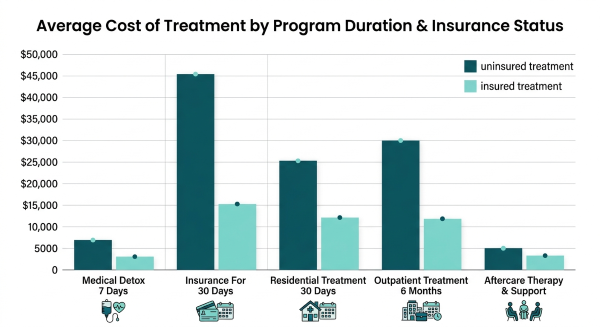
Substance abuse treatment can range from a few thousand dollars to ten thousand dollars.
This is a wide span; let’s narrow it to treatment type. The costs vary with the different types of care:
- Medical Detoxification: If you need medical supervision to safely withdraw from substances, detox typically costs $250 to $800 per day. A 5 to 7-day detox stay would cost $1,250 to $5,600 without insurance.
- Outpatient Treatment: If you live at home and attend treatment sessions, outpatient programs typically cost $1,400 to $10,000 for a 30-day program. Some specialized outpatient programs cost more.
- Intensive Outpatient Program (IOP): IOPs provide more hours per week than standard outpatient. Expect to pay $500 to $650 per day, which works out to $10,000 to $13,000 per month.
- Partial Hospitalization Program (PHP): PHPs provide daytime treatment without overnight stays. These typically cost $350 to $450 per day, or roughly $7,000 to $9,000 per month.
- Inpatient/Residential Treatment: Standard 30-day inpatient programs average $6,000 to $27,000. Luxury facilities with exceptional amenities might cost $20,000 or more for 30 days.
- Long-Term Residential Treatment: Programs lasting 60 days or more can cost $20,000 to $60,000 or more. The average is around $42,500 for longer stays.
“The cost of substance abuse treatment varies based on the level of care, location, and duration, but ranges from thousands to tens of thousands of dollars.” – National Institute on Drug Abuse
The good news is that for every dollar invested in substance abuse treatment, there’s an estimated $7 reduction in health and social costs. Treatment pays for itself through reduced healthcare expenses, fewer legal problems, and improved productivity.
The necessary advice is getting assistance at Solutions Healthcare
What Factors Affect the Cost of Treatment
Understanding what drives pricing helps you find options that fit your budget.
- Type of Care Level: As shown above, outpatient care costs much less than residential care because you’re not paying for 24/7 facility costs. More intensive levels of care cost more.
- Length of Stay: Longer programs cost more. A 60-day program costs roughly twice as much as a 30-day program. Some people need longer treatment and benefit from the extended time. Others do well with shorter programs.
- Facility Location: Treatment centers in areas with higher cost of living charge more. Urban facilities typically cost more than rural facilities. Treatment in Florida may cost differently than treatment in other states.
- Facility Type and Amenities: Standard facilities cost less than luxury facilities. Luxury centers with resort-like amenities, private rooms, or specialized treatment cost significantly more.
- Medical Needs: If you need medical detoxification, psychiatric medications, or treatment for co-occurring mental health conditions, costs increase. These services require trained medical staff and specialized expertise.
- Specialized Programs: Treatment addressing specific populations (adolescents, women, military veterans) or specialized issues (trauma, dual diagnosis) might cost more because they require specialized staff and programming.
- Reputation and Credentials: Well-known facilities with excellent outcomes and strong credentials often charge more than newer or less-established centers.
- Additional Services: Some facilities include holistic therapies, recreational activities, family programs, or aftercare services in their cost. Others charge separately for these.
Different Treatment Types
Here’s a quick comparison showing typical cost ranges for different programs:
Treatment Type | Daily Cost | 30-Day Cost | 60-Day Cost | Typical Length | Best For |
Medical Detox | $250-$800 | $7,500-$24,000 | N/A | 5-7 days | Medically dangerous withdrawal |
Outpatient | $47-$333/month | $1,400-$10,000 | $2,800- $20,000 | 30-90 days | Mild-moderate addiction, employed |
Intensive Outpatient (IOP) | $500-$650 | $10,000-$13,000 | $20,000- $26,000 | 30-90 days | Moderate addiction, working |
Partial Hospitalization (PHP) | $350-$450 | $7,000-$9,000 | $14,000- $18,000 | 30-90 days | Moderate addiction, need structure |
Standard Inpatient | $200-$900 | $6,000-$27,000 | $12,000- $54,000 | 30-60 days | Severe addiction, no support system |
Luxury Inpatient | $667+ | $20,000+ | $40,000+ | 30-60 days | Severe addiction, prefer amenities |
Long-Term Residential | Varies | $14,000-$42,500 | $28,000- $85,000 | 60-180 days | Chronic relapse, complex issues |
As you can see, outpatient programs are the most affordable, while luxury inpatient programs are the most expensive. The right choice depends on your specific situation, not just the cost.
To investigate the opportunities of the supervised support, call Solutions Healthcare
Insurance Coverage for Substance Abuse Treatment
Good news: most insurance plans cover at least a portion of addiction treatment.
Due to the Affordable Care Act (ACA), insurance companies must cover mental health and substance abuse services the same way they cover other medical services. This means:
- Private Insurance: Most private insurance plans cover substance abuse treatment. Coverage typically includes 60 to 90% of services like detoxification, inpatient treatment, outpatient counseling, and psychiatric care. Your specific coverage depends on your plan.
- Medicaid: Medicaid covers substance abuse treatment for low-income individuals. Coverage varies by state, but typically includes inpatient, outpatient, medications, and counseling. Each state runs its own Medicaid program with different specifics.
- Medicare: Medicare covers substance abuse treatment for people 65 and older and some people with disabilities. Both Original Medicare and Medicare Advantage plans provide coverage.
- TRICARE: Military members, veterans, and their families may have coverage through TRICARE.
Coverage Details You Should Know:
- Deductibles: You might need to meet a yearly deductible before insurance starts paying
- Copays/Coinsurance: You might pay a percentage of the cost
- Out-of-pocket Maximums: Insurance stops charging you after you reach this limit
- Prior Authorization: Some plans require approval before treatment starts
- In-Network vs. Out-of-Network: In-network facilities are cheaper
To find your coverage, call your insurance company or visit their website. Better yet, ask the treatment facility to verify your benefits for you.
Payment Options When Cost is a Barrier
Even if insurance doesn’t cover everything or you don’t have insurance, payment options exist.
- Sliding Scale Fees: Many treatment centers charge based on your income. Lower income means lower costs. This makes treatment affordable for people without insurance or with limited resources.
- Payment Plans: Many facilities offer financing where you pay the cost over time in monthly installments, often with little to no interest. This spreads the cost over several months, making it manageable.
- Personal Loans: Banks and credit unions offer personal loans for healthcare costs, including addiction treatment. These typically have lower interest rates than credit cards.
- Healthcare Credit Cards: Special credit cards exist for healthcare expenses, sometimes with deferred interest periods if you pay within a certain timeframe.
- Grants and Scholarships: Some organizations offer grants or scholarships to help pay for treatment, especially for people in financial hardship.
- Government Assistance Programs: SAMHSA (Substance Abuse and Mental Health Services Administration) provides grants to states that help people without insurance access treatment.
- employer benefits: Some employers offer substance abuse treatment as part of their health benefits or employee assistance programs (EAPs). Check with your HR department.
- Payment Assistance Directly from Facilities: Ask the treatment center directly about their financial assistance programs. Many facilities have staff dedicated to helping patients find affordable options.
Untreated Addiction vs. Treatment
While treatment costs thousands, untreated addiction costs much more.
Consider these actual costs of continued addiction:
Substance Costs: Someone using daily:
- Alcohol (12-pack daily): Over $3,000 per year minimum
- Cocaine (1 gram daily): Around $25,000-$36,500 per year
- Heroin (1 gram daily): Around $12,000-$18,000 per year
- Methamphetamine: Often $10,000-$50,000+ per year
These are just the drugs themselves, not the rest.
Health Costs:
- Emergency room visits: $1,000-$10,000+ each
- Hospitalizations: $1,000-$5,000+ per day
- Chronic health problems: Thousands in ongoing medical care
- Organ damage, infections, overdose: Catastrophic costs
Legal Costs:
- Arrests and legal fees: $1,000-$10,000+
- Incarceration: Thousands per month
- Probation, court-ordered treatment: Ongoing costs
Employment and Housing:
- Job loss and reduced earning: Years of lost income
- Homelessness: Costs to society and individual suffering
- Family disruption: Relationship destruction
Relationship and Quality of Life:
- Divorce: Expensive and emotionally devastating
- Child custody loss: Devastating consequences
- Social isolation: Loss of support and meaning
Research shows that untreated addiction costs far more than treatment. The average person in active addiction spends more on the addiction and its consequences than treatment would cost. Once you account for all costs, financial, health, legal, social, and emotional—treatment is actually the most affordable option.
Making Your Decision: Cost Shouldn’t Stop You
Here’s the truth: cost should not prevent you from getting help.
Every day you wait is another day of suffering. Every day you wait costs money through substance use and its consequences. Every day you wait increases the risk of overdose, legal problems, or losing important relationships.
If you’re hesitating because of cost, know this:
- Most insurance will cover at least part of treatment
- Payment options exist for those without insurance
- Many facilities will work with you to make treatment affordable
- The cost of treatment is far less than the cost of untreated addiction
- Your recovery is worth the investment

Getting Help at Solutions Healthcare
If you’re ready to address your addiction, cost should not stop you.
Solutions Healthcare in Central Florida offers comprehensive substance abuse treatment with flexible payment and financing options. We work with most major insurance plans and offer financial assistance for those without insurance.
Our treatment options include:
- Medical Detoxification to safely manage withdrawal
- Residential Treatment for intensive, full-time care
- Intensive Outpatient Programs for flexible, structured care
- Partial Hospitalization Programs for daytime treatment
- Individual and Group Therapy tailored to your needs
- Medication-Assisted Treatment when appropriate
- Dual Diagnosis Treatment for addiction plus mental health issues
- Aftercare and Alumni Support for long-term recovery
We offer:
- Insurance Verification: We check your coverage for you
- Payment Plans: Flexible monthly payments
- Sliding Scale Fees: Adjusted based on your income
- Financial Assistance: Programs to help those without insurance
- Expert Guidance: Our financial counselors help you navigate options
Don’t let cost be the reason you stay stuck in addiction. Recovery is possible, and it’s affordable.
Visit our contact page to discuss your situation and explore your options. Our team is available 24/7, and all conversations are completely confidential.
FAQs
Will Insurance Cover Substance Abuse Treatment?
Most insurance plans cover at least a portion of substance abuse treatment. Under the Affordable Care Act, marketplace plans must include substance use disorder services as essential health benefits. Coverage varies by provider and policy, so it is important to verify benefits directly with your insurance company.
How Much Will I Have to Pay Out-of-Pocket?
Out-of-pocket costs depend on your specific insurance plan and coverage details. Expenses may include deductibles, copays, coinsurance, or annual out-of-pocket maximums. The amount you owe can vary significantly, so contacting your insurer directly is the best way to understand expected treatment costs.
What If I Don’t Have Insurance?
Many treatment centers offer options for individuals without insurance, including sliding-scale fees, payment plans, scholarships, and financial assistance programs. Government-funded programs such as Medicaid and state-supported substance use services may also help cover costs and improve access to treatment and recovery support.
Is Outpatient Treatment Cheaper Than Inpatient?
Yes. Outpatient treatment is generally much less expensive than inpatient or residential care because it does not include housing, meals, or around-the-clock supervision. However, treatment recommendations should be based on clinical needs, safety, and addiction severity rather than cost alone.
Can Treatment Facilities Help Me Navigate Insurance?
Absolutely. Most treatment centers have admissions or financial specialists who help verify insurance benefits, explain coverage details, and estimate potential costs. Their goal is to simplify the process, answer questions, and help individuals access treatment without unnecessary confusion or administrative barriers.
Are There Payment Plans With No Interest?
Many treatment facilities offer flexible payment plans, including options with little or no interest. Some programs also partner with third-party financing companies to provide additional payment solutions. Available options vary by provider, so it is helpful to ask about financial arrangements during admission.
Is There Financial Assistance If I Can’t Pay?
Yes. Many treatment providers offer scholarships, financial assistance programs, or reduced-cost services for qualifying individuals. Additional support may be available through state funding, nonprofit organizations, or government grants. Discussing financial concerns with a treatment center can help identify available resources and assistance programs.
How Long Will Treatment Take?
Treatment length varies based on individual needs, substance use severity, and recovery goals. Outpatient programs often last several weeks to a few months, while inpatient and residential programs may continue longer. Longer treatment engagement is frequently associated with improved recovery outcomes and long-term stability.
Will Medicaid or Medicare Cover Treatment?
Yes. Medicaid generally covers substance abuse treatment for eligible low-income individuals, while Medicare provides coverage for qualifying older adults and certain disabled individuals. Benefits vary by state, plan type, and treatment setting, making it important to review coverage details before beginning treatment.
Why Is Treatment So Expensive?
Substance abuse treatment involves licensed professionals, medical services, therapy, medications, testing, facility operations, and, in some cases, housing and around-the-clock care. These comprehensive services require significant resources and trained staff, which contribute to the overall cost of delivering effective, evidence-based treatment programs.
Is the Cost of Treatment Worth It?
For many people, treatment is a valuable investment in long-term health and wellbeing. Effective treatment can improve physical and mental health, strengthen relationships, increase productivity, and reduce future healthcare costs. Most importantly, it provides support that can help individuals achieve lasting recovery and stability.
References
- National Institute on Drug Abuse, “The Cost of Treatment”
- Recovered.org, “Paying for Addiction Treatment”
- Rehabs.com, “How Much Does Drug and Alcohol Rehab Cost?”
- Addiction Resource, “Average Cost of Addiction Treatment in the US”
- American Addiction Centers, “Public Assistance”
- Recovery First, “Payment Options for Addiction Treatment”
- Grove Treatment, “Rehab Loan: What It Is and How It Works”
- Recovery.com, “How to Pay for Drug and Alcohol Rehab”
- Addiction Center, “Cost of Drug and Alcohol Treatment”
- Healthcare.gov, “Mental Health and Substance Abuse Coverage”
This content is for informational purposes only and does not constitute medical advice or a clinical recommendation. For a personalized assessment, please consult a licensed mental health professional. To learn more about evidence-based mental health and addiction treatment in Florida, visit shc.health or call (386) 866-3600.