
Cocaine can alter an individual swiftly. One minute, he or she can be optimistic and full of self-confidence. They may be emotionally vulnerable several hours later, acting out of control or even using dangerous drugs. This can be a continuous worry to households witnessing the process.
A lot of people who are looking for answers to Cocaine’s Drug Effects are probably trying to figure out what is going on with them or someone they care for. Maybe the signs were small to start with. Maybe the person has already suffered from negative health, relationship, work or mental effects from the drug use.
Cocaine’s effects on the body and brain can be felt almost immediately, and with continued use (without intervention), it can cause serious consequences. By understanding the risks, and the symptoms and recovery from withdrawal, individuals can take the next step and prevent further damage.
Treatment can start early with medical and emotional/family support and recovery is possible.
Side Effects of Cocaine Drug
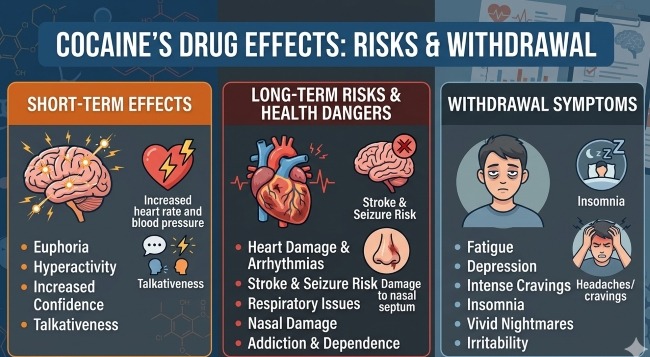
Cocaine is a strong stimulant of the central nervous system. This triggers short intervals of euphoric, energetic, alert feelings in the brain so the cells release a flood of dopamine.
The effects are usually felt within minutes and may last for anything between several minutes and up to an hour, depending on the method consumed.
These are some of the common short-term cocaine effects:
- Increased energy
- Extreme confidence
- Rapid heart rate
- Dilated pupils
- Elevated blood pressure
- Decreased appetite
- Restlessness
- Increased body temperature
Following the wear-off of the high, an individual may feel cravings. It’s a repetition that can quickly lead to use and dependency.
According to the National Institute on Drug Abuse, cocaine increases dopamine levels in brain reward pathways, reinforcing repeated drug use behaviors.
Cocaine’s Drug Effects on the Brain
Cocaine changes the way the brain works in terms of pleasure, stress and decision-making. The brain becomes accustomed to the drug to receive what it normally would receive in terms of dopamine.
This disturbance can result in:
- Anxiety
- Depression
- Panic attacks
- Mood swings
- Irritability
- Impulsive behavior
- Memory problems
- Poor concentration
With prolonged cocaine use, there might also be an increased likelihood for a person to experience paranoia, hallucinations and psychosis.
Scans of the brain show that cocaine may lessen the functioning of parts of the brain that control judgment and self-control.
Researchers at the National Institutes of Health found chronic cocaine use alters brain circuits involved in reward, stress response, and emotional regulation.
Cocaine’s Drug Effects On Heart
Cocaine has an extremely negative effect on the heart. Using, even occasionally, increases the risk of dangerous medical incidents.
The problems of the heart may involve complications of:
- Heart attack
- Stroke
- Irregular heartbeat
- Chest pain
- High blood pressure
- Aortic rupture
Most people think that heart problems are only a problem for those who use substances for decades. In fact, the complications can result from just one use of cocaine.
Cleveland Clinic warns cocaine significantly raises the risk of heart attack and sudden cardiac death, especially when combined with alcohol or other substances.
Cocaine’s Drug Effects On Body
Cocaine has an impact on almost all organ systems in the body. Physical effects will depend upon the frequency, dosage and method.
Snorting Cocaine Risks
Sniffing can result in:
- Nosebleeds
- Loss of smell
- Chronic sinus infections
- Damage to nasal tissue
- Difficulty swallowing
Smoking Crack Cocaine Risks
Smoking cocaine may result in:
- Lung damage
- Chronic cough
- Respiratory infections
- Burns on lips or fingers
Injecting Cocaine Risks
Injection drug use increases the risk of:
- Collapsed veins
- Skin infections
- HIV
- Hepatitis
- Bloodstream infections
The use of these drugs over the long term can also help to weaken the immune system and lead to a significant reduction in weight and malnutrition.
Cocaine’s Drug Effects And Addiction
Cocaine addiction can occur rapidly because cocaine causes a high which is intense but also brief. Many of them are still using it to avoid the emotional hangover that comes after discontinuation.
Cocaine addiction may be characterized by:
- Strong cravings
- Using more than intended
- Hiding drug use
- Financial problems
- Relationship conflicts
- Missing work or school
- Risky behavior
- Failed attempts to quit
Addiction is a disease that not only impacts the brain but also behavior. If a person has a cocaine addiction, it may seem they are chained, even if they desire to kick the addiction.
The Substance Abuse and Mental Health Services Administration states stimulant addiction often requires professional treatment because cravings and relapse risk can remain strong long after detox.
Cocaine’s Drug Effects Withdrawal Symptoms
Cocaine withdrawal rarely involves the potentially life-threatening physical symptoms that occur when someone stops using alcohol or benzodiazepines, and yet the emotional aspects of cocaine withdrawal can be overwhelming.
Typical signs of cocaine withdrawal are
- Intense fatigue
- Depression
- Anxiety
- Irritability
- Nightmares
- Increased appetite
- Strong drug cravings
- Difficulty concentrating
- Sleep disturbances
Some people may be suicidal during withdrawal, especially if they have used the drug for a long time or in high doses.
Cocaine Withdrawal Timeline
Withdrawal Stage | Common Symptoms |
First 24 hours | Crash, exhaustion, depression |
Days 2 to 7 | Cravings, mood swings, anxiety |
Weeks 2 to 4 | Sleep problems, emotional instability |
Months later | Intermittent cravings, triggers |
The psychological issues of addiction and withdrawal can last longer than that which most people assume. One of the reasons why relapse is common is because there is no structure that is in place for support.
Cocaine’s Drug Effects Mental Health
People can find their lives caught up in a web of cocaine and mental health issues. Some people turn to cocaine as a way of recovering from anxiety, trauma or depression. Overall, the drug is more harmful in the long run.
Use of cocaine is highly associated with:
- Panic disorder
- Major depression
- Anxiety disorders
- PTSD
- Bipolar symptoms
- Suicidal thinking
Dual diagnosis treatment offers answers for addiction as well as mental health issues at the exact same time.
Yale School of Medicine researchers note that untreated mental health disorders significantly increase the risk of ongoing stimulant addiction and relapse.
Cocaine’s Drug Effects Recovery Steps
Detox is not enough for the recovery process from cocaine addiction. Treatment is best when it involves physical recovery, emotional healing and relapse prevention.
Step 1: Medical Assessment
The first step in the treatment is understanding:
- Substance use history
- Mental health symptoms
- Physical health concerns
- Family history
- Previous treatment attempts
Step 2: Stabilization And Detox
Medical supervision provides individuals with a safe environment to cope with withdrawal symptoms and emotional issues.
Step 3: Behavioral Therapy
Evidence-based therapies are available to help pinpoint triggers, re-establish coping strategies, and develop new healthy habits.
Common therapies include:
- Cognitive Behavioral Therapy
- Dialectical Behavioral Therapy
- Trauma therapy
- Group counseling
- Family therapy
Step 4: Relapse Prevention
Recovery Plans can contain the following:
- Ongoing therapy
- Peer support groups
- Structured routines
- Aftercare planning
- Mental health treatment
Firstly, it’s crucial to go through the long-term support because cravings and emotional triggers may still remain after the detox.

Cocaine’s Drug Effects Family Impact
Though the cocaine user might be the one that is impacted by his or her addiction, it is a problem that impacts the entire family. Family and friends may feel scared, stressed, angry, confused and exhausted.
Members of the family may observe:
- Personality changes
- Isolation
- Secretive behavior
- Mood swings
- Missing money
- Legal problems
- Sudden aggression
There’s also a need to support families in recovery. With the support of therapy and education, trust and communication can be restored.
Cocaine Drug Effects Treatment Help
Early intervention with professionals can minimize the long-term consequences of cocaine abuse and enhance recovery prospects. Solutions Healthcare is a Central Florida-based, compassionate, evidence-based addiction and mental healthcare provider. They have a whole-person approach to their programming and provide individual help and support for substance use and co-occurring mental health issues.
SHC offers Residential Treatment, Outpatient Care, Addiction Treatment Programs, Dual Diagnosis Treatment, Family Therapy & Aftercare Planning. They deliver evidence-based practice to their team, including CBT and trauma-informed care, helping people to learn how to recover in the longer term.
Solutions Healthcare also puts an emphasis on customized care rather than the one-size-fits-all approach. They are Joint Commission accredited and are designed to facilitate their long-term healing in a safe and nurturing environment.
Call SHC today at (386) 866-3600 or visit the Admissions Page for information about available treatment options if you or a loved one is suffering from cocaine addiction.
FAQs
What are the immediate effects of cocaine?
Cocaine usually causes a rapid burst of energy, confidence, alertness, and euphoria shortly after use. It can also increase heart rate, blood pressure, breathing rate, and body temperature within minutes. Some people may experience anxiety, restlessness, paranoia, or risky behavior during the drug’s short but intense effects.
How addictive is cocaine?
Cocaine is considered highly addictive because it strongly affects dopamine and reward systems in the brain. Repeated use can quickly lead to cravings, compulsive drug seeking, and loss of control over use. Some individuals develop dependence after relatively short periods of regular or binge cocaine consumption.
What happens during cocaine withdrawal?
Cocaine withdrawal often causes fatigue, depression, anxiety, irritability, strong cravings, and sleep disturbances after stopping use. Some people also experience mood swings, difficulty concentrating, or loss of motivation. Emotional symptoms can continue for weeks or months, especially without professional treatment, therapy, or ongoing recovery support.
Can cocaine cause heart attacks?
Yes. Cocaine can significantly increase the risk of heart attacks, strokes, chest pain, and dangerous heart rhythm problems. The drug places major stress on the cardiovascular system by narrowing blood vessels and raising blood pressure. Serious cardiac events can occur even in younger adults without prior heart disease.
How long does cocaine stay in your system?
Cocaine itself leaves the bloodstream relatively quickly, often within several hours after use. However, cocaine metabolites may remain detectable in urine for several days and sometimes longer with heavy or repeated use. Detection times vary depending on frequency of use, metabolism, overall health, and the type of drug testing performed.
Can cocaine cause permanent brain damage?
Long term cocaine use can contribute to lasting cognitive, emotional, and neurological changes over time. Some individuals experience problems with memory, attention, decision making, or emotional regulation. Early treatment, medical support, and sustained recovery efforts may improve brain healing and reduce the risk of long term complications.
What does crack cocaine do differently?
Crack cocaine is smoked rather than snorted, producing a much faster and more intense high within seconds. Because the effects appear rapidly and wear off quickly, many users experience stronger cravings and repeated binge use. This rapid cycle often increases the risk of addiction and compulsive drug seeking.
Is cocaine withdrawal dangerous?
Cocaine withdrawal is usually not medically life threatening in the same way as alcohol or benzodiazepine withdrawal. However, severe depression, suicidal thoughts, intense cravings, and emotional distress can occur. Professional medical and mental health support may be important to ensure safety and improve recovery outcomes during withdrawal.
Can therapy help cocaine addiction?
Yes. Behavioral therapies such as CBT, motivational interviewing, and trauma focused counseling remain among the most effective treatments for cocaine addiction. Therapy can help individuals identify triggers, manage cravings, improve coping skills, and address underlying emotional or psychological factors contributing to substance use and relapse risk.
Does insurance cover cocaine rehab?
Many insurance plans provide coverage for addiction treatment services, including detox programs, residential rehab, outpatient treatment, therapy, and medication management when appropriate. Coverage levels vary depending on the provider and policy. Patients should contact their insurance company directly to verify benefits, treatment options, and possible out of pocket costs.
What are signs someone is using cocaine?
Common signs of cocaine use may include dilated pupils, rapid speech, increased energy, insomnia, mood swings, irritability, nosebleeds, secrecy, or sudden financial problems. Some individuals also display impulsive behavior, appetite loss, social withdrawal, or dramatic personality changes that become more noticeable with ongoing substance use.
Can someone recover from cocaine addiction?
Yes. Many individuals achieve long term recovery from cocaine addiction through professional treatment, therapy, support groups, and strong relapse prevention strategies. Recovery often involves ongoing lifestyle changes, emotional support, and continued mental health care. Early intervention and consistent support can significantly improve long term treatment outcomes.