In This Blog:
- The foundational principles of behavior modification
- How thought patterns influence substance use
- Core techniques used in individual sessions
- Building resilience through skill development
- The role of relapse prevention strategies
- Integrating therapeutic support into daily life
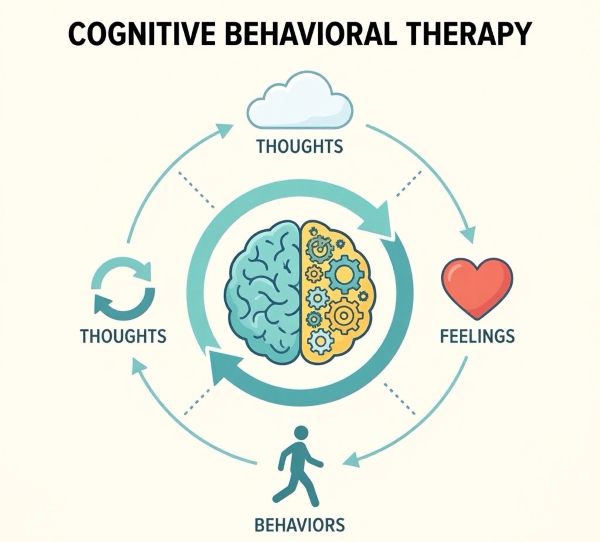
Learning about Cognitive Behavioral Therapy of addiction is one of the fundamentals of recovery today and allows human beings with practical means to cope with the maze of behavioral change. Cognitive Behavioral Therapy is a method of psychological intervention that aims to develop a relationship between thoughts, feelings and actions and is goal-oriented and is structured.
With the identification and confrontation of distorted thinking patterns, one can grow to have a healthier response to the stressors and triggers that often become the source of the use of a substance.
This guide discusses how such evidence-based solutions allow individuals to gain power to control their mental health and establish a platform of sustainable stability. A mix of self-understanding and tips and skills help participants realize that their environment may sometimes be beyond their control but they can control their response to it.
Expert Advice: Aligning internal thought processes with external goals is vital for achieving sustainable behavioral change.
How Your Thoughts Drive Addictive Behavior
At its core, this approach operates on the belief that most harmful behaviors are learned and can, therefore, be unlearned. In the context of substance use, many individuals develop “automatic thoughts” that lead them toward a substance whenever they face a challenge.
By slowing down the decision-making process, participants can begin to see the flaws in their logic. This awareness is the first step in breaking the cycle of dependency and replacing it with intentional, healthy choices.
FACT: Effective therapy significantly reduces the frequency and intensity of cravings.
How Does CBT Work for Addiction
The therapy is highly collaborative, requiring active participation from both the person and their support provider. It is not a passive process; it involves homework, practice, and a willingness to confront uncomfortable truths.
Focusing on the “here and now” rather than dwelling exclusively on the past allows for immediate application of new skills. This practical focus makes it an ideal intervention for those in the early to middle stages of recovery.
Concept | Description | Application |
Cognitive Appraisal | Evaluating the meaning of an event | Identifying if a situation is truly a “crisis” |
Behavioral Activation | Engaging in positive activities | Scheduling exercise to improve mood |
Self-Monitoring | Tracking thoughts and triggers | Using a journal to find patterns of use |
100% Confidential Support is Available 24/7
No matter what you’re going through, you’re not alone. Our dedicated team is here to provide a safe, judgment-free space where you can talk openly and honestly. Whether you need emotional support, resources, or just someone to listen.
We’re here for you—completely confidential and always respectful of your privacy. Call us today!
What are Cognitive Distortions in Addiction
Cognitive distortions are irrational thought patterns that perpetuate negative emotions and harmful behaviors. Learning to recognize these patterns is a major component of Cognitive Behavioral Therapy.
- All-or-Nothing Thinking: Viewing a minor setback as a total failure.
- Catastrophizing: Expecting the worst possible outcome in every situation.
- Emotional Reasoning: Assuming that because you feel a certain way, it must be true.
- Overgeneralization: Drawing broad conclusions based on a single negative event.
Contact Solutions Healthcare
Battling with Drug and Alcohol Addition? Remember, you are not alone and we are here to help you!
Coping Skills You Learn in CBT for Addiction
Recovery is not just about stopping a behavior; it is about learning how to live life differently. Therapy sessions often focus on developing a “toolbox” of skills that can be used when cravings or stress arise.
These skills include stress management techniques, assertive communication, and problem-solving strategies. By practicing these in a safe environment, individuals feel more confident when they encounter similar situations in their daily lives.
Why Do People Turn to Substances?
A key technique involves analyzing the “function” of the substance use. This means looking closely at what happens before, during, and after use to understand what need the substance was attempting to fill.
Once the function is understood, whether it was to numb pain, reduce anxiety, or fit in socially, the individual can work on finding healthier ways to meet those same needs. This targeted approach makes the recovery process more efficient and personalized.
Solutions Healthcare offers evidence-based support through professional Cognitive Behavioral Therapy programs.
How CBT Helps Prevent Relapse
Relapse is often viewed not as a failure but as an opportunity to learn more about one’s triggers. Therapy helps individuals create a detailed plan for what to do if they find themselves moving toward old habits.
- Early Warning Signs: Identifying behaviors like social withdrawal or changes in sleep.
- Emergency Contacts: Having a list of people to call when a crisis occurs.
- Actionable Steps: Immediate behaviors to redirect focus away from the substance.
100% Confidential Support is Available 24/7
No matter what you’re going through, you’re not alone. Our dedicated team is here to provide a safe, judgment-free space where you can talk openly and honestly. Whether you need emotional support, resources, or just someone to listen.
We’re here for you—completely confidential and always respectful of your privacy. Call us today!
How CBT Improves Relationships in Recovery
Substance use often leads to strained relationships and social isolation. Cognitive Behavioral Therapy addresses this by helping participants improve their interpersonal skills and set healthy boundaries.
- Learning how to say “no” to social pressure without feeling guilty.
- Practicing active listening to rebuild trust with loved ones.
- Identifying and avoiding “enabling” behaviors in others.
- Expressing needs and emotions clearly to reduce frustration and conflict.
How Physical Health Affects Your Recovery
There is a strong link between physical health and the ability to maintain cognitive control. Fatigue, poor nutrition, and lack of exercise can all make it harder to challenge negative thoughts.
Incorporating wellness goals into the therapeutic plan ensures that the body is supporting the mind’s efforts. Simple changes in diet and activity levels can lead to significant improvements in emotional regulation and clarity.
Wellness Pillar | Impact on Recovery | Strategy |
Hydration | Improves kidney function and clarity | Drinking water throughout the day |
Sleep Hygiene | Reduces irritability and cravings | Maintaining a consistent sleep schedule |
Nutrition | Stabilizes mood and energy levels | Balanced meals to avoid “hangry” triggers |
100% Confidential Support is Available 24/7
No matter what you’re going through, you’re not alone. Our dedicated team is here to provide a safe, judgment-free space where you can talk openly and honestly. Whether you need emotional support, resources, or just someone to listen.
We’re here for you—completely confidential and always respectful of your privacy. Call us today!
Using CBT for Addiction and Mental Health
Many people struggling with addiction also face challenges like anxiety, depression, or trauma. Cognitive Behavioral Therapy is highly effective at treating these conditions simultaneously.
By addressing the root causes of emotional distress, the urge to use a substance as a coping mechanism is greatly reduced. This integrated approach leads to a more comprehensive and lasting sense of wellness.
Why a Structured Program Helps CBT Work Better
For many, the structure provided by a professional program is essential during the early stages of change. This structured environment reduces the number of immediate triggers and allows the individual to focus entirely on their growth.
Within this structure, participants follow a daily schedule of therapy, reflection, and skill-building. This consistency helps the brain begin to rewire itself, making healthy choices feel more natural over time.
For information on how our structured programs utilize Cognitive Behavioral Therapy, call Solutions Healthcare.
How CBT Builds Confidence in Recovery
Self-efficacy is the belief in one’s own ability to succeed in specific situations. As individuals successfully use their new skills to navigate challenges, their confidence grows.
- Small Victories: Celebrating minor accomplishments to build momentum.
- Role-Playing: Practicing difficult conversations in a safe setting.
- Self-Reflection: Reviewing progress to recognize personal growth and resilience.
Why Practice Outside CBT Sessions Matters
Because this therapy is skills-based, practice outside of sessions is vital. Homework might include keeping a thought journal, practicing a new communication skill, or visiting a place that was previously a trigger.
- Thought Records: Documenting situations that cause emotional distress.
- Exposure Exercises: Gradually facing feared situations to reduce anxiety.
- Behavioral Experiments: Testing out new ways of acting to see the results.
Building a Life That Supports Sobriety
Beyond therapy, creating a life that supports wellness is essential. This includes finding new hobbies, pursuing career goals, and spending time with people who respect one’s boundaries.
A fulfilling life provides the natural rewards that substances once provided. When a person feels connected and purposeful, the desire to return to old habits naturally diminishes.

Setting Goals for Life After Addiction
Entering therapy is a courageous step toward a better life. It marks the beginning of a process where the individual takes responsibility for their own happiness and well-being.
- Goal Setting: Defining what a healthy life looks like for the individual.
- Action Planning: Developing the steps needed to reach those goals.
- Commitment to Change: Maintaining focus even when the process becomes difficult.
Solutions Healthcare provides professional support through integrated programs that utilize Cognitive Behavioral Therapy as a core component of recovery. The facility emphasizes evidence-informed practices and individual empowerment to foster long-term stability and personal growth without making guarantees of specific outcomes.
Medical Disclaimer: This article is for informational purposes only and is not a substitute for professional medical advice.
Key Takeaways
- Cognitive Behavioral Therapy addresses the relationship between thoughts, emotions, and behaviors.
- Identifying cognitive distortions helps break the cycle of automatic, harmful thinking.
- Skill-building and homework are essential for applying therapeutic lessons to real-world situations.
- Integrated support can address both substance use and co-occurring mental health challenges.
- Long-term success is supported by consistent practice and a fulfilling, structured lifestyle.
FAQs
How long does a typical course of therapy last?
The duration of Cognitive Behavioral Therapy varies depending on individual needs and goals. While some people find significant benefit in 12 to 20 weekly sessions, others may choose to continue for a longer period to address deeper issues or maintain accountability during major life transitions.
Can this therapy be used for all substances?
Yes, Cognitive Behavioral Therapy is a versatile approach that has been proven effective for a wide range of substances. Because it focuses on the underlying thought processes and behavioral patterns that drive use, the specific substance involved is less important than the individual’s willingness to change.
What is the difference between this and traditional talk therapy?
Traditional therapy often focuses on exploring childhood experiences and past traumas to gain insight. In contrast, Cognitive Behavioral Therapy is more structured, goal-oriented, and focused on the “here and now,” providing practical skills to solve current problems and change immediate behaviors.
Do I have to do homework between sessions?
Yes, practice outside of sessions is a core component of this approach. Homework helps reinforce the skills learned in the office and allows the individual to see how they work in real-world settings, which is essential for making lasting behavioral changes.
Is Cognitive Behavioral Therapy effective for everyone?
While no single therapy works for everyone, Cognitive Behavioral Therapy is one of the most extensively researched and evidence-supported interventions for addiction. Its effectiveness often depends on the individual’s engagement and the quality of the partnership with their support provider.
References
- National Institute on Drug Abuse (NIDA) https://nida.nih.gov/
- Substance Abuse and Mental Health Services Administration (SAMHSA)
- National Institutes of Health (NIH) https://www.nih.gov/
- Centers for Disease Control and Prevention (CDC) https://www.cdc.gov/
- American Psychological Association (APA) https://www.apa.org/