Key Takeaways
- Alcohol Use Disorder DSM-5 combines alcohol abuse and dependence into one diagnosis
- Diagnosis is based on 11 criteria evaluated over 12 months
- Severity ranges from mild to severe, depending on symptoms
- Early identification improves treatment outcomes
- Professional support is essential for lasting recovery
Diagnosis of alcohol-related problems could be overwhelming, more so when it involves clinical terms. This manual breaks Alcohol Use Disorder DSM-5 into an easy way to learn new content that it comprises by dissecting it directly to the point to make the diagnosis of the disorder, for which you should follow the next steps.
It might be yourself that you fear or someone; either way, the knowledge on the fundamentals of the Alcohol Use Disorder DSM-5 will certainly enable you to see the patterns in the initial phases of the disorder and take action upon them with no hesitation whatsoever.
What is Alcohol Use Disorder DSM-5?
The Diagnostic and Statistical Manual of Mental Disorders, Fifth Edition (DSM-5) gives this name to the diagnostic criteria of Alcohol Use Disorder. It defines alcohol use disorder (AUD) as a medical disorder wherein somebody has poor judgment to drop or control the consumption of alcohol, irrespective of the negative effects.
Alcohol Use Disorder DSM-5 is a condition caused by one condition, unlike in the past where alcohol abuse and alcohol dependence were rated as different conditions and displayed as different ends of the same line.
This would assist the clinicians in identifying the problems at a considerably younger age and provide the required assistance.
Key Features of Alcohol Use Disorder DSM-5
The alcohol use disorder concept in the DSM-5 lacks focus on the behavioral patterns, symptoms of the alcoholic character, and impact that this drug produces on life. It does not assess an individual using narrow-minded standards or ultimately on the basis of meager parameters.
Here are the key features:
- Difficulties in alcohol regulation.
- Strong impulses or temptations to drink alcohol.
- He/she uses it regardless of social, personal or health issues.
- Tolerance (tolerance level is more dependent on the quantity of alcohol intake) heightens.
- Lack of drinking symptoms.
These features help the practitioners to know whether a person falls within the range of Alcohol Use Disorder Dsm 5 and to what degree it can be.
DSM-5 Diagnostic Criteria Explained
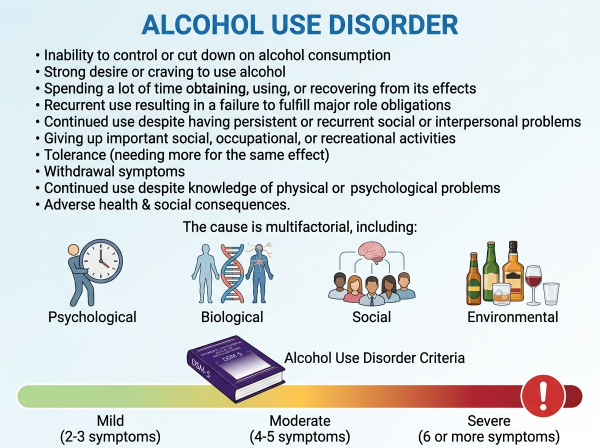
DSM-5 Alcohol Use Disorder is a diagnosis that is determined by 11 criteria. Alcohol use disorder can be diagnosed when a person meets at least two of the following criteria in 12 months:
The 11 Criteria Include:
- Helping yourself to excessively many drinks.
- Another attempt to ration, in vain.
- Using up time to get drunk or get well.
- Cravings or strong urges
- Inability to take up duties.
- Endurance of social problems.
- Making sacrifices of precious things.
- Use of alcohol in risky situations.
- Using it with physical or even psychological problems.
- Tolerance
- Withdrawal
Alcohol Use Disorder severity is defined by the number of met criteria.
- Mild: 2–3 symptoms
- Moderate: 4–5 symptoms
- Severe: 6 or more symptoms
This system has made it possible to made a more accurate diagnosis and plan a better treatment.
Why DSM-5 Matters in Diagnosis
The Alcohol Use Disorder DSM-5 model stands because it is the most similar model in comparison to real-life mechanisms of alcohol problems’ occurrence. The new diagnosis should not be yes or no, but it is recognized there is a range of alcohol misuses.
This helps:
- Be aware of the different signs.
- Lessen diagnosis stigma.
- Direct personalized treatment intervention.
- Promote recovery in the long run.
As a result of Alcohol Use Disorder DSM-5, the medical professionals could be in a position to support the sufferers in every level of the disorder.
Common Signs of Alcohol Use Disorder: DSM-5
Clinical criteria are important, but each day, their indicators can be striving to identify a problem. The DSM-5 paradigm of how the Alcohol Use disorder works is accompanied by what can be seen in real life, and turned out to be concerning enough.
Watch for:
- Bringing drinks to make us feel better or relieve stress.
- To be more tolerant with time.
- Acquisition of irresponsibility due to alcohol drinking.
- Conflict in relationships involving alcohol.
- Desiring not to want to be in control, despite what you really want.
When you are used to these patterns, it is perhaps high time to seek professional help per the Alcohol Use Disorder DSM-5 guidelines
Are you reading this today? You need to start your future. No one knows when to begin again- but you can begin.

How Alcohol Use Disorder is Treated
To be diagnosed with Alcohol Use Disorder, DSM-5, is, in a way, the beginning of a recovery. Treatment can vary depending on severity and the requirements of an individual.
Common Treatment Options:
- Behavioral therapy
- Medication-assisted treatment
- Inpatient/Outpatient programs.
- Counseling and support groups.
Quitting drinking is not merely a case but having a healthier and more stable life.
Take the First Step Toward Recovery
And just in case you or one of your loved ones may meet the criteria of the DSM-5 version of alcohol use disorder, do not wait until the situation deteriorates. Early intervention which is assistive, can contribute significantly.
Solutions Healthcare is a source of nurturing personalized attention intended to be used in aiding people to gain control over their back and move forward with a positive attitude.
Call Solutions Healthcare and speak to a specialist now, and start to recover. The initial step out of the comfort zone is in the right direction towards a better and healthier future.
Ready to Make a Change?
The initial step in the process to change the lives of individuals is understanding of Alcohol Use Disorder DSM-5; however, it is more about actions that enable changes in the lives of individuals.
The Solutions Healthcare is in place to assist you with professional care, humanitarian care, and individualized care plans.
Disclaimer
This content is for informational and educational purposes only and should not be considered a substitute for professional medical advice, diagnosis, or treatment. Always consult a qualified healthcare provider for personalized guidance.
FAQs
What are the DSM-5 criteria for alcohol use disorder?
The DSM-5 outlines 11 criteria for diagnosing alcohol use disorder, including cravings, loss of control, tolerance, and withdrawal. A diagnosis is made if at least two criteria are met within 12 months, with severity based on the number of symptoms present.
What is the difference between F10 10 and F10 20?
F10.10 refers to alcohol abuse (uncomplicated), while F10.20 indicates alcohol dependence. In DSM-5, these distinctions are no longer separate diagnoses and are instead combined under alcohol use disorder with varying severity levels.
What mental disorders are associated with alcoholism?
Alcohol use disorder is often linked with depression, anxiety, bipolar disorder, and PTSD. These conditions may develop alongside alcohol misuse or be worsened by it, making integrated treatment essential for long-term recovery and mental well-being.
What are the four main DSM-5 criteria for substance use disorder?
The four main categories include impaired control, social impairment, risky use, and pharmacological effects (tolerance and withdrawal). These categories help organize the 11 criteria used to diagnose substance use disorders, including alcohol use disorder.
What qualifies as alcohol use disorder?
Alcohol use disorder is diagnosed when a person meets at least two of the DSM-5 criteria within a year. These include behaviors like excessive drinking, inability to stop, cravings, and continued use despite negative consequences.
What is the DSM-5 checklist?
The DSM-5 checklist is a set of 11 diagnostic criteria used by clinicians to assess substance use disorders. It helps determine the presence and severity of alcohol use disorder based on behavioral and physical symptoms.