
Yes, it’s possible to take too much kratom. The answer is yes. Kratom can be toxic and/or fatal, especially when taken in large quantities and/or with other products. Symptoms can be severe, such as confusion, seizures, coma, breathing difficulties, and irregular heartbeat.
Also, it’s often referred to as a natural product but that’s not necessarily the same and that goes for “natural” and “safe”. Does it mean that you can overdose on Kratom? Yes, but, there’s a risk to consider: the strength and composition of kratom products can vary drastically. The active compounds found in the plant are mainly mitragynine and 7-hydroxymitragynine (7-OH), which could affect the brain and the nervous system. Some newer products or ones that have a high concentration of 7-OH may have other risks.
Key Takeaways
- Kratom can be quite toxic and overdoses can occur.
- Concentrated extracts, high-potency 7-OH products or those used in conjunction with other products may pose an increased risk.
- Also, there is no known “overdose dose” for any one product because each one is different.
- The symptoms are increased drowsiness, disorientation, vomiting, seizures, stupor, and breathing difficulties.
- Several of the compounds in the kratom interact with the opioid receptors and so can have opioid-like effects.
- The Food and Drug Administration (FDA) has warned of the risks of taking high doses of kratom and 7-OH.
- If the person displays serious signs of overdose, seek emergency medical help.
What is Kratom?
Kratom comes from the leaves of trees that belong to the species Mitragyna speciosa and can be found in Southeast Asian countries. Can be used as a tea, pills, extract, dried leaf, or drinkable liquid.
There are more than one alkaloid found in Mitragyna species, with the major being mitragynine. There is also a smaller amount of 7-hydroxymitragynine (also known as 7-OH) in Kratom. They attach to several receptors in the brain, including opioid receptors.
The type of effect may vary depending on the product and its dosage. Some people may experience increased energy and alertness with lower doses and relaxant, sedative, and opioid-like effects with higher doses.
But not all commercial products are necessarily interchangeable. One teaspoon of one certain powder for an individual might not provide the exact same level of constituents being absorbed as an additional item with precisely the same quantity of compounds.
Can You Overdose on Kratom?
Yes if it was the same product, and the food, and quantity of product, and other factors was different, such as if other substances were consumed.
Kratom could have various impacts on the body and cause toxicity. Seizure, liver problems, unconsciousness, and much more have been reported as serious reactions to kratom. The FDA has again called for a halt on the use of Kratom by consumers.
A major issue at hand today, which is quite rampant, is the availability of 7-OH-specific products in concentrated form. Some of the new products will have higher quantities of 7-OH and they will be marked as tablets, gummies, shots, or various high potencies,, distinguishing them from traditional botanical kratom dispensary products.
That difference matters. There are some products labeled “kratom” that are not the exact product as the normal dried leaf.
What Are the Signs of a Kratom Overdose?
Any one person can have at least one symptom of a kratom overdose and/or toxic effect. If you are experiencing the feelings below, it may be a sign that you are struggling with anxiety:
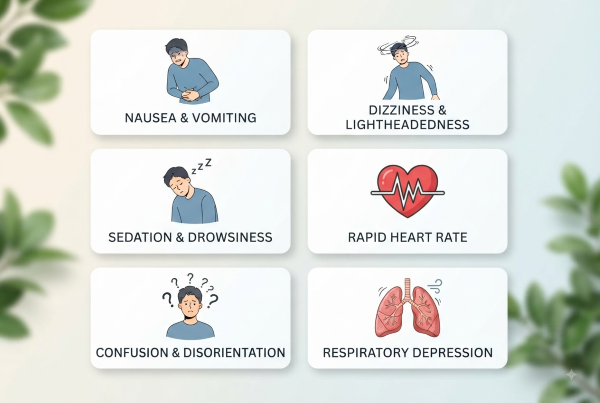
In this entry are included symptoms like excessive daytime sleepiness or drowsiness.
- Confusion or disorientation
- Nausea and vomiting
- Loss of coordination
- Rapid and irregular breathing or heart rate
- An increased or lowered blood pressure.
- An elevation or drop in blood pressure.
- Seizures
- Loss of consciousness
- Breathing difficulties
- In severe cases, coma will occur
When any kind of difficulty in breathing, seizures, severe symptoms or unconsciousness occurs, it should be considered an emergency situation.
When someone is difficult to wake up or breathing becomes difficult, or they have a seizure or have gone unconscious as a result of taking kratom, get emergency medical help right away. Do not expect the person to “sleep it off.”
Why is Kratom Overdose Risk Difficult to Predict?
Dosage is not something that can be determined.
Different batches of kratom products may not be the same as a result of varying concentrations of alkaloids, how they are grown or extracted, and even inaccuracies in the quantity of alkaloids marketed on the labels. Also, individuals’ reactions can differ by the size of their bodies, tolerance, health problems, drugs, and previous drug use.
“An additional factor is the use of ‘polysubstance,’ or drugs/intoxicants with anything else.
Kratom, when taken with other drugs that are sedating and/or nervous system-altering, can present a more serious risk than using kratom by itself. Likewise, American Addiction Centers states issues that are essential about kratom along with other products, and we might experience intensely serious side effects.
One of the reasons is that it’s unsafe to use an online dosage chart for determining what dosage is “safe.”
Can 7-Hydroxymitragynine Cause Toxicity?
Yes. One issue in particular is of concern: 7-hydroxymitragynine, which is found in the plant and has a greater affinity at the mu-opioid receptor than mitragynine.
Only naturally occurring 7-OH exists in kratom in small quantities, according to the FDA. Myrmecolysis analysis of botanical kratom showed that it had a 7-OH content of 0.01% – 0.04% by dry weight (as analyzed in 2026). Kratom is typically sold as dried powder or resin, with 0.1-0.4 milligrams of alkaloids per gram.
7-OH products that are concentrated may differ from normal leaf products. The FDA has pointed out its concerns for products that claim to deliver a lot more 7-OH and has taken action on some 7-OH products.
That doesn’t mean that the product labeled “kratom” will be as harmful as regular dried leaves.
What Does Mitragynine Toxicity Mean?
Mitragynine toxicity is the result of the negative effects of excessive or problematic use of mitragynine, one of the main alkaloids in kratom.
Mitragynine affects several biological pathways such as those of opioid receptors. It may cause to sleepiness, palpitations, involuntary urination, impairment in coordination, and dizziness. More serious neurological or cardiovascular toxibilities may result in severe toxicity.
Research also indicates that mitragynine might be metabolized in the body into 7-hydroxymitragynine, adding to the individual’s effect from taking kratom.
Is Kratom an Opioid?
Kratom is not an actual prescription opioid, like oxycodone or morphine. However, certain active substances react with the opioid receptors.
According to reports from the NIDA research materials, mitragynine is a partial agonist of mu-opioid receptors, while 7-hydroxymitragynine has a higher binding affinity to the mu-opioid receptors.
Kratom is not a “pure” opioid, nor is it impossible that it does not affect opioid pharmacology, but to say that it is an “opioid” is incorrect.
Knowing the difference is important with respect to dependence, withdrawal, intoxication, and treatment.
What Should You Do If Someone May Have Overdosed on Kratom?
If you suspect serious kratom poisoning, refer it as a medical emergency.
If the person looks unconscious or has a seizure, is having trouble breathing or symptoms are severe or worsening quickly, call emergency medical services. Remain with the victim and share information with the response personnel of what had been removed, if such knowledge exists.
Never make someone vomit unless directed to do so by a health care provider.
When they keep taking the drug and feel that they can’t stop, professional addiction treatment could also be the best option. Treatment may focus on substance use, or on some of the underlying conditions that may have caused an individual to use substances.
When Kratom Use Becomes a Problem
Many people use kratom and never suffer from substance abuse issues. However, after a while, it can be difficult for some to stop.
There are some signs of potential problems, and these are:
- The use of kratom to maintain normal functioning.
- Increase in the frequency of use over time in general:
- Strong cravings
- Taking a long time to get it or utilize it.
- Continuing to do it while it hurts
- Having withdrawal from the drug
- Wants to quit but is never able to do so
If these sound familiar, people shouldn’t wait until they have a crisis to seek assistance.
Solutions Healthcare will help you to understand what’s going on and what you’ll require to take a better path. Our treatment team can provide advice and recommendations about drug requests, withdrawal, and drug and alcohol recovery options, so please ask for advice on a confidential basis. A little help and understanding at the beginning of can help make the next step a little bit easier.
Kratom, Overdose, and the Bigger Overdose Crisis
In addition, it is important to put Kratom in the broader U.S. overdose context.
The CDC reports 79,384 drug overdose deaths among people in the United States in 2024. Of these, 54,045 were attributed to an opioid and 47,735 to a synthetic opioid other than methadone (such as fentanyl and fentanyl analogs).
What the statistics should not make people think is that the majority of all overdose deaths are as a result of taking kratom. It does not. Both, however, highlight why the issues of “opioid combinations,” “potency,” and “overdose prevention” should be important topics to discuss.
An important point to remember too is that individuals should not automatically think a product is safe simply because it’s labeled as herbal or plant-based.
Final Thoughts
In short, yes, there can be a Kratom overdose. Yes. The toxicity of kratom can vary greatly based on the quality, strength, and dosage of the preparation used. Particularly, concentrated preparations and/or those containing the 7OH isomer, or mixing concentrated preparations with other products, can be highly toxic. No amount can guarantee safety–universally reliable.
If, however, you’re able to just get by on how much of this substance you consume, professional assistance will be helpful. Solutions Healthcare provides supportive treatment services for the person suffering from substance abuse and mental health problems.
Do you need support from others regarding kratom, or any other issue? Talk to a Solutions Healthcare representative about treatment and recovery services. You don’t have to solve the problem by yourself.
Call the team today and talk with them about your situation in a confidential manner and explore your recovery options.
Frequently Asked Questions
Which drug has the most overdose deaths?
In the United States, synthetic opioids other than methadone, primarily illicitly manufactured fentanyl, are involved in more overdose deaths than other major drug categories. CDC data recorded 47,735 deaths involving this category in 2024.
How much 7-hydroxymitragynine is in a gram of kratom?
Naturally occurring kratom typically contains about 0.01% to 0.04% 7-hydroxymitragynine by dry weight. That corresponds to approximately 0.1 to 0.4 milligrams per gram, although products can vary considerably.
What is the #1 drug of abuse in the United States?
There is no single answer because “most abused” can mean prevalence, dependence, treatment admissions, or overdose deaths. Alcohol is widely used and can cause addiction, while illicit fentanyl is a major driver of overdose mortality.
Which city in the world has the highest drug use?
There is no reliable global ranking that identifies one city as having the highest overall drug use. Drug use varies by substance, population, measurement method, and year, so claims naming one city should be treated cautiously.
Does kratom count as an opioid?
Kratom is a plant rather than a conventional opioid medication, but its active compounds interact with opioid receptors. Mitragynine and 7-hydroxymitragynine can produce opioid-like effects, making opioid pharmacology relevant to kratom.
What exactly is mitragynine toxicity?
Mitragynine toxicity means harmful effects associated with excessive or otherwise dangerous exposure to mitragynine, a major kratom alkaloid. Symptoms can involve the nervous, cardiovascular, and gastrointestinal systems and may become severe in some cases.
Can kratom cause dependence?
Yes. Repeated kratom use can lead some people to develop physical dependence and withdrawal symptoms. Risk varies between individuals and may be influenced by frequency of use, product potency, and patterns of consumption.
Can you overdose on kratom if you use it with other drugs?
Yes. Combining kratom with other substances can increase the risk of serious adverse effects. Because the interaction depends on the substances involved, amount used, and individual factors, combining kratom with other drugs should not be assumed to be safe.
Disclaimer
This article is for educational purposes only and is not a substitute for medical diagnosis, emergency care, or individualized treatment. Kratom products vary significantly, and information about their contents and potency may be limited. If someone is unconscious, having a seizure, experiencing breathing difficulties, or showing signs of a serious overdose, seek emergency medical attention immediately.
References
- U.S. Food and Drug Administration: Hiding in Plain Sight: 7-OH Products
- U.S. Food and Drug Administration: FDA Takes Steps to Restrict 7-OH Opioid Products
- U.S. Food and Drug Administration: Kratom Safety Information
- Centers for Disease Control and Prevention: Drug Overdose Deaths
- Centers for Disease Control and Prevention: Fentanyl and Overdose Prevention
- American Addiction Centers: Kratom Dangers and Overdose Information