
Key Takeaways
- Kratom affects opioid receptors and can cause physical dependence.
- Kratom Withdrawal symptoms range from mild to severe, depending on dose and duration.
- Withdrawal is not usually life-threatening, but it can be extremely uncomfortable.
- Tapering, medical detox, and supportive care can ease symptoms.
- Professional treatment improves safety, comfort, and long-term outcomes.
It is among the issues that everyone is inquiring about due to the increased prevalence of kratom beverages in the U.S. Kratom is commonly packed in a pretty bag to be used as a natural relief to pain, energy or mood, although the drug in question can be addictive without much noise. The end would be unpleasant and sometimes excruciating, with Kratom Withdrawal signs appearing very real and very disruptive to some.
The following manual informs you about the nature of kratom, why we experience withdrawal, and what the recovery entails but what the recovery can be in easy, readable words and one that you can base your belief in.
What is Kratom?
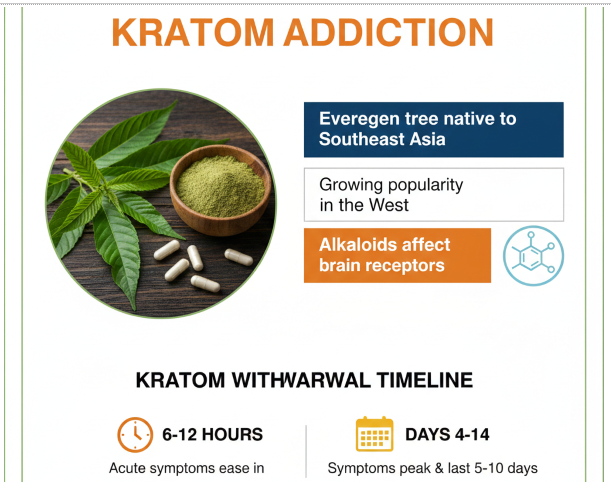
Kratom is an indigenous plant found in Southeast Asia and is extracted by using the leaf of M. speciosa. Traditionally, it has been used as a narcotic, an endurance-enhancing drug and a mood stabilizer. Kratom is nowadays sold in U.S. as powders, capsules, teas, and extracts.
Major active constituents of kratom are mitragynine and 7-hydroxymitragynine, which interact with the opioid receptors in the brain. Although the drug is not an opioid drug, it has opioid-like effects. Such an interaction is the reason why tolerance, dependence, and Kratom Withdrawal may occur in the course of time, particularly when it is used frequently and in large doses.
What is Kratom Withdrawal?
Kratom Withdrawal can be characterized as physical and psychological symptoms which appear when a person decreases or changes the frequent use of kratom. When the brain gets used to kratom and its effects, it starts depending on it to have a sense of balance. Upon withdrawal, there is a need to recalibrate the nervous system and it can be very uncomfortable or overwhelming.
The degree of withdrawal in individuals varies. Others report of mild and flu-like symptoms, and others report opioid withdrawal symptoms. Some of the factors include dosage, frequency, potency of the products being used, duration of use, and overall health. Even those people who believed that kratom is a harmless drug tend to be typically shocked at the uncomfortable feeling of quitting taking it.
Kratom Withdrawal Symptoms
Kratom Withdrawal may cause symptoms that are either physical or emotional. Common symptoms may include:
- Muscle aches and joint pain
- Fatigue and low energy
- Trembling, aggravation or impatience.
- Nausea, vomiting, or diarrhea
- Sweat, cold and a runny nose.
- Insomnia or disturbed sleep
- Depression or mood swings
- Strong cravings for kratom
The symptoms usually start between 12 and 24 hours of the final dose and can rise rapidly; thus early support is rather vital.
Kratom Withdrawal Timeline
The Kratom Withdrawal timeline is similar to the traditional opioid withdrawal but it is also shorter. A rough trend may be of the nature:
- Day 1-2: The patient reports the onset of the symptoms that are anxiety, muscle pain and craving.
- Day 3–5: Symptoms peak. The most likely severe changes are those that can take place in sleep, gastrointestinal function, and mood.
- Day 6-10: This is characterized by slow relief of the physical symptoms and is accompanied by homesickness and feeling down.
- Weeks 2-4: The psychological symptoms (anxiety or insomnia) may persist, although in most cases continue to improve.
Post-acute symptoms are intermittent and some people may be affected by them, especially when abused over a long term.
100% Confidential Support is Available 24/7
No matter what you’re going through, you’re not alone. Our dedicated team is here to provide a safe, judgment-free space where you can talk openly and honestly. Whether you need emotional support, resources, or just someone to listen.
We’re here for you—completely confidential and always respectful of your privacy. Call us today!
How Long Do Withdrawal Symptoms Last?
The withdrawal symptoms may take a period of a few days all the way to some weeks. Signs and symptoms are nausea, sweating, shakiness, restlessness, and anxiety. Withdrawal symptoms and the duration are influenced by the length of kratom use, dosage on which the drugs are taken and the involvement of other substances.
Kratom Detox and Tapering
Kratom detox usually happens either through a taper system or an abrupt system. Tapering is the process of reducing the dose gradually with time in order to ease Kratom Withdrawal symptoms. Such a method can be suitable in mild and moderate dependence.
Nonetheless, tapering should be structured, constant and properly planned. In their absence, they become stuck, relapse to greater amounts of doses and do not weigh the strength of products. Tapering might not be adequate in individuals with heavy use patterns, comorbid conditions of mental problems and those with a history of relapse.
Medical Detox for Kratom
Medical detox helps in the Kratom Withdrawal with supervision. Even though there is minimal life-threatening risk of kratom withdrawal, medical detox may help a lot to be comfortable and minimize the chances of a relapse.
In the clinical area, the practitioners track vital signs and manage the symptoms and complications, e.g., dehydration, insomnia, or great anxiety. They are particularly advised in medical detox when such people take high-potency extracts, have a mix of kratom and other drugs/substances, or have severe withdrawal symptoms.
Medications for Kratom Withdrawal
No single drug has been approved by FDA to specifically treat Kratom Withdrawal, although healthcare professionals can prescribe drugs to alleviate symptoms. These may include:
- Anti-nausea drugs and diarrhea drugs.
- Sleep aids for the short term.
- Narcotic painkillers in muscle aches.
- The restlessness can be mitigated using anxiety or blood-pressure medications.
Treatment decisions are determined by personal effect and history of medicine. Properly utilized, these supports can help the withdrawal process to become much easier.
Can the Effects of Kratom Withdrawal Be Reversed?
Yes. The majority of the Kratom Withdrawal effects are short-lived and become better with time and treatment. Re-equilibrium of the brain is very high when kratom use is stopped.
The symptoms eventually disappear, physical, then emotional, and cognitive healing. The levels of sleep, mood and energy slowly return to normal. When they are withdrawn, therapy, changes in lifestyle, and continuous assistance are provided, recovery is most effective in the long term.
Is Kratom Treatment Covered by Insurance?
Kratom treatment is not a universally covered substance. Though not necessarily named, kratom is commanding a lot of treatment time on the benefits covers of substance use disorder.
Outpatient programs, medical detox and counseling services can be covered in part or in full. Benefits can also be verified with an advanced treatment clinic that may help better explain the costliness and reduce financial unpredictability during the process of seeking assistance.

Find a Kratom Detox Center Near You
There are no more reasons to struggle against Kratom Withdrawal alone, even if it is impacting your health, relationships, or everyday work. With the help of professional assistance, the process of withdrawal becomes safe, comfortable, and more successful.
Solutions Healthcare provides evidence-based and generous care for kratom dependency. Our team is aware of the special issues of kratom withdrawal and approaches each step of its individual care.
Make a call today and talk to a specialist and take the first step to feeling like yourself again. In case you are battling a Kratom Withdrawal or you have a loved one who is going through the same situation, contact them and that could make a difference. At Solutions Healthcare, we are the ones who are here to assist, confidentially and with non-judgment.
Contact Solutions Healthcare
Battling with Drug and Alcohol Addition? Remember, you are not alone and we are here to help you!
Disclaimer
This content is for informational and educational purposes only and is not a substitute for professional medical advice, diagnosis, or treatment. Always consult a qualified healthcare provider before making changes to substance use or beginning detox or treatment.
Frequently Asked Questions About Kratom Withdrawal
What happens when you quit kratom?
When you quit kratom, your body reacts to the absence of the substance. This can trigger Kratom Withdrawal symptoms such as anxiety, muscle aches, fatigue, insomnia, and cravings. Symptoms typically begin within a day and peak within several days.
Does kratom mess with your serotonin?
Kratom can influence serotonin indirectly by affecting brain signaling and mood regulation. This interaction may contribute to mood changes, anxiety, or depression during use and Kratom Withdrawal, especially in people sensitive to neurotransmitter fluctuations.
What is the chronic toxicity of kratom?
Chronic kratom use has been linked to liver strain, hormonal changes, digestive issues, and cognitive effects. Long-term exposure may increase the risk of dependence and Kratom Withdrawal, particularly with high doses or concentrated extracts.
How does kratom affect the mind?
Kratom can alter mood, focus, and perception by interacting with opioid and other brain receptors. Some people feel temporary alertness or calm, while others experience anxiety, irritability, or brain fog, especially during Kratom Withdrawal.
What are 5 symptoms of withdrawal?
Five common Kratom Withdrawal symptoms include muscle aches, anxiety, insomnia, nausea, and strong cravings. The intensity varies based on usage patterns, but these symptoms often disrupt daily functioning without proper support.
What organs are affected by kratom?
Kratom primarily affects the brain but can also impact the liver, digestive system, and cardiovascular system. Long-term use increases stress on these organs, and Kratom Withdrawal may temporarily intensify discomfort as the body recovers.
How long do withdrawal symptoms last?
Most Kratom Withdrawal symptoms last 7–10 days, with peak intensity around days three to five. Some psychological symptoms, such as low mood or sleep problems, may persist for several weeks but gradually improve.
Is kratom withdrawal worse than opiate withdrawal?
Kratom withdrawal is generally considered milder than opioid withdrawal, but it can still be very uncomfortable. Some people report comparable symptoms, especially after heavy use, making professional support helpful during Kratom Withdrawal.
How long does insomnia last after kratom withdrawal?
Insomnia from Kratom Withdrawal may last one to three weeks. Sleep usually improves gradually as brain chemistry stabilizes, especially with healthy sleep routines and, when needed, short-term medical support.
What is the chronic toxicity of kratom?
Chronic toxicity from kratom may include liver inflammation, hormonal disruption, dependence, and mental health effects. These risks increase with long-term use and highlight why managing Kratom Withdrawal safely is so important.