
Quick answer: Postpartum psychosis is invariably temporary, and with the right treatment, it can get much better, and pretty soon, within a couple of weeks. If not treated, it can last for weeks or even months and can be more serious and dangerous. Immediate professional care is a must.
If you’re asking yourself, “How long does postpartum psychosis last?” it depends on whether or not treatment has been initiated and the person’s reaction to treatment. Postpartum psychosis is a rare and serious mental health emergency that may occur postpartum. According to our center, with treatment, symptoms may get better relatively fast; if not treated, symptoms may last for weeks or months.
Waiting and seeing if symptoms will go away is not safe when the person is hallucinating, extremely confused, has delusions or is thinking about harming the baby or him/herself. It is crucial to seek immediate medical help.
Key Takeaways
- Postpartum psychosis is a serious, although uncommon, mental health emergency.
- Typically, symptoms occur in the first couple of days post-delivery but may begin as late as 6 weeks post-delivery.
- Treatment that is utilized can result in recovery within a number of weeks.
- If not treated, symptoms can persist for weeks or months and can become more severe.
- May experience hallucinations, delusions, lack of clarity, paranoia, extreme mood swings, and other bizarre behaviors.
- Sometimes a person in the throes of psychosis may fail to realize that they need help.
- Sometimes, family members must be quick in order to ensure the protection of the parent and baby.
- With the right professional care, it is possible to make it through the treatment process.
What is Postpartum Psychosis?
Postpartum psychosis is a very serious and temporary mental disorder that may occur following childbirth. It affects a person’s ability to recognize what is real and may cause hallucinations, delusions, paranoia, confusion, disorganized thinking, insomnia, agitation, and significant mood changes. It’s regarded as a psychiatric emergency, as the question of safety can rapidly arise.
There is one important thing to remember regarding the duration of postpartum psychosis: Not everybody experiences it for the very same duration of time. Cleveland Clinic reports that individuals can recover within weeks if they receive treatment, but symptoms can last weeks or months if they go without treatment. When symptoms persist over time, without appropriate treatment, it is a cause for concern.
Postpartum Psychosis: Who is Affected?
Any woman or man who has had a baby can develop postpartum psychosis. It is most commonly experienced in the days after giving birth, but can be manifested up to 6 weeks after birth. However, not having had a diagnosis of mental illness at any other time does not rule out the possibility of postpartum psychosis.
There may be a higher risk among individuals with some mental health or familial history. Cleveland Clinic considers bipolar disorder (bipolar I disorder) to be an important associated factor. A history of postpartum psychosis also makes the likelihood of its recurrence more likely following another pregnancy.
How Common is Postpartum Psychosis?
Postpartum psychosis is a rare disorder. At the Cleveland Clinic, they estimate that it happens in 0.089 to 2.6 of every 1000 births. While it’s uncommon, its severity demands a heightened awareness of its symptoms by new parents, partners, family and healthcare workers alike.
Postpartum psychosis can impair judgement and sense of reality, and the woman suffering it may not be aware that anything is wrong. They might be noticed for odd behavior at first by a loved one. Families can reach out for professional help when changes in an individual’s behavior and abilities first occur to prevent them from worsening.
Symptoms of Postpartum Psychosis
All the symptoms can appear or happen suddenly, and the symptoms may appear very different than normal postpartum mood fluctuations. Two main symptoms are hallucinations and delusions. Even when others can show them that they are not true or did not occur, a person can hear or see what was not or believe something strongly.
Other symptoms can include mania, depression, paranoia, disorganized thoughts or behavior, severe insomnia, irritability, agitation, confusion and thoughts of harming oneself or the baby. These symptoms shouldn’t be attributed to all the work of having a new baby. They are in need of immediate professional assessment.
What Causes Postpartum Psychosis?
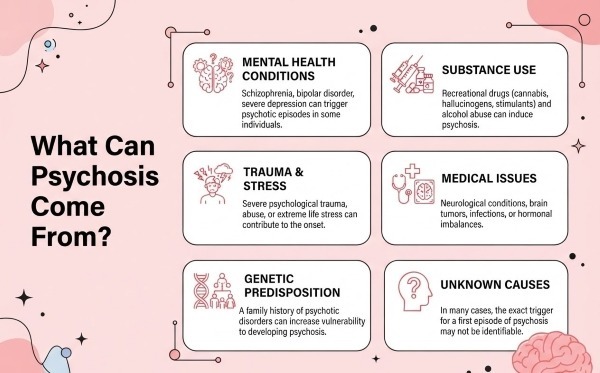
The cause of postpartum psychosis is not yet known. Researchers believe a mix of factors may be responsible, says Cleveland Clinic, such as mental health history, family history, sleep loss, and large fluctuations of a woman’s hormones after her baby is born. Some medical conditions can also be a cause for psychotic symptoms.
This implies that postnatal psychosis is not the result of being a bad parent and it is not to do with personal failure. People with the condition have complex biological and mental health issues. Knowing this can minimize feelings of shame and hopefully motivate families to seek care, instead of pointing out what ails the family member or friend.
How is Postpartum Psychosis Diagnosed?
A mental health professional can make a diagnosis of postpartum psychosis based on the symptoms and a physical and neurological examination. Blood or blood tests also may be ordered to look for medical conditions that may be contributing to the symptoms of psychosis. Sometimes imaging tests, such as a CT or MRI scan, may be used.
Postpartum psychosis is not diagnosed using any particular lab test. Rather, clinicians account for the person’s symptoms, recent childbirth, medical history and examination findings, and exclude other differential diagnoses. The importance of a detailed examination is that some illnesses that occur after childbirth can also result in behaviour, thinking or awareness changes.
How is Postpartum Psychosis Treated, And Is There A Cure?
Postpartum psychosis can be treated and recovery is possible. As it is a psychiatric emergency, inpatient mental healthcare is often required to allow trained professionals to keep an eye on the individual’s safety and to help with treatment. Treatment may involve taking certain medications, typically called mood stabilizers or antipsychotics for people who need them.
Another type of treatment that occasionally is given for psychosis is called electroconvulsive therapy (ECT). Treatment will be tailored as per symptoms, medical history and clinical judgement. What is important is that postpartum psychosis cannot be treated alone or “wait and see” at home.
If you are suffering from or know someone who is suffering from possible postpartum psychosis, reach out to Solutions Healthcare today to find out what the next step is towards receiving the necessary mental health treatment. When a risk of harm is present, respond quickly, call 911 and/or the local emergency number and/or proceed to the nearest emergency department.
How Do I Take Care Of Myself Or Manage Symptoms?
Some would not wish to attempt to treat postpartum psychosis without outside support. Since psychosis may affect the person’s ability to grasp reality, they may not realize that they require treatment. Family and friends are often the first ones to know about the issue and make the necessary care arrangements, Cleveland Clinic mentions.
Talk to your health professional if you are someone with a history of postpartum psychosis, bipolar disorder, or other serious mental health issues before or during a pregnancy. Planning with trusted family members can also be effective to determine what to do in case serious symptoms occur following delivery.
What Can I Expect If I Have Postpartum Psychosis?
If postpartum psychosis is diagnosed, it doesn’t mean that she won’t gain control over her emotions forever. Cleveland Clinic says postpartum psychosis is a transient disorder and that those who undergo treatment can get better fairly rapidly, sometimes in just a few weeks. There are a number of factors that can make each person’s recovery time different.
When considering how long postpartum psychosis lasts without treatment, there are people who have asked how long symptoms last and the answer is weeks or even months. But above all, if not treated, postpartum psychosis can worsen and be more harmful. Early treatment can be a huge factor in safety and recovery.
What Can I Do If A Loved One Shows Signs Of Postpartum Psychosis?
Do not dismiss unusual behavior, particularly if the person has recently given birth and seems ‘out of it.’ If they experience hallucinations, intense false beliefs, severe confusion, extreme agitation, severe insomnia or suggest that they intend to harm themselves or their infant, immediate action needs to take place.
Avoid contesting or openly disagreeing with delusions. Pay attention to safety and seek professional help. Call 911 or your local emergency service if there is an immediate threat. Perhaps a family member will need to assume the responsibility to get them help.

What’s the Difference Between Postpartum Psychosis, Postpartum Blues, and Postpartum Depression?
Despite experiencing similar symptoms, postpartum blues typically occur in a mild form and for a relatively brief period, while postpartum depression has more prolonged and more intense feelings of sadness, anxiety, hopelessness, or dysfunction. The postpartum period is different, as it can lead to a loss of touch with reality, hallucinations, delusions, paranoia, and confusion.
The exact time period of when postpartum depression ends or how long postnatal depression lasts typically can vary widely for those seeking the answer to the question of how long postpartum depression lasts. These conditions should not be confused with psychosis. If hallucinations, delusions, or severe confusion are present after birth, these symptoms should be treated as a medical emergency; do not wait for the symptoms to fade.
Get Help for Postpartum Psychosis
Still wondering how long postpartum psychosis lasts without treatment? The answer is, don’t delay and find out. The symptoms may persist for weeks or months and be more serious over time. It is imperative to get the expert help you need when dealing with postpartum psychosis.
To help families and people find the right mental health care, Solutions Healthcare can be a respite. Contact us today to find out about your concerns and the treatment options available.
Call the emergency medical service immediately if they feel they are seeing or hearing things that are not there, think they are hurt or that the baby is hurt, feel very confused, are afraid to harm themselves or the baby, or feel as though they are failing to care for the baby.
Frequently Asked Questions
What are the early warning signs of postpartum psychosis?
Early warning signs may include severe insomnia, unusual behavior, confusion, agitation, paranoia, rapid mood changes, hallucinations or unusual beliefs. Because symptoms can escalate quickly, sudden changes after childbirth deserve prompt professional evaluation.
What are the five stages of psychosis?
There is no universally accepted five-stage sequence for postpartum psychosis. Symptoms can appear suddenly, and people may experience different combinations of hallucinations, delusions, mood changes, confusion and disorganized behavior rather than progressing through fixed stages.
When is the highest risk time for postpartum psychosis?
Postpartum psychosis most commonly develops within several days after childbirth. However, Cleveland Clinic notes that it can occur up to six weeks after delivery, so concerning symptoms should be taken seriously throughout this period.
Would I know if I had postpartum psychosis?
Not necessarily. Postpartum psychosis can significantly affect a person’s ability to recognize what is real and understand that something is wrong. Family members or other trusted people may notice the changes and seek help first.
Who is most likely to get postpartum psychosis?
Anyone who recently gave birth can develop postpartum psychosis. Risk is higher among people with certain mental health histories, especially bipolar disorder, and those with a previous history or family history of postpartum psychosis or related conditions.
What are the three main symptoms of psychosis?
The most recognizable psychotic symptoms include hallucinations, delusions and significant disruption in thinking or behavior. Postpartum psychosis may also involve mania, depression, paranoia, insomnia, agitation and confusion.
Is postpartum psychosis a form of bipolar?
Postpartum psychosis is not simply another name for bipolar disorder. However, bipolar disorder is strongly associated with postpartum psychosis, and many people who experience postpartum psychosis have a history of bipolar disorder.
Can you give me an example of postpartum psychosis?
For example, a new parent might hear voices others cannot hear, become convinced that someone is trying to harm the baby despite no evidence, and become severely confused or unable to distinguish these beliefs from reality.
Will I ever be normal again after psychosis?
Yes. Recovery is possible, and postpartum psychosis is considered a temporary and treatable condition. Cleveland Clinic reports that people may recover relatively quickly with treatment, although the timeline varies from person to person.
Disclaimer
This article is intended for educational purposes only and is not a substitute for professional medical diagnosis, treatment or emergency care. Postpartum psychosis is a psychiatric emergency. If you believe someone may be at immediate risk of harming themselves or another person, including a baby, contact 911 or your local emergency service or go to the nearest emergency department.