Antidepressants aren’t helping anymore, and two names seem to be popping up at the same time: ketamine and esketamine. They sound very much alike, and it’s much trickier than it should be to choose between them.
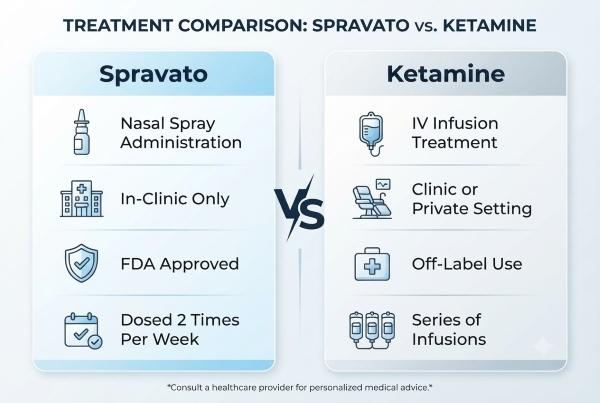
Both ketamine and esketamine work by blocking the NMDA receptors, and these are used to treat depression, but they are not the same. While ketamine itself is a racemic mixture injected intravenously off-label, esketamine, which is known as Spravato, is a nasal spray with just one half of ketamine’s molecule, approved by the FDA. They both work quickly, but don’t cover or monitor the same things.
That distinction is even more important if you or someone you know is experiencing substance abuse, as there are actual factors involved in these treatments based on your history.
Let’s take a closer look at what each treatment really is, the differences between them, and what you should consider when deciding which treatment is right for you.
What is Ketamine
Ketamine is a dissociative anesthetic, first approved decades ago for surgical use, that’s now used off-label at low doses to treat depression, particularly when standard antidepressants haven’t worked. It’s typically delivered through an IV infusion in a clinical setting.
Chemically, ketamine is a racemic mixture, meaning it contains two mirror-image molecules, R-ketamine and S-ketamine, combined together. This matters because esketamine isolates just one of those two halves.
If you’re weighing ketamine or esketamine treatment alongside a substance use history, Solutions Healthcare can help at (386) 866-3600.
What is Ketamine Used For
Ketamine is used medically for anesthesia and, off-label, for treatment-resistant depression, certain chronic pain conditions, and rapid relief of suicidal thoughts in some clinical settings. Its psychiatric use isn’t FDA-approved, but it’s widely supported by clinical research and experience.
Fact: Ketamine has been used as an anesthetic for more than fifty years before its antidepressant effects were studied.
Because it’s off-label for depression, protocols, dosing, and monitoring can vary meaningfully from one clinic to another, which is worth knowing before choosing a provider.
What is Esketamine Treatment
Esketamine treatment refers to Spravato, an FDA-approved nasal spray containing only the S-enantiomer of ketamine, used specifically for treatment-resistant depression and depression with suicidal thoughts. It’s administered under strict, standardized protocols in a healthcare setting.
Comparative research notes that esketamine binds to NMDA receptors with up to two to three times higher affinity than racemic ketamine, which allows for a lower dose volume through nasal administration.
What is Esketamine Used For
Esketamine is used specifically for treatment-resistant depression in adults who haven’t responded to at least two other antidepressants and for major depressive disorder involving suicidal thoughts or behavior. Its approval came with a required monitoring program due to sedation and dissociation risks.
If you’re trying to figure out whether esketamine or ketamine fits your situation, Solutions Healthcare can help you think it through at (386) 866-3600.
Because Spravato is FDA-approved for these specific uses, insurance coverage tends to be more consistent and predictable than it is for off-label ketamine treatment.
The Difference Between Ketamine and Esketamine
The core difference between ketamine and esketamine comes down to chemistry, regulation, and how each is delivered, even though both act on the same receptor system in the brain. Esketamine is essentially one specific piece of the ketamine molecule, refined and FDA-approved for a narrower purpose.
Feature | Ketamine | Esketamine (Spravato) |
Chemical makeup | Racemic mixture (R and S) | S-enantiomer only |
FDA status for depression | Off-label | FDA-approved |
Administration | IV infusion, clinician-administered | Self-administered nasal spray, in-clinic |
Dosing | Flexible, provider-determined | Standardized (56mg or 84mg) |
Insurance coverage | Typically self-pay | Often covered by insurance and Medicare |
Expert Advice: Ask any provider directly which form they use and why before starting treatment.
Esketamine vs. Ketamine: Comparing Cost and Access
Esketamine tends to be more accessible through insurance, while ketamine infusions are typically self-pay, often ranging from roughly $400 to $650 per session depending on the clinic. That cost difference can meaningfully shape which option is realistic long-term.
Spravato is commonly covered by commercial insurance and Medicare for eligible patients
Insurance approval for Spravato can take days to weeks due to prior authorization requirements
IV ketamine is usually paid out-of-pocket, with costs varying widely by provider and region
Ongoing treatment costs add up differently depending on how many sessions each option requires
Esketamine vs. Ketamine: Comparing Effectiveness
Research generally shows similar effectiveness between ketamine and esketamine for treatment-resistant depression, though some studies suggest IV ketamine may achieve remission in fewer sessions. Neither treatment works identically for everyone.
An observational study published in The Journal of Clinical Psychiatry found that intravenous ketamine and intranasal esketamine produced similar response and remission rates, though ketamine infusions required significantly fewer treatments to reach that point.
Both treatments can ease suicidal thoughts within hours of the first session, which is part of why they’ve become valuable options for acute depressive crises when time genuinely matters.
Esketamine vs. Ketamine: Which Carries More Misuse Risk
Both ketamine and esketamine are Schedule III controlled substances with documented misuse potential, and research has found their subjective effects and “liking” scores to be similarly rated in studies of recreational drug users. Neither treatment is risk-free from a substance use standpoint.
This is a genuinely important consideration for anyone with a personal or family history of substance use disorder. It doesn’t necessarily rule either treatment out, but it does mean the conversation with your provider needs to be honest and thorough before you begin.
Both require in-clinic administration and observation, reducing opportunity for misuse during treatment
Esketamine’s REMS monitoring program adds an additional layer of oversight
A thorough screening for substance use history should happen before either treatment begins
Ongoing recovery check-ins matter more, not less, for anyone in recovery from substance use
Which Treatment Is Right for You
The right choice between ketamine and esketamine often comes down to your depression severity, insurance situation, comfort with IV versus nasal administration, and any substance use history that needs to be factored in. There’s no single right answer for everyone.
Questions worth discussing with a provider include:
- Have I already tried at least two other antidepressants without success?
- Does my insurance realistically make one option more accessible than the other?
- Do I have any history of substance use that changes how carefully this should be monitored?
- Am I looking for the fastest possible relief or a more standardized, insurance-friendly path?

Support Navigating Ketamine and Esketamine Decisions at Solutions Healthcare
If you’re weighing ketamine or esketamine treatment while also managing a substance use history or co-occurring mental health condition, Solutions Healthcare offers evidence-based, dual-diagnosis care across Central Florida to help you make that decision safely. We don’t administer ketamine or esketamine ourselves, but we regularly help clients and families sort through exactly these kinds of treatment decisions.
Our continuum of care includes dual-diagnosis care for co-occurring depression and substance use concerns, flexible intensive outpatient and outpatient treatment options, and residential treatment for those who need more structured, immersive support first.
Our family therapy program helps loved ones stay informed and involved throughout the process.
Across our four Central Florida treatment centers, our clinical team is accredited by The Joint Commission and licensed through the state of Florida, with every plan built around a genuine, individualized assessment.
Reach out through our contact page or call us directly at (386) 866-3600 to talk through your options with someone who understands the full picture.
FAQs
What is the difference between ketamine and esketamine?
Ketamine is a racemic mixture containing two mirror-image molecules and is used off-label for depression, while esketamine contains only one of those molecules. Sold as Spravato, esketamine is FDA-approved specifically for treatment-resistant depression and administered under strict clinical monitoring.
What is ketamine?
Ketamine is a dissociative anesthetic that has been safely used in medicine for decades during surgery and emergency care. Today, it is also used off-label in carefully supervised settings to treat treatment-resistant depression and certain chronic pain conditions.
What is ketamine used for?
Ketamine is used medically for anesthesia and procedural sedation. In mental health care, it is prescribed off-label for treatment-resistant depression, some chronic pain conditions, and rapid reduction of suicidal thoughts under close medical supervision in specialized clinical settings.
What is esketamine treatment?
Esketamine treatment uses Spravato, an FDA-approved nasal spray containing a purified form of esketamine. It is administered only in certified healthcare facilities, where patients remain under observation afterward to monitor blood pressure, side effects, and overall safety throughout each treatment session.
What is esketamine used for?
Esketamine is approved to treat adults with treatment-resistant depression who have not improved after trying at least two antidepressants. It is also approved for certain cases of major depression with acute suicidal thoughts when combined with comprehensive psychiatric treatment.
Is esketamine more effective than ketamine?
Current research suggests ketamine and esketamine produce similar overall improvements in treatment-resistant depression. Some studies indicate intravenous ketamine may achieve remission more quickly for certain patients, though individual responses vary and both require careful medical supervision and ongoing evaluation.
Does insurance cover esketamine or ketamine?
Because esketamine is FDA-approved, many insurance plans, including Medicare, are more likely to provide coverage when eligibility requirements are met. Intravenous ketamine for depression is commonly considered an off-label treatment and is often paid for out of pocket.
Is ketamine or esketamine addictive?
Yes. Both ketamine and esketamine are Schedule III controlled substances with documented misuse potential. However, when administered under medical supervision using standardized dosing and careful screening, the risk is significantly reduced compared with unsupervised recreational use.
Which is safer, ketamine or esketamine?
Both treatments have similar safety profiles when provided by qualified medical professionals. Esketamine includes additional safeguards through the FDA’s Risk Evaluation and Mitigation Strategy (REMS) program, requiring administration and monitoring in certified healthcare facilities after every treatment session.
Can someone with a substance use history safely try ketamine or esketamine?
Possibly, but only after a comprehensive evaluation by a clinician experienced in addiction medicine. Because both medications carry misuse potential, providers carefully weigh the benefits, risks, recovery history, and available supports before recommending either treatment option.
How quickly do ketamine and esketamine work for depression?
Unlike traditional antidepressants that often require several weeks, ketamine and esketamine can begin reducing depressive symptoms, including suicidal thoughts, within hours for some individuals. Sustained improvement typically requires multiple supervised treatments combined with ongoing outpatient mental health care.
Does Solutions Healthcare provide ketamine or esketamine treatment?
No. Solutions Healthcare does not administer ketamine or esketamine therapy. However, the organization provides comprehensive dual-diagnosis treatment and can help individuals explore these options safely while addressing co-occurring substance use disorders and other depression conditions.
References
- Comparison of SPRAVATO and Ketamine – J&J Medical Connect
- Psychiatrist.com – Study: Intravenous Ketamine vs. Intranasal Esketamine
- Footprints to Recovery – Ketamine vs. Spravato: What’s the Difference?
- NIH/PMC – Ketamine and Esketamine for Treatment-Resistant Depression
- Christian Health – SPRAVATO (Esketamine) vs. Ketamine for Treatment-Resistant Depression
- Mid City TMS – Understanding Esketamine vs Ketamine for Treatment-Resistant Depression