
Quick Answer: Benadryl and alcohol should not be used together because both slow down the central nervous system. When used together, they could result in increased drowsiness. Uncoordinated movements, breathing problems, and accidents. Small amounts of alcohol can add up to these effects, particularly for people or individuals who have health problems.
After all, many people think that taking Benadryl and alcohol is a safe mix. Because Benadryl (diphenhydramine) is an over-the-counter medication, many think it won’t have any effect on a drink. The combination of Benadryl and alcohol can, however, intensify the effects of Benadryl, leave people unable to judge properly and cause severe health risks. One should know how alcohol interacts with Benadryl, whether it is used as a sleep aid, allergy medicine or for itching.
Key Takeaways
- Both Benadryl and alcohol are central nervous system (CNS) depressants.
- Taking them together produces greater drowsiness, poor coordination, and dizziness.
- Just one drink of alcohol can make the medication take a greater effect.
- Do not drink alcohol while taking Benadryl.
- In the event of a mix-up and you are having serious symptoms, immediately seek medical help.
What is Benadryl?
Benadryl is the brand name for diphenhydramine, one of the first generation of anti-histamines which have been used to treat:
- Seasonal allergies
- Hay fever
- Skin itching
- Hives
- Motion sickness
- Cold symptoms
- Temporary insomnia
Benadryl is not a ‘nonsedating’ antihistamine. It is for this reason that it frequently makes people drowsy, slow to react, and less alert.
Can You Mix Benadryl and Alcohol?
The simple response is no.
Doctors usually do not recommend that people take alcohol when taking Benadryl. Both substances reduce brain activity and make you sleepy. As a group, their effects are compounded, greater than the sum of its parts.
Some people may feel sleepy, while others may become very confused, or may have trouble breathing. The effect depends on the individual, their age, body weight, health condition, dosage of medicine and amount of alcohol consumed.
Can you mix Benadryl with alcohol?
Is Mixing Benadryl and Alcohol Bad?
Yes. There is no evidence that it is safe to mix Benadryl and alcohol, as both are central nervous system depressants.
- Potential consequences include:
- Extreme sleepiness
- Poor balance
- Slower reflexes
- Reduced concentration
- Impaired driving ability
- Risk of falls is greater
- Accidental injuries
If other drugs, sleeping pill yergon, narcotic drugs, or anti-anxiety drugs are added to the risk, these risks are further increased.
Why Is Mixing Benadryl and Alcohol Dangerous?
Both substances have an effect on the same parts of the brain.
When taken together, they might:
- Intensify sedation
- Slow breathing
- Reduce oxygen delivery
- Increase confusion
- Affect decision-making
- Increase accident risk
It can also be hard to spot potentially serious signs as the person may think, “Oh I am very tired.
The risk could be greater if a person has sleep apnea, COPD, asthma or other breathing disorders.
How Benadryl and Alcohol Affect the Brain
Benadryl also inhibits histamine receptors that control alertness. Alcohol also slows a brain cell’s communication with other brain cells.
Combined, they can lead to:
- Slowed thinking
- Memory problems
- Delayed reaction time
- Poor coordination
- Difficulty concentrating
- Impaired judgment
After the combination of Benadryl and alcohol, it will be more difficult to drive, use machinery, swim or even walk safely.
Can One Drink Be Safe?
Many ask if one drink is OK.
There is no ‘safe dose’ for every person.
Risk is affected by factors such as:
- Benadryl dosage
- Alcohol amount
- Age
- Liver function
- Other medications
- Medical conditions
Others can be severely affected even after just one drink.
Earlier, you took Benadryl, so you should steer clear of using alcohol at all until you are certain that it has passed from your body.
Who is Most at Risk?
Some people are far more susceptible to the dangers of Benadryl and alcohol.
These include:
- Adults over 65
- Those suffering liver disease.
- People who have asthma or chronic obstructive pulmonary disease (COPD)
- People who take sleeping pills;
- Those taking opioid painkillers
- People who use anti-anxiety drugs
- Individuals having trouble with balance
- People who have a past of alcohol abuse
The elderly population is particularly susceptible since Benadryl can cause confusion and falls.
Benadryl and Alcohol Side Effects
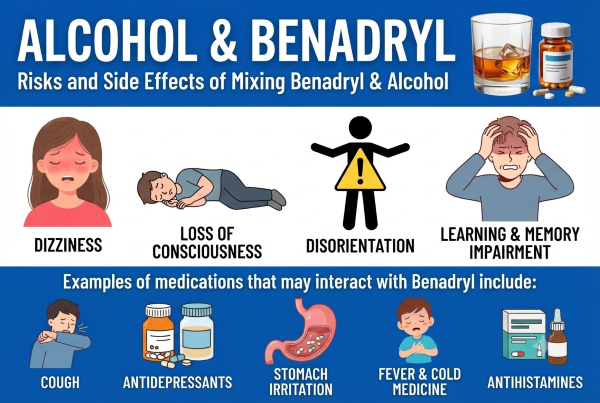
Some side effects are likely to occur, such as:
- Severe drowsiness
- Blurred vision
- Dry mouth
- Dizziness
- Thinking
- Poor coordination
- Headache
- Nausea
- Fatigue
More severe symptoms can occur, such as:
- Trouble breathing
- Loss of consciousness
- Irregular heartbeat
- Confusion
- Hallucinations (rare)
Accidental overdose if other sedating meds are used
Symptoms of Benadryl and Alcohol Mixing
Symptoms are either mild or severe.
Watch for:
- Extreme sleepiness
- Difficulty waking up
- Confusion
- Slurred speech
- Poor balance
- Slow breathing
- Vomiting
- A blue tint at lips and/or fingertips
- Unresponsiveness
If the person’s breathing rate slows down a lot or they cannot be roused, call an ambulance right away.
Need Professional Support?
When it becomes difficult to control our use of alcohol, or when we find ourselves trying to drink alcohol with our medicine, it’s time to get professional guidance.
Solutions Healthcare offers empathetic and discreet treatment for people who are affected by alcoholism, drug addiction or underlying mental health issues.
Our knowledgeable and qualified treatment professionals develop personalized recovery plans that support long-term wellness.
Call today and find out how the path to recovery can start safely and confidently.
Benadryl and Alcohol Withdrawal
Following proper usage, Benadryl should not produce any withdrawal effects.
Alcohol withdrawal can be severe, however, and even life-threatening.
Symptoms may include:
- Tremors
- Anxiety
- Sweating
- Increased heart rate
- Nausea
- Insomnia
- Seizures
- Delirium tremens (DTs)
People who drink a lot regularly before quitting alcohol should seek medical help first.
Benadryl and Alcohol Reaction
Everyone reacts differently.
Possible reactions include:
- Increased sedation
- Faster intoxication
- Poor judgment
- Memory impairment
- Difficulty walking
- Slower breathing
- Increased accident risk
However, individuals might react to it more than they would normally do because alcohol affects the body’s ability to metabolize certain medications.
How Long Should You Wait Before Drinking?
Specific answers vary for different people.
The “half-life” of Benadryl is several hours, but varies depending on:
- Age
- Liver function
- Kidney function
- Dose taken
- Overall health
It is recommended by most health care providers that people refrain from drinking alcohol until the drug has left their system. Ask your healthcare provider or your pharmacist for personalized advice if you need it.
Alcohol Misuse and Medication Safety
Alcohol in combination with medications is involved in many emergency room visits.
To reduce risk:
- Thoroughly read the labels of medications.
- Follow dosing instructions.
- Don’t drink alcohol while taking medicines that make one sleepy.
- Make sure to share information with your health care provider about all of your medications (prescription and non-prescription, including supplements).
- Do not give more than one sedative at a time without a doctor’s prescription.
Truthfully, medication safety plays a role in your physical and mental well-being.
Tips for Staying Safe
Consider ways to keep safe:
- DO NOT DRINK ALCOHOL INTENTIONALLY WHILE TAKING BENADRYL.
- If it is okay with your healthcare professional, take a non-drowsy allergy medicine.
- Consult a pharmacist before taking any new medicines.
- Don’t operate a vehicle while on Benadryl.
- Stay hydrated.
- Store medications safely.
- If symptoms are severe, seek medical help!
Don’t let serious health problems develop later; make informed decisions today.
Take the First Step Toward Better Health
Alcohol use can affect your health, relationships, and daily life and if this happens, you don’t have to deal with it on your own.
Solutions Healthcare offers private evaluations, clinically proven programs, and caring treatment for alcoholism and drug abuse and addiction issues to individuals and families affected by these disorders. We are here to assist you develop more healthy routines and long-term healing.
Call Solutions Healthcare today for information about your treatment options and to embark on your path towards a healthier future.
Frequently Asked Questions
How long after taking Benadryl is it safe to drink?
Most people should wait until Benadryl has completely worn off before drinking alcohol. Because metabolism varies, ask your healthcare provider or pharmacist for guidance based on your dose, age, and overall health.
How many hours after antihistamine can I drink alcohol?
The timing depends on the specific antihistamine. Benadryl lasts longer than many newer allergy medications. Always review the medication label or speak with a pharmacist before consuming alcohol after taking any antihistamine.
What should you never mix Benadryl with?
Avoid combining Benadryl with alcohol, opioids, sleeping pills, anxiety medications, muscle relaxants, or other medicines that cause drowsiness unless specifically directed by your healthcare provider.
Why does my neck hurt after drinking alcohol?
Neck pain after drinking may result from dehydration, muscle tension, inflammation, poor sleeping posture, or an unrelated medical condition. Persistent or severe pain should be evaluated by a healthcare professional.
Can I have one drink with Benadryl?
Even one alcoholic drink may increase Benadryl’s sedative effects. Because there is no guaranteed safe amount, avoiding alcohol while taking Benadryl remains the safest recommendation.
Can I drink alcohol after 2 hours of taking medication?
Not necessarily. Many medications—including Benadryl—remain active well beyond two hours. Always follow medication guidance and consult your healthcare provider before drinking alcohol.
What are the first signs of liver damage from alcohol?
Early signs may include fatigue, nausea, abdominal discomfort, loss of appetite, and yellowing of the skin or eyes. Liver disease may develop gradually, so medical evaluation is important.
Why am I suddenly so sensitive to alcohol?
Age, medications, liver function changes, dehydration, illness, and reduced alcohol tolerance can all increase sensitivity. Discuss unexpected reactions with your healthcare provider.
How long does alcohol stay in your system?
Alcohol metabolism varies among individuals. Factors including body weight, liver health, food intake, and the amount consumed all influence how long alcohol remains in the body and affects performance.
Disclaimer
This article is intended for educational purposes only and should not replace professional medical advice, diagnosis, or treatment. Never stop, start, or combine medications without consulting your healthcare provider. If you experience severe symptoms after mixing Benadryl and alcohol—including difficulty breathing, loss of consciousness, or seizures—seek emergency medical attention immediately.
References
- Healthline. Benadryl and Alcohol: Is It Safe to Mix Them? https://www.healthline.com/health/allergies/benadryl-alcohol
- U.S. National Library of Medicine (MedlinePlus). https://medlineplus.gov
- National Institute on Alcohol Abuse and Alcoholism (NIAAA). https://www.niaaa.nih.gov
- U.S. Food & Drug Administration (FDA). https://www.fda.gov