
In This Blog
- Defining the difference between harmful use and physical dependency
- Identifying common behaviors associated with problematic drinking
- Understanding the progression toward chronic dependency
- The physical and psychological impacts of long-term consumption
- How to find structured support and professional guidance
The difference between the levels of drinking is a critical aspect to understand when we discuss the problems of alcohol addiction. Although the terms “abuse” and “alcoholism” are commonly used interchangeably in everyday discourse, they are at different ends of a continuum of substance use. Alcohol abuse is normally the habit of consumption which leads to adverse effects, yet may not actually encompass a physical dependence on the drug.
Conversely, alcoholism, or extreme alcohol use disorder, is defined by physical desire and loss of control to drink. The understanding of such differences will enable individuals and families to determine the proper level of care to achieve long-term wellness.
Expert Advice: Early identification of problematic habits can prevent the progression toward chronic dependency issues.
What is Alcohol Abuse?
Alcohol abuse refers to a tendency of using the substance in a manner that leads to continuous troubles in the life of an individual. It could involve absenteeism, legal problems such as drunken driving or poor personal relations.
At this stage, an individual may still be able to stop drinking on their own if they choose to. However, the continued choice to drink despite these harmful outcomes is a primary indicator of a growing problem.
What Is Alcoholism and Dependency?
Alcoholism is often viewed as the more severe end of the alcohol addiction spectrum. It involves a physical or psychological dependency where the body requires alcohol to function normally.
Key characteristics of this stage include:
- Developing a tolerance, requiring more alcohol to feel the same effects.
- Experiencing withdrawal symptoms like tremors or nausea when stopping use.
- A persistent, unsuccessful desire to cut down or control drinking.
- Spending a significant amount of time obtaining, using, or recovering from alcohol.
Difference Between Alcohol Abuse and Alcoholism
The primary difference lies in the level of control an individual has over their consumption. Those who abuse alcohol may drink excessively at a party or during a stressful week but can still function without it.
Individuals struggling with dependency often feel they have no choice but to drink. The substance becomes the central focus of their daily life, overshadowing hobbies, career goals, and family obligations.
FACT: Problematic drinking exists on a spectrum ranging from mild to severe.
Feature | Alcohol Abuse | Alcoholism (Dependency) |
Control | Can often stop if desired | Loss of control over intake |
Physical Need | No physical withdrawal | Withdrawal symptoms present |
Tolerance | May or may not be present | High tolerance is common |
How Does Alcoholism Progress?
It is common for alcohol abuse to progress into a more severe state of alcohol addiction over time. The brain begins to adapt to the constant presence of the substance, altering its natural chemistry.
What starts as a coping mechanism for stress can slowly turn into a physical necessity. This progression is often subtle, making it difficult for the individual to realize they have crossed the line into dependency.
Physical Health Risks of Alcoholism
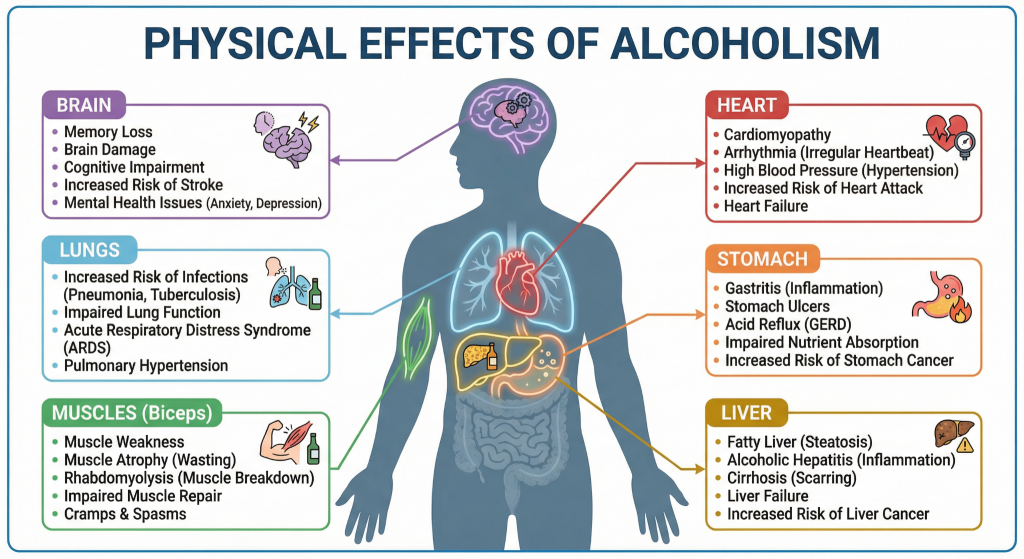
Both abuse and dependency take a heavy toll on the body’s internal systems. The liver is frequently the most impacted organ, as it must work harder to filter out toxins.
Long-term heavy consumption is also linked to:
- Increased blood pressure and risk of heart-related issues.
- Weakened immune system, making the body more susceptible to illness.
- Permanent damage to brain cells and cognitive functions.
- Nutritional deficiencies caused by the displacement of healthy food.
To investigate the opportunities of the supervised support, call Solutions Healthcare
How Alcohol Affects Mental Health
Alcohol often worsens underlying mental health challenges like anxiety or depression. While it may provide temporary relief, the “rebound” effect usually leaves the person feeling worse than before.
This creates a dangerous cycle where the individual drinks more to escape emotional pain. Professional support is necessary to address both the drinking habits and the co-occurring mental health concerns.
If you need help, Solutions Healthcare offers support for your recovery.
Problematic drinking affects more than just the individual; it impacts the entire community. Work productivity declines, and the risk of accidents increases, creating broader social challenges.
Maintaining honesty with oneself and others is a critical part of the journey. Seeking help is a responsible action that benefits the individual and their loved ones.
How Is Alcohol Use Assessed?
Professionals use standardized criteria to determine the severity of a person’s relationship with alcohol. These assessments look at behaviors over the past year to identify the best course of action.
Assessments often involve:
- Questions about cravings and the inability to stop drinking.
- Evaluating the impact on physical health and social roles.
- Checking for signs of tolerance and physical withdrawal.
- Discussing the frequency and quantity of alcohol consumed.
Benefits of Alcohol Treatment Programs
Structured programs provide the environment needed to break the cycle of alcohol addiction. These services offer a combination of monitoring and therapeutic support.
By removing triggers and providing professional oversight, individuals can focus entirely on their wellness. This structure is especially important during the early stages of making a significant lifestyle change.
What Are Long-Term Recovery Goals?
Recovery is a continuous process that involves more than just abstinence. It requires building a life where alcohol is no longer needed as a tool for coping.
Success is measured by improved relationships, better physical health, and a restored sense of purpose. Ongoing support through peer groups and individual therapy helps maintain this progress over many years.
Support Type | Primary Focus | Ideal For |
Individual Support | Personal triggers and history | Deep emotional work |
Group Support | Shared experience and community | Reducing isolation |
Aftercare | Relapse prevention and stability | Maintaining long-term goals |
How to Build a Healthy Lifestyle
Choosing a different path involves developing new hobbies and healthy coping mechanisms. This might include regular physical activity, better nutrition, and mindfulness practices.
Surrounding oneself with a supportive network of people who encourage wellness is vital. These connections provide the accountability needed during challenging times.
Solutions Healthcare provides professional guidance and resources via phone today.

How to Handle Triggers and Cravings
Identifying the people, places, or emotions that spark the urge to drink is a key skill in recovery. Professionals help individuals develop strategies to manage these moments without returning to use.
Cravings are a natural part of the healing process as the brain recalibrates. With time and the right tools, these urges become less frequent and easier to handle.
Why Continued Care Matters in Alcohol Abuse
Successful recovery often involves moving through different levels of support as needs change. This ensures that the individual always has the appropriate amount of guidance for their current stage.
Continuity of care prevents gaps in support that could lead to a setback. A dedicated team monitors progress and adjusts the plan to ensure long-term stability and health.
Solutions Healthcare offers comprehensive support services and personalized guidance for those seeking a healthier lifestyle. Their team focuses on providing a structured environment where individuals can address their habits through evidence-informed methods and ongoing peer support.
Medical Disclaimer: This article is for informational purposes only and is not a substitute for professional medical advice.
Key Takeaways
- Alcohol abuse is defined by harmful consequences, while alcoholism involves physical dependency.
- Tolerance and withdrawal are primary indicators that a habit has progressed toward dependency.
- Both levels of consumption cause significant damage to the liver, heart, and brain.
- Alcohol addiction often co-occurs with mental health challenges like anxiety or depression.
- Professional programs provide the structure and accountability needed for long-term health.
FAQs
Can someone abuse alcohol without being addicted?
Yes, it is possible for someone to abuse alcohol by drinking excessively or in dangerous situations without having a physical dependency. However, frequent abuse often leads to the development of a more severe disorder over time as the brain adapts to the substance.
What is the main sign of alcoholism?
The main sign of alcoholism is a loss of control over consumption and a physical need for the substance. This often manifests as experiencing withdrawal symptoms when trying to stop or needing increasingly larger amounts of alcohol to feel its effects.
Is alcohol addiction a chronic condition?
Yes, alcohol addiction is considered a chronic condition that requires ongoing management. While it cannot be “cured” in a traditional sense, individuals can lead healthy, stable lives through continuous support, lifestyle changes, and professional guidance.
Why do I experience tremors after drinking?
Tremors are a common sign of physical withdrawal, indicating that the body has become accustomed to alcohol. When alcohol levels drop, the nervous system becomes overactive. If you experience these symptoms, it is important to seek professional help immediately.
How do I talk to a professional?
Talking to a professional begins with a simple, confidential conversation about your habits and concerns. They will listen without judgment and help you understand your options for support. You can reach out to a support center or your primary provider to start.