Alcoholic personality traits can include defensiveness, mood changes, bad judgment, isolating yourself, impulsive decision-making, and irritability. There is no single alcohol-immersed personality type, however. Solutions Healthcare can assist individuals and help them understand if these behaviors are indicative of alcohol use disorder and what type of treatment would be appropriate.
What are Alcoholic Personality Traits?
Alcoholic personality traits are behavioral or emotional patterns that can go hand in hand with a difficulty consuming alcohol, including defensiveness, secrecy, irritability, impulsivity, withdrawal from others, or making persistent commitments to quit. Alcohol use disorder is more serious than just the above signs, it has to be professionally assessed.
Introduction
Knowing alcoholic personality traits can help if one finds that the person’s thoughts, words or actions are changing when they drink. Someone once deemed to be reliable can become unreliable. A calming person might get suddenly angry when drinking. Another can become reclusively focused or drink more and more.
However, there is a difference in calling someone an alcoholic because it harms the person, the family, and the community. Alcohol use disorder (AUD) is a medical condition characterized by problems with alcohol use despite harmful outcomes. According to the National Institute on Alcohol Abuse and Alcoholism (NIAAA), there is a spectrum of AUD and it can be mild or severe.
Judgment of a person’s character isn’t the aim. Aimed at identifying a possible pattern that might signify a problem and eliciting appropriate support.
Key Takeaways
- No single alcoholic ‘personality’ is medically acknowledged.
- Excessive drinking may lead to impaired judgment, unknown to friends and family, and irritability/impulsivity.
- Alcoholic character traits may become more apparent as alcohol consumption increases or as control decreases.
- Alcohol use disorder can’t be diagnosed by physical appearance.
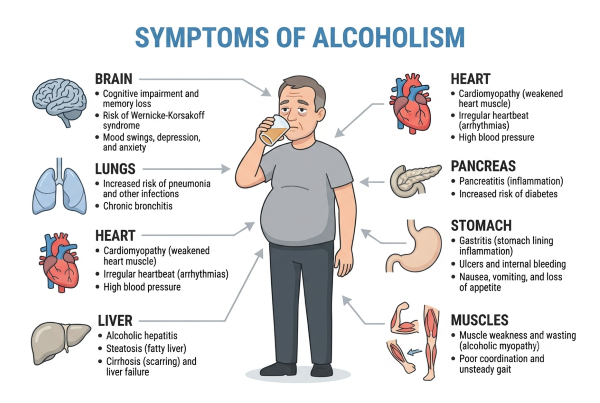
- Liver damage caused by alcohol is a possibility before there are apparent symptoms.
- Treatment may involve counseling, behavioral therapies, medications and recovery support.
Solutions Healthcare can aid people in identifying treatment options for their needs.
What Alcoholic Personality Traits May Look Like
1. Irritability and mood changes
Regular drinking can be linked to irritable mood, anxiety, anger, or big fluctuations in mood. These changes can be particularly prominent during the withdrawal process from alcohol or when a person is unable to consume alcohol as desired.
2. Defensiveness about drinking
When family members ask questions about alcohol use, it’s possible to get defensive. They might downplay their drinking, deflect the conversation, get aggressive, or make excuses when they get into more trouble for drinking.
3. Secrecy and dishonesty
It can become a habit of hiding bottles, minimizing the amount of alcohol, or fibbing about it. Though secrecy doesn’t always indicate addictive patterns, repeated attempts to cover up drinking do warrant attention.
4. Impulsive or risky decisions
Alcohol may affect judgment, and make it more likely to make an unsafe decision. Another possibly more alarming common drunk personality trait is when people continue to drink even in the face of injury or damaging consequences, such as impairing the workplace, relationships with others, bankruptcy, or hurting oneself.
5. Social withdrawal
A person could discontinue activities once they were fun in favor of the importance of drinking. SAMHSA also lists various signs to watch for as indicators of substance use issues, such as changes in friendships, hobbies, appearance, behavior, or relationships.
6. Difficulty keeping commitments
When alcohol starts impacting daily responsibilities, missed appointments, broken promises, poor work attendance or repeatedly failing to follow through may begin.
While these patterns are similar to those depicted in the literature surrounding addiction and in clinical conversations, they are not a personality diagnosis. However, American
Addiction Centers explains that there are behavioral struggles incurred by individuals whose parents suffer from addiction and this is not synonymous with addiction for the individual.
Why Can Alcohol Change Personality and Behavior?
Alcohol impacts the brain and nervous system such as those that impact judgment, impulse control, memory, and emotional control. Chronic, heavy drinking can, therefore, affect a person’s response to stress, conflicts and everyday circumstances.
However, other factors like genes, environment, drinking habits, trauma, stress and other illnesses can also increase vulnerability to AUD. NIAAA says risk is caused by both genes and environment.
For this reason, to look for an alcoholic personality type is a deception. The behavior of two people with AUD might be quite different. One may be aggressive and impulsive, while the other is withdrawn and emotionally distant.
Alcoholism can be another form of coping mechanism. When someone is feeling anxious, depressed, lonely, or stressed and has not been able to resolve these feelings, she may resort to drinking as a way to get temporary relief from painful emotions. In time, that coping mechanism can be more and more difficult to manage.
How Is Alcohol Use Disorder Identified?
No personality test can be used to diagnose alcoholism. Clinical assessment of alcohol-related symptoms, based on a set of diagnostic criteria, is used to assess drinking behaviors and symptoms.
NIAAA defines AUD as the presence of at least two of the symptoms in 1 month. These may be an increase in the amount of drinking, an attempt to reduce the amount of drinking that failed, a craving to drink, spending significant time associated with drinking or being drunk, neglect of work or personal obligations, feeling a need to drink, developing tolerance, or experiencing withdrawal.
Physical health, mental health, medicines, family history, how often you drink, how much you drink, previous quitting attempts, and effects of alcohol on your life would also be important factors in a professional assessment.
But, importantly, a person doesn’t have to be visibly intoxicated every day in order to suffer from AUD. Similarly, one person can drink alcohol but not necessarily exhibit all symptoms to be considered diagnosed. The complete pattern, not just the appearance, is a factor to consider in a proper assessment.
Can Alcoholic Personality Traits Improve?
Yes. Treatment of alcohol problems may create a space for healthier behaviors and emotions to emerge if problematic drinking is interfering with these things.
Behavioral therapy
Counselling can assist an individual in determining their drinking triggers, there are unhealthy thinking patterns, healthy coping skills and communication. Treatment options depending on the individual may include cognitive behavioral therapy, motivational techniques, being mindful, and family/partner therapy.
Drugs for alcoholism.
Treatment may include FDA-approved medications for the correct patient. NIAAA lists several treatments approved for AUD, including naltrexone, acamprosate, and disulfiram. They work in a different way and should not be used without their doctor’s supervision. You can read more about medication-assisted treatment protocols.
Medical detox (if needed!)
Those who have been drinking heavily for an extended period of time should not presume that quitting alcohol all at once is always safe. Alcohol withdrawal can be life-threatening and include seizures and/or delirium tremens. Special importance when dependency is suspected: medical evaluation.
Ongoing recovery support
Treatment doesn’t always stop upon detox. They can maintain progress through continuing counseling and recovery support, family involvement, plans for relapse prevention and medical follow-up.
At Solutions Healthcare, we are here to help you take another step forward if alcohol is affecting your behavior, relationships or ability to engage in your day-to-day life. Call today to get answers to your questions discreetly and consider treatment options that are right for you.
100% Confidential Support is Available 24/7
No matter what you’re going through, you’re not alone. Our dedicated team is here to provide a safe, judgment-free space where you can talk openly and honestly. Whether you need emotional support, resources, or just someone to listen.
We’re here for you—completely confidential and always respectful of your privacy. Call us today!
How Can Problem Drinking Be Reduced?
To prevent alcohol-related issues, it’s important to monitor drinking habits before alcohol-related problems become an issue.
Practical steps include:
- Monitor beverages consumed both in frequency and volume.
- Be aware of the use of alcohol as a coping mechanism for stress or negative feelings.
- Don’t drink in a place where it may pose safety concerns.
- If you’re having trouble trying to cut back, talk to your healthcare professional.
- Pay attention to trusted family members’ concerns.
- Work on your anxiety, depression, trauma, or other issue within a professional setting.
- Develop more beneficial stress, sleep, loneliness, and conflict coping skills.
- Don’t wait until an emergency to look for treatment for your child’s behavior.
SAMHSA suggests talking to a health care provider about alcohol use if drinking becomes a problem or it begins to impact health, relationships, work, and daily responsibilities.

Conclusion
Knowing the alcoholic personality traits can provide families and individuals with some indicators when drinking is influencing behavior, emotions, and relationships. The following behaviors can happen with problematic drinking but are not necessarily a part of an individual’s personality or evidence of AUD: irritability, secrecy, defensiveness, impulsivity, isolation, and poor judgment.
There’s no single personality type for an alcoholic either. Each person’s journey is unique, so there’s a need for professional assessment. Many people with AUD can decrease or even eradicate the need for problematic drinking when treated appropriately, and that may lead to an improved quality of life for them.
Get Help From Solutions Healthcare
But if you do notice patterns of behavior that are characteristic of alcoholism in yourself or a loved one, you don’t have to solve the issues on your own. Solutions Healthcare can help you discuss your worries, gain insight into your treatment options and move forward toward recovery in a realistic way.
Medical Disclaimer
This blog is for educational purposes and does not diagnose alcoholism or any mental health condition. Personality changes can have many causes. If alcohol use is affecting health, relationships, work, or safety, speak with a qualified healthcare professional for an individualized assessment.
Frequently Asked Questions
What are the top 10 signs of an alcoholic?
Common warning signs include drinking more than intended, unsuccessful attempts to cut down, cravings, tolerance, withdrawal, neglecting responsibilities, relationship problems, risky drinking, continued use despite harm, and spending significant time obtaining, using, or recovering from alcohol.
What is the physical appearance of a heavy drinker?
There is no specific physical appearance that proves someone drinks heavily. Some people may develop bloodshot eyes, weight changes, tremors, poor coordination, or changes in grooming, but appearance varies and cannot diagnose alcohol use disorder.
What are the first signs of liver damage from alcohol?
Early alcohol-related liver damage may cause few or no obvious symptoms. Fatty liver, called steatosis, can be an early form of liver injury. Medical testing is important because significant liver damage can develop before noticeable symptoms appear.
What are the early signs of alcohol-related eye problems?
There is no specific condition called “alcoholic eyes” that can diagnose drinking. Bloodshot or irritated eyes can occur for many reasons, including alcohol use, fatigue, allergies, or other conditions. Persistent eye changes should be evaluated by a healthcare professional.
Is Jennifer Aniston a drinker?
Public information about a celebrity’s drinking habits should not be used to diagnose or label them. Jennifer Aniston has discussed alcohol publicly at different times, but assumptions about her current drinking pattern should be avoided unless based on a reliable, current statement from her.
What is the alcoholic body shape?
There is no medically recognized “alcoholic body shape.” Alcohol-related weight gain, weight loss, abdominal changes, or muscle loss can occur in some people, but body shape is influenced by many factors and cannot establish whether someone has alcohol use disorder.
What do drinkers’ eyes look like?
Some people who have been drinking may temporarily have red, watery, or glassy-looking eyes because alcohol can affect blood vessels and coordination. However, similar eye changes can have many causes and cannot reliably indicate heavy drinking or AUD.
Is a person a heavy drinker or a light drinker?
Drinking level is better evaluated by amount, frequency, and pattern rather than personality or appearance. A healthcare professional can assess whether drinking exceeds recommended limits and whether symptoms of alcohol use disorder are present.
References
- National Institute on Alcohol Abuse and Alcoholism (NIAAA), Understanding Alcohol Use Disorder. NIAAA: Understanding Alcohol Use Disorder
- National Institute on Alcohol Abuse and Alcoholism (NIAAA), Alcohol Use Disorder: From Risk to Diagnosis to Recovery. NIAAA: Alcohol Use Disorder Resources
- Substance Abuse and Mental Health Services Administration (SAMHSA), Alcohol Use Disorder: Causes, Symptoms, Treatment & Help. SAMHSA: Alcohol Use Disorder
- American Addiction Centers, 10 Common Personality Traits of Adult Children of Alcoholics. American Addiction Centers: Adult Children of Alcoholics Traits