
There are several types of alcohol dependence, and they may account for different types and levels of alcohol use problems. Today, the term for people suffering from this disorder is “alcohol use disorder” (AUD) and it may be mild, moderate or severe. Solutions Healthcare provides a professional way to handle the situation, understand how they drink and help them get into treatment.
Addictions to alcohol do not manifest themselves uniformly. Some drink excessively on the weekends, and some drink every day, but it’s associated with the day job or family get-togethers. Understanding the most typical kinds of alcohol dependence can provide a better insight into the signs of the trouble, as well as better determine when it’s time to see a professional. Solutions Healthcare offers treatment that is caring and individual and is aimed at those affected by alcohol problems
What are the Types of Alcohol Dependence?
There are current, older alcohol-subtype classifications that are frequently used to refer to the various types of alcohol dependence, which include young adult, functional, intermediate familial, young antisocial, and chronic severe alcohol-subtype patterns of dependence. Today, alcohol use disorder is diagnosed according to symptoms and divided into mild, moderate, and severe.
Introduction
When people talk about alcoholism, they may envision a person who has had his or her life turned upside down because of his/her consumption of alcohol. However, it may be much harder to detect alcohol addiction. While perhaps they can retain a career, pay bills, and appear healthy, they are having trouble underhandedly managing their alcohol intake.
It’s not uncommon to hear the expression “alcohol dependency comes in many forms. There was a significant amount of evidence prior to this study that suggested there are several drinking subtypes accounting for age group, drinking history, family history, mental health problems, and other substance use. There are different explanations as to why there may be differences across each of these categories.
Alcohol use disorder (AUD) is generally used in the modern health care system, comprising of the previous diagnostic entities of alcohol abuse and dependence. These symptoms determine whether AUD is mild, moderate, or severe, and the numbers are based on the frequency of these symptoms over the past 12 months.
Key Takeaways
- Addictions to alcohol can manifest themselves in many ways.
- Previous studies indicated 5 general alcohol-problem subtypes.
- Alcohol use disorder (AUD) is used in the modern diagnosis.
- The severity of AUD can range from mild to moderate to severe.
- Tolerance, cravings, loss of control and withdrawal are significant warning signs.
- Alcohol addiction can be managed and then recovered.
- In severe withdrawal, medical supervision might be needed.
- The level of care can be professionally assessed to determine the safest level of care.
What Are the Signs of Alcohol Dependence?
Different types of alcohol dependence can have varied symptoms. Some people primarily crave alcohol, others have withdrawal symptoms, relationship issues, or they can’t seem to quit drinking.
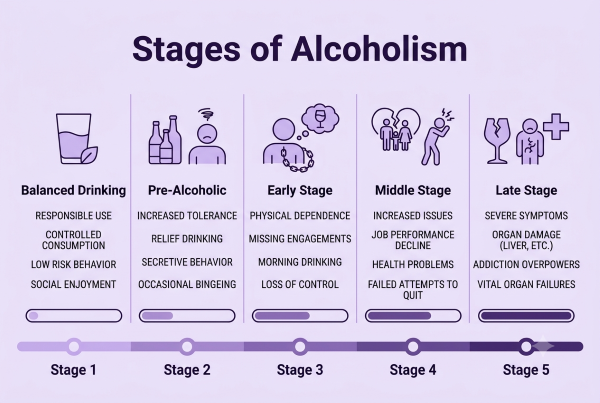
Doctors and other health care providers use 11 symptoms from the DSM-5-TR to determine AUD. Someone with at least two of the symptoms described below can qualify for AUD if they show at least two of these symptoms in the last 12 months. Severity is based on the number of symptoms: 2-3 symptoms would be considered mild AUD, 4-5 symptoms would be considered moderate AUD, and 6+ symptoms would be considered severe AUD. You can learn more about alcohol use disorder dsm 5 criteria.
Some common signs and symptoms are:
- Drinking more or longer than planned
- Trying again and again and not being able to cut down
- Intense urges to drink alcohol.
- Consuming a lot of time to drink or recover
- Failure to meet obligations due to drinking
- Drinking or using drugs in spite of difficulties in relationships
- Giving up hobbies or activities
- Drinking in physically dangerous situations
- Remaining in the race even if physically or psychologically disabled
- Developing tolerance
- Experiencing withdrawal symptoms
Symptoms of withdrawal may be shaking, excessive sweating, nausea, anxiety, insomnia, a fast heart rate and in severe cases, seizures or delirium tremens (DT).
These symptoms are more important than whether or not someone conforms to a specific stereotype of “alcoholic.”
Why Do Different Types of Alcohol Dependence Develop?
Alcohol dependence has many different causes. Risk may stem from a combination of genetics, environment, drinking habits, stress and trauma, mental health, and family history.
Crucial between-subtype age differences also were found for age of onset of drinking, age first intoxicated, and family history, as well as co-occurring mental disorders and other drug and alcohol use for each of the five older alcohol subtypes. Five different groups were identified: young adult, functional, intermediate familial, young antisocial, and chronic severe.
However, mental health may also be important. Other psychiatric conditions such as depression, anxiety, PTSD can co-occur with AUD.
It is also crucial to be aware of the forms of alcohol misuse aside from addiction. AUD is not always detected in those who consume risky or considerate heavy amounts of alcohol to drink, including those who participate in binge drinking. A professional assessment is carried out taking into account the whole picture and implications.
How Is Alcohol Dependence Identified?
There is no particular blood test to find out whether or not a person is an alcoholic. However, health care workers inquire about alcohol consumption, urges, abstinence from alcohol, and negative effects, as well as alcohol tolerance, withdrawal symptoms, health, psychological stress, and functionality.
According to DSM-5-TR, 11 symptoms are needed to diagnose AUD. At least 2 symptoms had to have occurred during the past year to be a diagnosis; severity was based on the number of symptoms.
This is key, as two individuals can consume the same amount of drinks but have totally different risk levels.
For instance, some drinkers may occasionally drink a lot but not have continuing difficulties, which differs from chronic alcoholism, while some drinkers drink less but cannot stop drinking. This should be a focus on control, consequences, cravings and symptoms, and not a counting of drinks.
A health professional will also want to assess if withdrawal is being considered will put the person at risk of being unsafe without alcohol.
How Are Different Types of Alcohol Dependence Treated?
Treatment should be tailored to reflect the individual’s needs, symptoms, medical condition, support system, and treatment goals. There’s not one program that will work for all.
Medical detox can be the first step in the treatment process for a person who has a notable physical dependence. Relieving withdrawal safely is an important first step in recovery through detox, but is just the start of the process. While NIAAA states that alcohol withdrawal is rarely fatal for non-heavy drinkers, some do need medical supervision, as they may have been heavy drinkers for long periods of time.
Behavioral Therapy
People can meet with a counselor to identify situations, feelings, and behaviors that are a hazard for their drinking. Depending on the needs of the person, these can include cognitive behavioral approaches, motivational interventions, mindfulness-based approaches, family therapy, and other behavioral treatments.
Medication-Assisted Treatment
There are multiple medications approved in the United States for AUD. Prescription drugs have been shown to diminish craving, help with abstaining from alcohol, and generally help keep people from drinking. Naltrexone can help diminish cravings and reduce drinking.
Acamprosate can help people continue to stay away from alcohol; disulfiram can make people not want to drink because they feel unwell after they have a drink. You can learn more about medication-assisted treatment options.
Residential care and outpatient care.
Residential Treatment Drug Rehab is a form of care that is provided for patients in which they are located within a residential home. Some people find it beneficial when dealing with alcohol use that can be severe or the home environment might be problematic for recovery. Others may be treated as outpatients, continuing to work, attend school, or to have other family responsibilities through an outpatient rehab program.
It depends on the clinical assessment, which is the right one. NIAAA stresses a need for personalized intensity of treatment, not one size fits all.
Continuing Care
Recovery does not always necessarily mean that formal treatment has finished. In addition to medication (where applicable), ongoing professional care, counseling, support groups, and relapse prevention are effective strategies to maintaining progress.
You don’t need to wait until the problem is out of hand if alcohol seems out of control. Solutions Healthcare can assist you in understanding your drinking pattern and in discovering an appropriate treatment choice. Please give a call today and discuss discreet help and next steps towards recovery with an individual.
What Does Research Say About Alcohol Dependence?
The research that is being conducted in the sciences has just veered away from the notion that there is a “type” of alcoholic. On one hand, previous studies showed five general alcohol-dependence (AD) profiles, and on the other hand, people suffering from alcohol problems are heterogeneous with respect to alcohol-related measures, family history, psychiatric comorbidities, age, and other drug use.
The study and practice of what is now called modern AUD is based on a spectrum of AUD, however. NIAAA classifies AUD based on the number of symptoms of the mild, moderate, or severe expression. It therefore helps the doctor to remain objective in the presence of symptoms, rather than stereotypes.
Other research support has been provided for behavioral treatments, mutual support, and medication. Others improve greatly and recover, and it seems the course of AUD is not necessarily a downhill descent but one where meaningful improvement is potentially attainable.
What Can Alcohol Dependence Do to Your Health?
Long-term overuse of alcohol or any use that is considered inappropriate can affect physical health, mental health and mental functioning; and one’s relationships, work, and daily life. It can cause liver disease, heart and circulation problems, pancreatitis, nervous system changes, certain cancers, depression and anxiety disorders, injury, and relationship problems.
The other is the question of withdrawal. Physical dependence can cause physical problems once an individual decreases or gives up drinking. Severe withdrawal may be defined as delirium tremens and seizures and may require emergency medical treatment.
For this reason, it might be a wise choice to scale back on alcohol consumption if you’ve ingested beer in bulk over an extended period of time before giving it up.
Review
By understanding the types of alcohol dependence, it will be easier to identify alcohol-related problems. No matter if the drinker appears “functional” or has had severe consequences related to their drinking, alcohol dependence is a condition that should be treated compassionately and professionally. Early help can help make treatment safer and recovery better.
How Can Alcohol Dependence Be Prevented?
An early warning sign of prevention is when drinking becomes an issue. Helpful strategies include
- Monitor your fluid intake, quantity, and frequency.
- Never assume that if you drink due to stress, it is “no big deal.”
- Be careful and play within the limits!
- Take alcohol-free days.
- Don’t drink under risky circumstances.
- If it becomes hard to control drinking, talk to someone you can trust.
- Reach out to a professional with any anxiety, depression, trauma and so much more.
- Get expert assistance when you try to quit drinking alcohol over and over again.
It’s also helpful to understand the levels of dependence upon alcoholic beverages. If an individual has concerns, these can be addressed at an early stage while the individual is still able to carry out a normal life at work or home.

Understanding the Types of Alcohol Dependence
The classifications of alcohol problems are not merely tags that identify people as having an alcohol problem. While five general subtypes have been described, the current use of alcohol use disorder is practiced in clinical use and categorized as mild, moderate, or severe.
No, it’s not about the type of alcoholic you are. Is there evidence that alcohol is hurting your behavior, health, relationships, or responsibilities? (Yes or no)
When it is, there are professional courses of help available. It is possible to recover, and treatment can be customized to the person.
Worry about your alcohol consumption? Solutions Healthcare is here to help! Come to understand your concerns today, find out your treatment options, and take the first step in finding treatment in confidence.
Medical Disclaimer: This blog is for educational purposes and does not replace medical advice, diagnosis, or treatment. Alcohol withdrawal can become dangerous, particularly after prolonged heavy drinking. Speak with a qualified healthcare professional before stopping alcohol suddenly if you may be dependent.
Frequently Asked Questions About Types of Alcohol Dependence
What are the five types of alcoholism?
Older research identified five alcohol-dependence subtypes: young adult, functional, intermediate familial, young antisocial, and chronic severe. These are research classifications, not current clinical diagnoses. Today, professionals diagnose alcohol use disorder as mild, moderate, or severe.
What are the four types of drinkers?
There is no universally accepted clinical system defining exactly four types of drinkers. Drinking is more accurately assessed by amount, frequency, consequences, and AUD symptoms. Patterns such as moderate, binge, heavy, and high-intensity drinking may describe consumption risk, not diagnoses.
What are the four symptoms of alcohol dependence?
Four common warning signs are strong cravings, difficulty controlling drinking, increased tolerance, and withdrawal symptoms. Other important signs include drinking despite consequences, neglecting responsibilities, unsuccessful attempts to cut down, and continuing alcohol use despite health problems.
What are the differences between Type 1 and Type 2 alcoholism?
Type 1 and Type 2 are not the standard modern clinical categories for AUD. Older research has used different classification systems to describe alcohol-related patterns. Current diagnosis focuses on DSM-5-TR symptoms and classifies AUD as mild, moderate, or severe.
Is there a difference between alcohol dependence and alcoholism?
Historically, alcohol dependence and alcoholism were used to describe problematic alcohol use. Modern medicine generally uses alcohol use disorder, or AUD, which incorporates the older concepts of alcohol abuse and dependence into one diagnosis.
What disorder do most alcoholics have?
Alcohol use disorder is the clinical diagnosis used for problematic alcohol consumption. Some people with AUD also have co-occurring mental health conditions, including depression, anxiety, PTSD, or other disorders. A professional assessment is needed to identify these conditions.
Is drinking 2 beers a day considered being an alcoholic?
Drinking two beers a day does not automatically mean someone has AUD. Diagnosis depends on symptoms and consequences, not one specific number of drinks. However, regular alcohol consumption can increase health risks, so discussing concerns with a healthcare professional may be helpful.
What are the 10 signs of being an alcoholic?
Ten warning signs include drinking more than intended, unsuccessful attempts to cut down, cravings, excessive time spent drinking, neglected responsibilities, relationship problems, lost activities, risky drinking, continued use despite harm, and increased tolerance. Withdrawal is another important diagnostic symptom.
References
- National Institute on Alcohol Abuse and Alcoholism (NIAAA), Understanding Alcohol Use Disorder. NIAAA: Understanding Alcohol Use Disorder
- National Institute on Alcohol Abuse and Alcoholism (NIAAA), Alcohol Use Disorder: From Risk to Diagnosis to Recovery. NIAAA: Alcohol Use Disorder Resources
- National Institute on Alcohol Abuse and Alcoholism, Treatment for Alcohol Problems: Finding and Getting Help. NIAAA: Treatment for Alcohol Problems
- Addiction Center, The 5 Types of Alcoholics. Used as a background content reference for the historical subtype discussion.
Content Note: The term “alcoholism” appears in some common search queries and historical classifications. For clinical accuracy and to reduce stigma, this article uses the current medical term alcohol use disorder (AUD) where appropriate.