
It can be hard to understand, exhausting, and confusing to watch someone hurt again and again who breaks the rules without considering who they affect or who tries to manipulate someone close to them but doesn’t seem remorseful. If this sounds familiar, then you might be witnessing the symptoms of antisocial personality disorder.
Antisocial personality disorder is a psychiatric disorder characterized by a chronic pattern of disregard for the rights of others, disregard for right and wrong, and manipulative, deceitful or aggressive behavior. It is diagnosed by mental health assessment, which is based on observing the individual’s behavior patterns, their history, and how they relate to others, as individuals suffering from the condition often are unable to see that they need help. Treatment is difficult, but some people can control their symptoms with long-term treatment and regular follow-up.
This is a more clinically sound term for describing a situation where you are seeking to understand an action of a loved one, or want to understand your own, than “sociopath,” a term that is used for the condition casually.
Supporting a loved one with complex behavioral patterns? Call Solutions Healthcare
What is Antisocial Personality Disorder?
Antisocial personality disorder, sometimes called sociopathy, is a mental health condition in which a person consistently shows disregard for right and wrong and ignores the rights and feelings of others. People with this condition often manipulate or treat others harshly, without genuine remorse.
This condition frequently leads to violations of the law, impulsive or violent behavior, and difficulty meeting responsibilities related to family, work, or school, often accompanied by problems with drug or alcohol use.
Understanding this pattern as a diagnosable condition, rather than simply “bad behavior,” is an important first step for families trying to make sense of what they’re experiencing.
Antisocial Personality Disorder Symptoms to Recognize
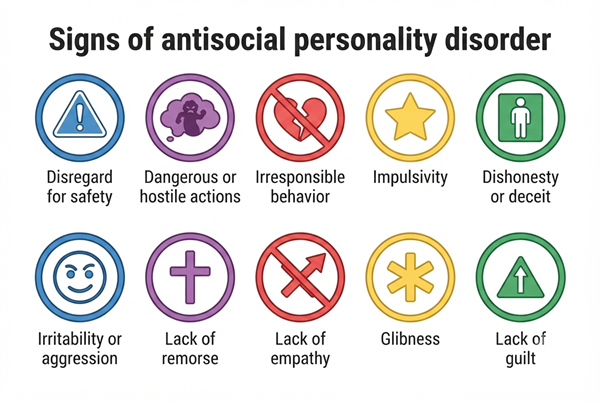
Antisocial personality disorder symptoms show up as a repeated pattern of behavior, not isolated incidents. Recognizing the full pattern matters more than any single event.
Common symptoms include:
- Repeatedly ignoring right and wrong
- Lying or deceiving others for personal gain
- Lacking sensitivity or respect toward others
- Using charm or wit to manipulate people
- A sense of superiority or being extremely opinionated
- Ongoing legal or criminal problems
- Hostile, aggressive, or threatening behavior
- Feeling no guilt about harming others
- Reckless behavior with no regard for safety
- Failing to meet work or financial responsibilities
Many adults with this condition showed signs of conduct disorder before age 15, including aggression, dishonesty, or serious rule violations during childhood.
Not sure if what you’re seeing fits this pattern? Solutions Healthcare can help you understand it.
100% Confidential Support is Available 24/7
No matter what you’re going through, you’re not alone. Our dedicated team is here to provide a safe, judgment-free space where you can talk openly and honestly. Whether you need emotional support, resources, or just someone to listen.
We’re here for you—completely confidential and always respectful of your privacy. Call us today!
Antisocial Personality Disorder Causes and Risk Factors
The exact cause of antisocial personality disorder isn’t fully understood, but research points to a combination of genetic and environmental factors working together.
Genetic vulnerability combined with difficult life circumstances, especially neglect or abuse, appears to play a role in the development of antisocial personality disorder, alongside changes in brain development that may occur during childhood.
Fact: Conduct disorder before age 15 often precedes antisocial personality disorder diagnosis.
Known risk factors include:
- Childhood diagnosis of conduct disorder
- Family history of antisocial personality disorder or other mental health conditions
- Experiencing abuse or neglect during childhood
- Growing up in an unstable or violent household
- Being male, which carries a higher documented risk
Contact Solutions Healthcare
Battling with Drug and Alcohol Addition? Remember, you are not alone and we are here to help you!
How Is Antisocial Personality Disorder Diagnosed?
Antisocial personality disorder diagnosis typically involves a mental health evaluation, since people with this condition rarely seek help on their own. A medical exam is often used first to rule out other explanations for the behavior.
The diagnostic process usually includes:
- A medical exam to rule out other conditions
- Referral to a mental health provider experienced with the condition
- A mental health exam covering thoughts, feelings, and behavior patterns
- Review of personal and family history
- Input from family or friends, with permission, since self-reporting can be unreliable
This condition typically isn’t diagnosed before age 18, even though related symptoms may appear earlier in childhood or the teen years.
Complications of Untreated Antisocial Personality Disorder
Left unaddressed, antisocial personality disorder can lead to serious complications affecting the person and the people around them.
Complications can include ongoing problems with alcohol or drugs, legal and financial difficulties, co-occurring conditions like depression or anxiety, and strained or harmful relationships with family members.
Because these complications often affect the entire family, not just the individual, getting support extends well beyond the person diagnosed.
Antisocial Personality Disorder Treatments Available
Antisocial personality disorder treatments focus on managing behavior and related symptoms, since there’s no cure for the underlying condition itself. Treatment success depends heavily on the person’s willingness to participate.
There are currently no medications specifically approved to treat antisocial personality disorder itself, though providers may prescribe medication for related conditions like anxiety, depression, or aggression.
Common treatment approaches include:
- Talk therapy, including anger and violence management
- Treatment for co-occurring alcohol or drug use
- Treatment for other mental health conditions present alongside it
- Long-term follow-up with an experienced mental health provider
Wondering how treatment might work for your specific situation? Solutions Healthcare can walk you through it.
100% Confidential Support is Available 24/7
No matter what you’re going through, you’re not alone. Our dedicated team is here to provide a safe, judgment-free space where you can talk openly and honestly. Whether you need emotional support, resources, or just someone to listen.
We’re here for you—completely confidential and always respectful of your privacy. Call us today!
What is the Best Treatment for Antisocial Personality Disorder?
There’s no single best treatment for antisocial personality disorder, but consistent, long-term care with a provider experienced in this specific condition tends to produce the most meaningful results. Talk therapy isn’t always effective, particularly when symptoms are severe.
Expert Advice: Family members should set boundaries and seek their own support too.
Success often depends less on a specific therapy technique and more on sustained engagement over time, something that’s genuinely difficult given how unlikely people with this condition are to see a need for treatment.
Supporting a Loved One With Antisocial Personality Disorder
If someone you love has antisocial personality disorder, getting support for yourself is just as important as encouraging them toward treatment. This condition can take a real emotional toll on family members.
Helpful steps for families include:
- Learning to set clear, consistent boundaries
- Working with a mental health provider on coping strategies
- Seeking your own therapy or support group
- Gently encouraging your loved one toward professional help
- Protecting yourself from aggression or manipulation when needed
100% Confidential Support is Available 24/7
No matter what you’re going through, you’re not alone. Our dedicated team is here to provide a safe, judgment-free space where you can talk openly and honestly. Whether you need emotional support, resources, or just someone to listen.
We’re here for you—completely confidential and always respectful of your privacy. Call us today!
Can Antisocial Personality Disorder Be Prevented?
There’s no guaranteed way to prevent antisocial personality disorder, but early identification of warning signs in childhood may help improve long-term outcomes. Since the roots of this condition often trace back to childhood, early intervention matters.
Parents, teachers, and pediatricians are often in the best position to notice early signs, such as conduct disorder symptoms, and connect a child with appropriate support before patterns become more entrenched.
Get Support for Co-Occurring Conditions Today
Solutions Healthcare connects individuals and families across Central Florida with a trusted network of treatment centers, including Florida Atlantic Coast Treatment Solutions, Palm Coast Treatment Solutions, DeLand Treatment Solutions, and Orlando Treatment Solutions, each offering evidence-based care for co-occurring mental health and substance use conditions.
Our network’s mental health residential treatment program provides structured support for individuals managing complex mental health conditions alongside substance use, guided by licensed clinicians.
What makes our network different:
- Multiple licensed facilities across Central Florida
- Clinicians experienced with complex, co-occurring conditions
- Family-inclusive support and guidance
- Individualized care instead of a one-size-fits-all program
- A calm, structured environment for ongoing treatment
If you or someone you love is navigating antisocial personality disorder alongside substance use, you don’t have to sort it out alone. Call Solutions Healthcare at (386) 866-3600 or visit our contact page to get started.
FAQs
What is antisocial personality disorder?
Antisocial personality disorder (ASPD) is a mental health condition characterized by a persistent pattern of disregarding other people’s rights, social rules, and consequences. Individuals with ASPD may engage in manipulative, deceitful, impulsive, or aggressive behavior, often showing little remorse for the harm they cause.
What are common antisocial personality disorder symptoms?
Common symptoms include frequent lying, manipulation, impulsivity, aggression, irritability, reckless behavior, lack of empathy or remorse, repeated legal problems, and difficulty maintaining work, financial, or family responsibilities. Symptoms usually begin in adolescence and continue into adulthood.
What causes antisocial personality disorder?
The exact cause of antisocial personality disorder remains unknown. Research suggests it develops through a combination of genetic factors, differences in brain development, and environmental influences such as childhood abuse, neglect, trauma, or prolonged exposure to unstable home environments.
What are risk factors for antisocial personality disorder?
Several factors increase the likelihood of developing ASPD, including childhood conduct disorder, a family history of personality disorders, physical or emotional abuse, neglect, exposure to violence, substance misuse, and growing up in an unpredictable or dysfunctional household environment.
How is antisocial personality disorder diagnosed?
Diagnosis requires a comprehensive mental health evaluation that examines long-term behavior patterns, personal history, and family background. Clinicians may also gather information from family members or others because individuals with ASPD may minimize or deny problematic behaviors during assessments.
What are antisocial personality disorder treatments?
Treatment often focuses on long-term psychotherapy aimed at improving behavior, relationships, and decision-making. Care may also address co-occurring conditions such as substance use disorders, depression, or anxiety, while ongoing support helps encourage treatment participation and reduce harmful behaviors.
What is the best treatment for antisocial personality disorder?
There is no single treatment that works for everyone with ASPD. However, consistent long-term therapy with an experienced mental health professional, combined with treatment for any co-occurring conditions and structured support, generally offers the greatest opportunity for meaningful improvement over time.
Is there medication for antisocial personality disorder?
No medication is specifically approved to treat antisocial personality disorder itself. However, healthcare providers may prescribe medications to manage related symptoms or co-occurring conditions such as depression, anxiety, mood instability, aggression, or substance use disorders when clinically appropriate.
Can antisocial personality disorder be cured?
There is currently no cure for antisocial personality disorder. However, long-term treatment, consistent therapeutic support, and addressing co-occurring mental health or substance use conditions may help some individuals reduce harmful behaviors and improve daily functioning and interpersonal relationships.
Is antisocial personality disorder the same as being a sociopath?
“Sociopath” is an informal, non-clinical term often used to describe someone with traits associated with antisocial personality disorder. The official diagnosis recognized by mental health professionals is antisocial personality disorder, which follows specific diagnostic criteria outlined in clinical guidelines.
How can families support someone with antisocial personality disorder?
Families can help by maintaining clear, healthy boundaries, avoiding enabling harmful behaviors, encouraging professional treatment, and seeking counseling or support for themselves. Learning about the condition also helps loved ones respond more effectively while protecting their own emotional well-being.
Where can I get support for co-occurring conditions in Florida?
Solutions Healthcare provides comprehensive mental health and addiction treatment throughout its Central Florida network, including care for individuals with co-occurring disorders. Call (386) 866-3600 to speak confidentially with an admissions specialist about available treatment options.
References
- Mayo Clinic: Antisocial Personality Disorder, Symptoms and Causes
- Mayo Clinic: Antisocial Personality Disorder, Diagnosis and Treatment
- Cleveland Clinic: Antisocial Personality Disorder
- American Psychiatric Association: What Are Personality Disorders?
- National Institute of Mental Health: Personality Disorders
- MentalHealth.gov: Antisocial Personality Disorder
- Florida Atlantic Coast Treatment Solutions: Mental Health Residential Treatment
Medical Disclaimer: This blog is for informational purposes only and is not a substitute for professional medical or mental health advice; please consult a qualified provider or contact Solutions Healthcare for personalized guidance. This is a sensitive topic, and if you or someone you know is struggling with mental health or thoughts of self-harm, please reach out to a mental health professional or crisis resource for support.