
You smoked once before, perhaps at a wedding, perhaps with old friends that you hadn’t seen in years, and now there is a test on the calendar, and a certain kind of panic is setting in. One of the most commonly searched cannabis questions is ‘Will smoking weed once show up on a drug test?’ and the answer, provided a straight, evidence-based one can be found, shouldn’t be an empty reassurance or a scare tactic that is typically the first thing he or she’ll read.
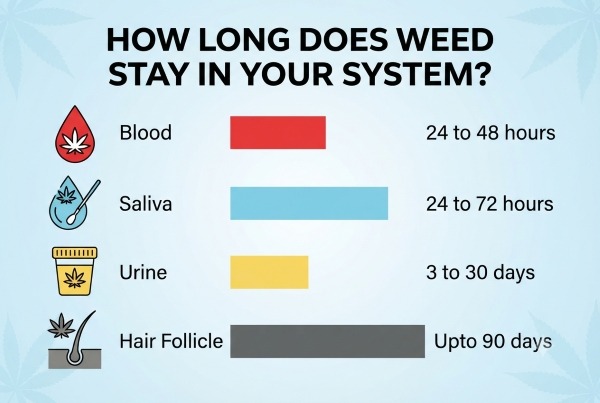
After a single use, marijuana is typically detectable in urine for 3 to 7 days, so the popular “10 days” rule is more accurate for daily users than occasional ones. Regular users may test positive for 15 to 30 days, and heavy long-term users can extend beyond that, since THC is fat-soluble and clears more slowly than most other drugs. Exact detection time depends on metabolism, body fat, hydration, and the lab’s testing cutoff.
Will Smoking Weed Once Show Up on a Drug Test?
Yes, it is possible for a marijuana use to show up on a regular urine test, for at least 3 to 4 days after use, although it can really vary from person to person.
This is not a guarantee either way. Individual studies tracking single-dose subjects have found real variation, some people clear the standard cutoff within a day, while others take a week or longer, even after using the exact same amount.
FACT: Urine marijuana tests detect THC-COOH metabolites rather than active THC in the body.
How Long Does Weed Stay in Your Urine After a Single Use?
After one use, THC metabolites are typically detectable in urine for 3 to 7 days, with the exact number depending heavily on which testing cutoff is being applied.
- At a 100 ng/mL cutoff: average detection time is about 1.5 days
- At the standard 50 ng/mL cutoff: detection generally runs 1 to 4 days, occasionally extending closer to a week in individual cases
- At a more sensitive 20 ng/mL cutoff: detection can extend to 5 to 7 days
- At a highly sensitive 15 ng/mL confirmatory cutoff: detection can reach up to 3.5 days on average, sometimes longer
That last point matters. Two people using the exact same amount can produce meaningfully different results, which is why no single number applies universally.
Is Weed Out of Your System in 10 Days?
For a single use, weed is very likely out of your system within 10 days at standard testing cutoffs, though for regular or moderate users, 10 days is often not enough time, and heavy users may need considerably longer.
- Single use: generally clears well within 10 days, often within the first week
- Moderate use (weekly or a few times monthly): can sometimes extend past 10 days depending on frequency and sensitivity of the test
- Daily use: commonly requires 10 to 15 days or longer
- Heavy, chronic use: can extend past 30 days, with documented extreme cases reaching much longer
The ten-day figure that circulates so widely is roughly accurate for daily use, not single use, which is a common source of confusion. If your situation is genuinely a one-time event, ten days is generally more time than you actually need.
Experts Advice: Focus on long-term health and support instead of relying on unproven detox products or shortcuts.
How Urine Testing for Weed Actually Works
Urine tests do not detect THC itself. They detect THC-COOH, a non-psychoactive metabolite your liver produces as it breaks THC down, measured against a specific cutoff concentration.
“A urine THC test usually does not look for active THC itself. It is looking for a metabolite called THC-COOH, also referred to as carboxy-THC, using a two-step testing process.” (Clinical toxicology reference)
The standard process works like this:
- Initial screening, typically using a 50 ng/mL cutoff, checks for THC-COOH above that threshold
- Confirmatory testing, used for any positive or borderline screen, typically applies a lower cutoff, often 15 ng/mL under federal testing standards, using more precise laboratory methods
- Result reporting, with concentrations below the applicable cutoff reported as negative, regardless of whether trace amounts are technically present
This is exactly why a positive result reflects THC-COOH concentration crossing a specific line, not simply “any trace of THC ever existed in your body.”
How Long Will Drugs Show Up in a Urine Test?
Detection windows vary enormously by substance, and marijuana’s relatively long window compared to many other drugs is exactly why it is often the substance people are most anxious about.
Substance | Typical Urine Detection Window |
Alcohol (standard test) | 12 to 24 hours |
Cocaine | 2 to 4 days, longer with heavy use |
Opioids (short-acting) | 1 to 3 days |
Amphetamines | 1 to 4 days |
Marijuana (single use) | 3 to 7 days |
Marijuana (chronic use) | 15 to 30+ days |
Marijuana’s fat-soluble nature is the key reason it stands apart from this list. Most other commonly tested substances are water-soluble and clear the body considerably faster, while THC’s tendency to store in fat tissue extends its detection window well beyond what people typically expect from a single use.
What Determines Whether a Single Use Shows Up?
Several individual factors influence whether and how long a single use of weed remains detectable, beyond the dose itself.
- Body fat percentage. Even a single dose introduces some THC into fat storage, and individuals with higher body fat may retain it somewhat longer.
- Metabolism. Faster metabolic rates generally clear THC-COOH more efficiently.
- Potency of the product used. Higher-THC products naturally produce more metabolite, even from a single use.
- Hydration. Normal hydration supports elimination, though it will not dramatically accelerate clearance on its own.
- Testing cutoff sensitivity. As shown above, the specific cutoff applied genuinely changes the practical answer more than most other factors combined.
Side Effects of Weed on the Body
Weed produces both short-term and, with regular use, longer-term effects on the body, extending well beyond the detection window itself.
Short-term effects include:
- Impaired memory and coordination
- Increased heart rate
- Red eyes and dry mouth
- Anxiety or paranoia, particularly at higher doses
- Increased appetite
Effects associated with regular, heavier use include:
- Respiratory irritation, particularly with smoking
- Cognitive effects, including difficulty with memory and learning
- Increased risk of developing cannabis use disorder
- Motivation and mood changes tied to prolonged, heavy use
If cannabis use is becoming harder to manage, call Solutions Healthcare to discuss personalized treatment and recovery options.

When “Just Once” Becomes More Than Once
A single, isolated use of weed is a fundamentally different situation than a pattern that started as occasional and has quietly become regular, and it is worth being honest with yourself about which one actually describes your situation.
Consider:
- Has “just once” become more frequent than you originally planned?
- Are you using it specifically to manage stress, anxiety, or difficult emotions?
- Have you found yourself minimizing or downplaying how often you actually use?
- Would cutting back or stopping feel harder than you expect it to?
“Approximately 3 in 10 people who use marijuana have some degree of marijuana use disorder, and the risk is higher among those who begin use at a younger age.” (National Institute on Drug Abuse)
If any of these questions gave you pause, that is worth paying attention to, separate from whatever a drug test result ultimately shows.
Getting Support at Solutions Healthcare
At Solutions Healthcare, our Central Florida treatment network provides evidence-based care for individuals navigating marijuana use at any level, from occasional concern to full dependence.
Depending on your needs, our team may recommend:
- Substance Use Disorder Treatment tailored to your specific use patterns and history
- Dual Diagnosis Program for those whose cannabis use overlaps with anxiety, depression, or another mental health condition
- Intensive Outpatient Program for flexible, ongoing support that fits around work and family life
- Family Therapy Program to help loved ones understand what is happening and how to support recovery
Worried about marijuana use or a positive drug test? Contact Solutions Healthcare for confidential, evidence-based guidance.
FAQs
1. Will smoking weed once show up on a drug test?
Yes, a single use of marijuana can show up on a standard urine drug test. Most occasional users test positive for about 3 to 4 days, although factors like metabolism, body fat, hydration, test sensitivity, and the amount consumed can all influence how long detection lasts.
2. Is weed out of your system in 10 days?
For someone who used marijuana only once or occasionally, THC is often cleared within 10 days. However, people who use cannabis daily or heavily may continue testing positive for 15 to 30 days or even longer because THC metabolites remain stored in body fat.
3. How long does weed stay in your urine after a single use?
After a single use, THC metabolites are generally detectable in urine for about 3 to 7 days. The exact detection window depends on laboratory cutoff levels, metabolism, hydration, body composition, and the amount of cannabis consumed during that one-time use.
4. How long will drugs show up in a urine test compared to marijuana?
Most drugs remain detectable in urine for only 1 to 4 days, but marijuana is different because THC is stored in fat tissue. As a result, cannabis can remain detectable for several weeks in regular users, making it one of the longest-lasting substances on urine tests.
5. What does weed detection on a urine test actually measure?
Urine drug tests do not detect active THC. Instead, they measure THC-COOH, a non-psychoactive metabolite produced when the liver breaks down THC. A positive result indicates previous cannabis exposure rather than current intoxication or impairment at the time of testing.
6. What cutoff level is used for standard marijuana urine tests?
Most workplace urine drug tests begin with an initial screening cutoff of 50 ng/mL for THC metabolites. If the screening is positive, confirmatory laboratory testing commonly uses a more sensitive cutoff of 15 ng/mL to verify the result and reduce false positives.
7. Can two people who used the same amount of weed test differently?
Yes. Two people who consume the same amount of marijuana can have different drug test results because metabolism, body fat percentage, hydration, activity level, genetics, and testing methods all influence how quickly THC metabolites are processed and eliminated from the body.
8. What are common side effects of weed on the body?
Common short-term effects of marijuana include impaired coordination, slower reaction time, red eyes, increased appetite, and an elevated heart rate. With frequent or long-term use, some people may also experience memory problems, reduced concentration, and respiratory irritation from smoking.
9. Does body fat affect how long a single use of weed stays detectable?
Yes. THC is fat-soluble, meaning some metabolites are stored in fat tissue after use. People with higher body fat percentages may eliminate THC more slowly than leaner individuals, which can slightly extend the detection window even after a single episode of marijuana use.
10. Why does the “10 days” number get repeated so often for weed?
The idea that marijuana stays in your system for 10 days is a general estimate that often applies to more frequent users, not everyone. Detection windows vary considerably based on use patterns, metabolism, body composition, and the type of drug test being performed.
11. Does a positive test after single use mean someone has a problem?
No. A positive marijuana test simply confirms recent exposure to THC metabolites and does not indicate addiction or cannabis use disorder. However, repeated positive tests or increasing use patterns may warrant a closer evaluation of substance use habits and related consequences.
12. When should someone be concerned about their weed use, even if it started as occasional?
If marijuana use becomes more frequent than intended, interferes with work, school, relationships, or daily responsibilities, or feels difficult to reduce despite wanting to stop, it is a good time to speak with a healthcare provider or addiction treatment professional for guidance.
References
- National Institute on Drug Abuse: Marijuana DrugFacts
- National Institute on Drug Abuse: Is Marijuana Addictive?
- California NORML: Marijuana Drug Test Detection Times
- Mayo Clinic: Drug Addiction Symptoms and Causes
- MedlinePlus: Marijuana
- Cleveland Clinic: Cannabis Use Disorder
- SAMHSA: Marijuana and Public Health
- SAMHSA: Drug Testing Resources
- Solutions Healthcare: Dual Diagnosis Program
- Solutions Healthcare: Family Therapy Program
This article is for informational purposes only and is not a substitute for professional medical advice. If you or a loved one needs support, Solutions Healthcare is available to help.