

Perhaps you are having a blood test. Perhaps you’re seeking to comprehend what’s going in your own body after an actually difficult weekend that became something a lot more regular. Perhaps you’re watching someone you know going through changes that frighten you and you’re seeking to know what cocaine is doing to them.
Although blood tests are the least frequently ordered way of detecting cocaine, they do have significance in certain legal cases, medical emergencies, and work-related accidents. If you want to know the “facts” about how long cocaine will remain in your bloodstream, and the “facts” about what cocaine does while it is in your bloodstream, it will certainly help you get a clear idea of what you want to do.
What Happens to Cocaine in Your Bloodstream
When cocaine is introduced to your body, it increases the level of the hormone dopamine in your system and it tightens blood vessels and puts stress on the cardiovascular system.
This dual action, the surge of feel-good chemicals paired with physical strain on blood vessels and the heart, is part of what makes cocaine so dangerous even at doses that do not reach overdose levels.
“Cocaine’s mechanism involves blocking the reabsorption of dopamine, norepinephrine, and serotonin, leading to an accumulation of these neurotransmitters in the brain that produces its characteristic euphoric and stimulant effects.” (National Institute on Drug Abuse)
Your liver begins breaking cocaine down almost immediately, converting it into metabolites like benzoylecgonine, which is actually what most drug tests are designed to detect.
Experts Advice: Seek professional support, since withdrawal-related depression can turn severe
How Long Does Cocaine Stay in Your Blood System
Cocaine itself is typically detectable in blood for only a few hours up to about 12 hours after use, since it clears the bloodstream far faster than it clears urine or hair.
Blood testing works differently than other methods. Because cocaine has a very short half-life in blood, generally estimated around 1 to 1.5 hours, active cocaine drops to undetectable levels relatively quickly compared to urine testing.
- Occasional use: cocaine typically undetectable in blood within 12 hours
- Frequent or heavy use: cocaine metabolites may remain detectable in blood slightly longer, though blood testing is still one of the shorter detection windows
- Cocaethylene (cocaine plus alcohol): this combined metabolite lingers in the blood longer than cocaine alone
Because of this narrow window, blood tests are used far less often for cocaine screening than urine tests, which is worth knowing if you are trying to understand why a specific test was chosen.
FACT: Cocaine’s half-life in blood is roughly one to one and a half hours
How Long Does Cocaine Stay in Your System Overall
Beyond blood, cocaine and its metabolites can be detected in urine for several days, in saliva for one to three days, and in hair for months after use.
Test Type | Typical Detection Window |
Blood | Up to 12 hours |
Saliva | 1 to 3 days |
Urine | 2 to 4 days for occasional use, longer for chronic use |
Hair | Up to 90 days |
Urine is the most commonly used method for standard drug screening, largely because benzoylecgonine remains detectable there far longer than cocaine remains in blood.
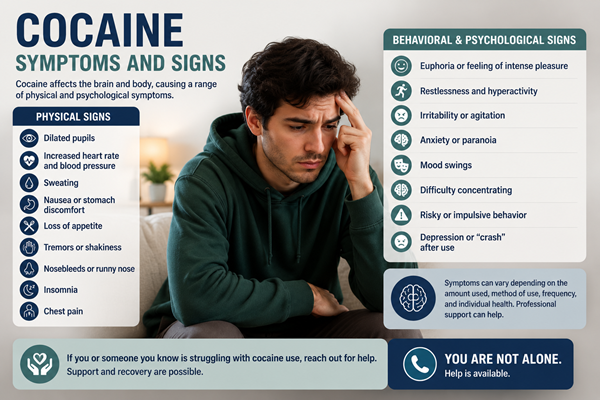
Cocaine Symptoms and Signs
The clearest signs of active cocaine use include dilated pupils, rapid speech, restless energy, and a noticeable spike in confidence or talkativeness.
Physical signs often include:
- Dilated pupils
- Increased heart rate and blood pressure
- Sweating
- Nosebleeds or frequent sniffling, particularly with snorting
- Decreased appetite
- Restlessness or hyperactivity
Behavioral and psychological signs often include:
- Sudden bursts of energy or confidence
- Talkativeness or rapid speech
- Irritability once the high fades
- Paranoia, especially with heavier or repeated use
- Risk-taking behavior
Effects of Cocaine on the Body
In the short term, cocaine produces intense euphoria and energy, but it does so by placing significant, immediate strain on the cardiovascular and nervous systems.
Short term effects include:
- Euphoria and increased confidence
- Elevated heart rate and blood pressure
- Constricted blood vessels
- Increased body temperature
- Reduced appetite
- Heightened alertness followed by a noticeable crash
Even a single use can trigger dangerous cardiovascular events in some people, particularly those with underlying heart conditions they may not even know about.
Toxic Effects of Cocaine on Long Term Health
Repeated cocaine use produces cumulative toxic effects across nearly every major body system, from the heart and brain to the digestive tract and immune function.
Cardiovascular system:
- Chronic high blood pressure
- Increased risk of heart attack and stroke
- Irregular heart rhythms
Neurological system:
- Impaired memory and decision-making
- Increased seizure risk
- Structural changes in brain regions tied to reward and impulse control
Other systems:
- Weakened immune function, increasing susceptibility to illness
- Nutritional deficiencies from chronic appetite suppression
- Gastrointestinal damage from reduced blood flow
- Nasal tissue damage from chronic snorting
“Cocaine constricts blood vessels, raising blood pressure and increasing the risk of heart attacks, strokes, and irregular heart rhythms, even in individuals without prior cardiovascular disease.” (Clinical addiction treatment literature)
Some of these effects improve with sustained abstinence. Cardiovascular strain in particular can begin to normalize over time, though structural heart or brain changes from long term heavy use may not fully reverse.
Concerned about what repeated use is doing to your heart or health? Call Solutions Healthcare before the damage adds up.
Cocaine Withdrawal Symptoms and Timeline
Cocaine withdrawal generally unfolds in three phases: an initial crash within hours, a withdrawal period lasting one to a few weeks, and an extended extinction phase where cravings resurface periodically.
- The crash (within hours to 3 days): intense fatigue, increased appetite, and a strong urge to use again as dopamine levels plummet
- Withdrawal phase (roughly 1 to 4 weeks): ongoing fatigue, irritability, difficulty concentrating, anxiety, and disrupted sleep
- Extinction phase (weeks to months): cravings become less frequent but can resurface unpredictably, often triggered by stress or specific people, places, or situations
Unlike opioid or alcohol withdrawal, cocaine withdrawal often has few visible physical symptoms, which can lead families to underestimate how difficult the internal experience actually is.
Riding out the crash and cravings alone gets exhausting fast. Solutions Healthcare offers supervised support through withdrawal and beyond.
What Influences How Long Cocaine Stays in Your Blood
Several factors affect exactly how long cocaine remains detectable in an individual’s blood, beyond the general averages.
- Frequency of use. Regular or heavy use can lead to more gradual clearance than a single isolated use.
- Liver function. Since the liver metabolizes cocaine, any liver impairment slows this process.
- Body composition and hydration. These influence how quickly metabolites are processed and excreted.
- Combined substance use. Mixing cocaine with alcohol produces cocaethylene, a metabolite that lingers in the blood longer than cocaine alone and carries added cardiovascular risk.

Getting Support for Cocaine Use
If any part of this, the symptoms, the toxic effects, or the withdrawal timeline, sounded uncomfortably familiar, that recognition matters. Cocaine use disorder is treatable, and the sooner support begins, the less cumulative damage there tends to be to work through.
At Solutions Healthcare, our Central Florida treatment network provides evidence-based, dual diagnosis care for individuals whose cocaine use has grown into something bigger than a weekend habit.
Depending on your needs, our team may recommend:
- Cocaine Addiction Treatment built around the physical and psychological patterns of stimulant use
- Medical Detox for safe, supervised support through the crash and early withdrawal phase
- Dual Diagnosis Program for those whose substance use overlaps with anxiety, depression, or trauma
- Intensive Outpatient Program for flexible, ongoing care that fits around work and family life
You do not have to keep white-knuckling through the crash alone. Call us at (386) 866-3600 or visit our contact page to speak with someone who understands, confidentially and any time of day.
FAQs
Q: How long does cocaine stay in your blood system?
Cocaine is usually detectable in blood for only a few hours, generally up to about 12 hours after use. Because it is rapidly broken down and eliminated, blood testing has a much shorter detection window than urine, saliva, or hair testing.
Q: How long does cocaine stay in your system overall?
Cocaine itself clears quickly, but its metabolites remain detectable much longer. Saliva tests may detect use for 1 to 3 days, urine for 2 to 4 days or longer with heavy use, and hair tests for up to 90 days, depending on use patterns.
Q: What are common cocaine symptoms and signs?
Common signs of cocaine use include dilated pupils, rapid speech, restlessness, increased heart rate, elevated energy, reduced appetite, and overconfidence. As the drug wears off, irritability, fatigue, anxiety, and mood changes often replace the initial stimulant effects.
Q: What are the toxic effects of cocaine on the body?
Repeated cocaine use can damage the heart, brain, and blood vessels by increasing blood pressure and strain on the cardiovascular system. Long-term use also raises the risk of heart attack, stroke, memory problems, impaired judgment, and weakened overall physical health.
Q: What are the effects of cocaine on the body in the short term?
Short-term effects include intense euphoria, increased alertness, elevated heart rate and blood pressure, higher body temperature, decreased appetite, and greater confidence. These effects are often followed by an unpleasant crash marked by fatigue, anxiety, and depressed mood.
Q: What does cocaine withdrawal feel like?
Cocaine withdrawal often begins with an intense crash involving exhaustion, increased sleep, and powerful cravings. Over the following days or weeks, many people experience irritability, depression, anxiety, reduced motivation, and disrupted sleep as the brain gradually readjusts.
Q: How long does cocaine withdrawal last?
The initial crash usually lasts several hours to a few days, while most withdrawal symptoms improve over one to four weeks. However, cravings, mood changes, and occasional sleep disturbances can continue for months, particularly without ongoing treatment and recovery support.
Q: Is cocaine withdrawal dangerous?
Cocaine withdrawal is generally not medically life-threatening like alcohol or benzodiazepine withdrawal. However, severe depression, suicidal thoughts, and intense cravings can develop, making professional support important for safety, relapse prevention, and successful long-term recovery from cocaine use.
Q: Why does cocaine last longer in urine than in blood?
Cocaine disappears from the bloodstream quickly, but its primary metabolite, benzoylecgonine, is eliminated more slowly through the kidneys. Because urine tests detect this metabolite rather than cocaine itself, they remain positive significantly longer than blood tests after use.
Q: Does mixing cocaine with alcohol change how long it stays in your blood?
Yes. Using cocaine with alcohol produces cocaethylene, a compound that remains in the bloodstream longer than cocaine alone. Cocaethylene also places greater stress on the heart and significantly increases the risk of dangerous cardiovascular complications and overdose.
Q: Can toxic effects of cocaine on the body be reversed?
Some cocaine-related damage, including elevated blood pressure and certain cardiovascular changes, may improve after stopping use. However, severe or prolonged damage to the heart, brain, or blood vessels may be permanent, making early treatment and sustained recovery especially important.
Q: When should someone seek help for cocaine use?
Professional help is recommended if cocaine use becomes frequent, difficult to control, or begins affecting health, work, relationships, or daily responsibilities. Early treatment can reduce medical complications, address underlying causes, and greatly improve the chances of lasting recovery.
References
- National Institute on Drug Abuse: Cocaine Research Report
- University of Florida Health: Cocaine Withdrawal
- American Heart Association: Cocaine and Cardiovascular Risk
- MedlinePlus: Cocaine
- Cleveland Clinic: Cocaine Addiction
- Mayo Clinic: Drug Addiction Symptoms and Causes
- National Institute on Drug Abuse: Understanding Drug Use and Addiction
- Solutions Healthcare: Cocaine Addiction Treatment
- Solutions Healthcare: Dual Diagnosis Program
This article is for informational purposes only and is not a substitute for professional medical advice. If you or a loved one needs support, Solutions Healthcare is available to help.