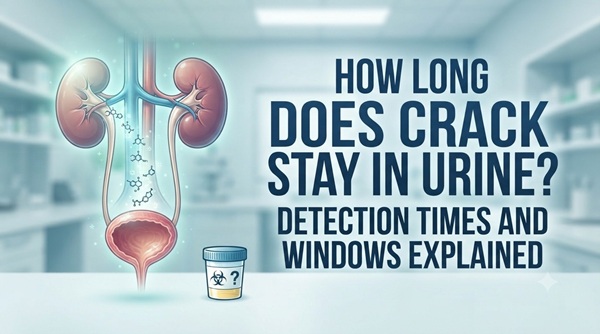

When people ask themselves how long crack cocaine stays in their system, it’s probably not just out of curiosity. Perhaps you need to undergo a drug test. Perhaps you’re trying to catch on to your loved one’s situation. Perhaps you’re the one using it and secretly wondering how far this is going.
The rapid onset and short duration of the crack’s effects make it so dangerous. Even if the high only lasts a few minutes, that doesn’t imply that the drug leaves your body that quickly. The perception gap between how long you feel it and how long it can still be detected counts.
We’re about to tell you just how long crack cocaine lasts, how long it can be detected in your system and what that intense high can do to the body when used repeatedly. No lectures, just the facts you came here for.
How Long Does Crack Cocaine Stay in Your System
While crack cocaine itself is detectable in the bloodstream for only a few hours, the byproducts of the drug can stay longer, depending on the type of test that is performed.
Crack has an extremely short half-life, generally estimated at well under an hour. That means the drug itself breaks down fast. But your liver converts crack into metabolites, primarily benzoylecgonine, and those metabolites stick around far longer than the original high ever did.
“Cocaine and its metabolites are eliminated primarily through hepatic metabolism, with benzoylecgonine serving as the major urinary metabolite used in forensic and clinical drug testing.” (National Institute on Drug Abuse)
This is the disconnect that trips people up. Feeling normal again does not mean the drug is gone from your system.
Experts Advice: Avoid mixing crack with alcohol, since cocaethylene adds cardiovascular strain.
How Long Does a Crack High Actually Last
A crack cocaine high typically lasts only 5 to 15 minutes, making it one of the shortest and most intense highs of any commonly used drug.
Because smoking crack delivers the drug to the brain almost instantly, the rush is powerful but brief. This is exactly why crack use often escalates into a repeated, compulsive pattern, sometimes called a binge, where a person uses again and again to chase that initial high.
- Onset: within 8 to 10 seconds of inhaling
- Peak intensity: 1 to 5 minutes
- Noticeable comedown: begins within 15 to 30 minutes
- Crash phase: fatigue, irritability, and low mood follow within hours
That rapid crash is part of what drives repeat use, and repeat use is what turns occasional experimentation into dependence.
FACT: A crack cocaine high typically lasts only five to fifteen minutes
Tired of riding the cycle of intense highs, rapid crashes, and overwhelming cravings? Call Solutions Healthcare right now to explore our structured recovery programs.
Crack Cocaine Detection Times by Test Type
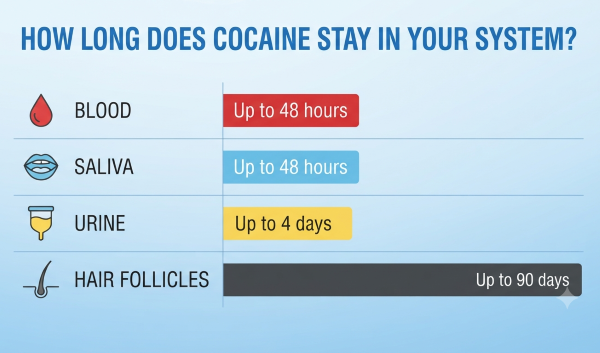
Detection windows for crack cocaine vary significantly by test type, ranging from a few hours in blood to as long as 90 days in hair.
Test Type | Typical Detection Window |
Blood | Up to 12 to 48 hours |
Saliva | Up to 24 to 48 hours |
Urine | 1 to 4 days for occasional use |
Urine, heavy or chronic use | Up to several weeks |
Hair follicle | Up to 90 days or longer |
Standard workplace drug panels almost always test urine, and they are looking for benzoylecgonine, not crack itself, which is why detection windows extend well beyond how long the high lasted.
What Changes How Long Crack Stays in Your System
Several personal and usage factors determine exactly how long crack cocaine remains detectable, and no two people clear it at the same rate.
- Frequency of use. Chronic, heavy use causes metabolites to build up faster than the body can clear them, extending detection windows considerably.
- Body fat and hydration. Cocaine metabolites are stored in fat tissue and released gradually, so hydration and body composition both play a role.
- Liver function. Since the liver does almost all the metabolic work, any liver stress or damage slows clearance.
- Amount used. Larger or more frequent doses simply take longer to fully process and eliminate.
- Polysubstance use. Combining crack with alcohol produces a metabolite called cocaethylene, which stays in the system longer than cocaine alone and carries added cardiovascular risk.
What Crack Cocaine Does to the Body
Crack cocaine floods the brain with dopamine, producing intense euphoria followed by an equally intense crash that drives the cycle of repeated use.
Beyond the high and the crash, crack places enormous strain on the cardiovascular system with nearly every use.
“Cocaine use, including crack cocaine, is associated with significant cardiovascular risks, including elevated heart rate, increased blood pressure, and heightened risk of heart attack, even in young and otherwise healthy users.” (American Heart Association)
Some effects fade once the drug clears the body. Others do not resolve as easily:
Effects that typically improve after stopping:
- Elevated heart rate and blood pressure
- Sleep disruption and appetite changes
- Anxiety and paranoia tied to active use
Effects that may persist longer or require treatment:
- Cardiovascular damage from repeated strain on the heart
- Cognitive changes affecting memory and decision-making
- Psychological dependence and cravings
- Damage to lung tissue from smoking crack repeatedly
Signs Someone May Be Struggling With Crack Use
The clearest signs of crack cocaine misuse include compulsive use despite consequences, financial strain, and a visible shift in mood, appearance, and relationships.
Families often notice these patterns before the person using is willing to admit anything is wrong:
- Disappearing for hours at a time, often followed by a crash
- Burn marks on fingers or lips from makeshift smoking devices
- Sudden financial problems or missing money and valuables
- Extreme mood swings between euphoria and irritability
- Withdrawing from family responsibilities and relationships
- Increasing tolerance, needing more to feel the same effect
Noticing these patterns in someone you love? Solutions Healthcare offers confidential guidance built around your family’s specific situation.
Recovery Timeline After Stopping Crack Use
Crack withdrawal typically peaks within the first 3 to 5 days and gradually eases over the following two to three weeks, though cravings can resurface for much longer.
- First 24 to 72 hours: intense crash, exhaustion, irritability, and strong cravings
- Days 3 to 5: depression, anxiety, and disrupted sleep often peak during this window
- Week 1 to 2: physical symptoms ease, though emotional symptoms can linger
- Weeks 3 to 4: mood and sleep patterns gradually stabilize with continued support
- Beyond one month: psychological cravings can still surface, especially under stress, which is why ongoing support matters
Unlike some substances, crack withdrawal is not typically medically dangerous on its own, but the psychological pull to relapse is significant, which is exactly why structured treatment improves long-term outcomes.
Cravings resurfacing weeks after quitting? Solutions Healthcare provides structured, ongoing support to help you stay on track.
Getting Help for Crack Cocaine Addiction
If you have read this far because the numbers on that detection chart hit closer to home than you expected, we want you to know that recovery from crack cocaine addiction is absolutely possible, and you do not have to start figuring it out alone.
At Solutions Healthcare, our Central Florida treatment network provides evidence-based, dual diagnosis care for individuals whose crack or cocaine use has grown into something they can no longer manage on their own.
Depending on your needs, our team may recommend the following:
- Cocaine Addiction Treatment is built specifically around the physical and psychological patterns of crack and cocaine use
- Residential Treatment for structured, around-the-clock support during early recovery
- Dual Diagnosis Program for those whose substance use overlaps with anxiety, depression, or trauma
- Intensive Outpatient Program for flexible, ongoing care that fits around work and family life
- Family Therapy Program to help loved ones understand addiction and rebuild trust during recovery
You do not have to wait for rock bottom to reach out. Call us or visit our contact page to speak with someone who understands, confidentially and at any time of day.
FAQs
Q: How long does crack cocaine stay in your system for a urine test?
Crack cocaine metabolites are typically detectable in urine for 1 to 4 days after occasional use. Heavy or long-term use can extend the detection window to several weeks because metabolites accumulate in the body and take longer to be eliminated.
Q: How long does a crack cocaine high actually last?
The intense high from smoking crack cocaine usually lasts only 5 to 15 minutes, followed by a rapid crash within 15 to 30 minutes. This short duration often contributes to repeated use as people attempt to maintain the drug’s euphoric effects.
Q: How long does crack cocaine stay in your hair?
Hair follicle tests can detect crack cocaine metabolites for up to 90 days or longer, depending on hair length and growth rate. Because hair testing captures long-term drug exposure, it is commonly used when an extended detection window is needed.
Q: How long does crack cocaine stay in your blood?
Crack cocaine is generally detectable in blood for 12 to 48 hours after use. Blood testing has a much shorter detection window than urine or hair because the drug and its metabolites leave the bloodstream relatively quickly after consumption.
Q: What is the half-life of crack cocaine?
Crack cocaine has an extremely short half-life, generally well under one hour. While the active drug leaves the body quickly, its metabolites remain detectable for much longer, which is why drug tests can identify cocaine use days after the effects wear off.
Q: Does crack cocaine show up the same as regular cocaine on a drug test?
Yes. Standard drug tests detect benzoylecgonine, the primary metabolite produced after using either crack cocaine or powder cocaine. Because both forms produce the same metabolite, laboratory testing cannot usually distinguish how the cocaine was consumed.
Q: Can drinking water speed up how fast crack leaves your system?
No. Staying hydrated supports normal body function, but it does not significantly speed up the elimination of crack cocaine metabolites. Time, metabolism, frequency of use, and overall health have a much greater influence on how long the drug remains detectable.
Q: What does crack cocaine withdrawal feel like?
Withdrawal commonly causes extreme fatigue, depression, irritability, anxiety, sleep disturbances, increased appetite, and intense cravings. Symptoms usually peak during the first three to five days after stopping, although emotional symptoms and cravings may continue for several weeks afterward.
Q: Is crack cocaine withdrawal dangerous?
Crack cocaine withdrawal is not usually medically life-threatening, but severe depression, suicidal thoughts, and powerful cravings can make it extremely difficult. Professional medical and behavioral support helps reduce relapse risk and provides a safer, more comfortable recovery process.
Q: How does mixing crack with alcohol change how long it stays in your system?
Using crack cocaine with alcohol produces cocaethylene, a toxic compound that remains in the body longer than cocaine alone. Cocaethylene increases stress on the heart and liver while raising the risk of overdose, cardiac complications, and other serious health consequences.
Q: What are early signs of crack cocaine addiction?
Early warning signs include needing more of the drug to achieve the same effects, frequent cravings, financial problems, mood swings, neglecting responsibilities, secretive behavior, and withdrawing from family, friends, or activities that were once important.
Q: When should someone seek treatment for crack cocaine use?
Treatment should be considered as soon as crack cocaine use becomes frequent, difficult to control, or begins affecting health, work, finances, or relationships. Early intervention improves recovery outcomes and helps prevent addiction from progressing into more severe physical and psychological complications.
References
- National Institute on Drug Abuse: Cocaine Research Report
- SAMHSA: Drug Testing Resources
- Drug Enforcement Administration: Cocaine Drug Fact Sheet
- American Heart Association: Cocaine and Cardiovascular Risk
- MedlinePlus: Cocaine
- Cleveland Clinic: Cocaine Addiction
- Mayo Clinic: Drug Addiction Symptoms and Causes
- National Institute on Drug Abuse: Understanding Drug Use and Addiction
- Solutions Healthcare: Cocaine Addiction Treatment
- Solutions Healthcare: Dual Diagnosis Program
This article is for informational purposes only and is not a substitute for professional medical advice. If you or a loved one needs support, Solutions Healthcare is available to help.