
In your life there is always someone who has to be right and always be admired, and in some way doesn’t notice how their decisions impact others. You have most likely thought or said “narcissistic.” You’re also thinking, is this word really clinical or is this the word for someone who is hard to deal with?
The narcissistic person exhibits a consistent pattern of grandiosity, an excessive need for admiration and a lack of empathy for others. This may include common narcissistic characteristics or a potentially serious mental health problem known as narcissistic personality disorder or NPD, which leads to significant dysfunction in relationships, work and daily life. While it is not always the case that anyone who appears self-absorbed actually has NPD, the pattern is more significant than any one moment.
Let’s take a moment to discuss what it means to be a narcissistic person, its causes, and what treatment actually entails.
What is a Narcissistic Person, Really
A narcissistic person consistently prioritizes their own image, admiration, and self-importance over the feelings and needs of the people around them.
This isn’t the same as confidence or high self-esteem. Underneath the outward grandiosity is often a fragile sense of self-worth that depends heavily on constant external validation.
Mayo Clinic describes narcissistic personality disorder as a condition involving an unreasonably high sense of self-importance, alongside fragile self-esteem that’s easily upset by even minor criticism.
The key word is “pattern.” Everyone has moments of vanity or self-focus. A narcissistic person shows this as a consistent, defining trait across most relationships and situations.
What Is Narcissistic Personality Disorder
Narcissistic personality disorder is a diagnosable mental health condition, not just a personality quirk or an insult people throw around casually.
Fact: Narcissistic personality disorder affects about 1 percent of U.S. adults.
NPD causes genuine impairment in relationships, work, school, or financial matters. People with the condition are often generally unhappy when they don’t receive the admiration or special treatment they feel they deserve.
NPD typically begins in the teens or early adulthood and affects more men than women, though it can appear in anyone.
Personality patterns can shift with the right support. Reach Solutions Healthcare
Narcissistic Personality Disorder Symptoms to Know
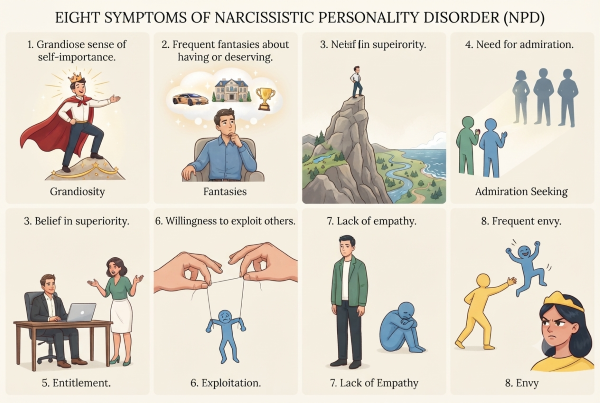
Narcissistic personality disorder symptoms generally fall into two categories: an outward display of grandiosity, and a hidden vulnerability underneath it.
Common outward symptoms include:
- An unreasonably high sense of self-importance
- Expecting special treatment without earning it
- Exaggerating achievements or talents
- Believing they can only be understood by equally “special” people
- Taking advantage of others to get what they want
- Struggling to recognize or care about others’ feelings
Common hidden symptoms include:
- Becoming defensive or enraged at perceived criticism
- Secret feelings of shame, insecurity, or fear of failure
- Difficulty managing stress or adapting to change
- Withdrawing from situations where they might fail
Narcissism vs Clinical NPD
Not everyone who seems self-centered has narcissistic personality disorder, and understanding this distinction matters more than most people realize.
Everyday Narcissistic Traits | Clinical NPD |
Occasional self-focus or vanity | Consistent, defining pattern across situations |
Can reflect on and adjust behavior | Rarely recognizes the pattern in themselves |
Doesn’t significantly damage relationships | Causes lasting relational and functional harm |
Situational, tied to stress or circumstance | Persistent since adolescence or early adulthood |
Some children display narcissistic traits that are simply typical for their age and don’t predict NPD later in life. The disorder is defined by rigidity and lasting impairment, not a single trait.
Not sure if it’s NPD or something else? Solutions Healthcare can help, call (386) 866-3600.
Narcissistic Personality Disorder Causes
There’s no single known cause of narcissistic personality disorder, and researchers believe it develops from a mix of factors rather than one clear trigger.
According to Mayo Clinic, narcissistic personality disorder may be linked to childhood environments, including parenting that swings between excessive adoration and excessive criticism, along with genetic and neurobiological factors.
Contributing factors often include:
- Overprotective or excessively praising parenting
- Neglectful or harshly critical parenting
- Inherited personality traits and temperament
- Differences in brain development tied to behavior and emotional regulation
None of these factors guarantee NPD develops, which is part of why the condition remains difficult to predict or prevent.
How NPD Affects Relationships and Family
Narcissistic personality disorder rarely stays contained to just one person. It shapes, and often damages, the relationships around them.
Family members frequently describe:
- Feeling unseen or unimportant despite closeness
- Walking on eggshells to avoid triggering criticism or rage
- Confusion after being blamed for the narcissistic person’s own mistakes
- Exhaustion from constantly managing someone else’s self-image
Families deserve support too. Call Solutions Healthcare to learn more.
Children raised by a parent with NPD often internalize the idea that their own needs matter less than the parent’s image. That pattern can follow them well into adulthood.
Narcissistic Personality Disorder Treatments That Help
Narcissistic personality disorder treatments center almost entirely on psychotherapy, since no medication treats the condition directly.
Expert Advice: Focus on your own boundaries, not on changing someone else.
Effective treatment approaches include:
- Individual psychotherapy, especially schema therapy or psychodynamic approaches
- Cognitive behavioral therapy to identify and shift distorted thinking patterns
- Family therapy to address relational harm and rebuild healthier communication
- Group therapy, which can help build genuine empathy through peer feedback
Progress tends to be gradual. Recognizing the pattern in the first place is often the hardest, and most important step.
Why People With NPD Rarely Seek Help
People with narcissistic personality disorder often don’t believe anything is wrong, which is a major reason so few ever start treatment.
Mayo Clinic notes that when people with NPD do seek treatment, it’s usually for related symptoms like depression or substance misuse, rather than for narcissistic traits themselves, since perceived insults to self-esteem make treatment difficult to accept.
This is why family involvement matters so much. A loved one may be the one who first recognizes the pattern, even if the person with NPD isn’t ready to acknowledge it themselves.
NPD and Substance Use
Narcissistic personality disorder and substance use disorders overlap more often than people expect, and treating one without addressing the other rarely works.
Alcohol or drugs can become a way to manage the shame, insecurity, and emotional dysregulation hiding underneath the outward grandiosity. When both conditions are present, a coordinated, dual diagnosis approach gives treatment a real chance of working.

Living With or Loving Someone With NPD
Living with or loving someone with NPD means protecting your own wellbeing while staying realistic about what you can and can’t change in someone else.
Helpful approaches include:
- Setting clear, consistent boundaries without expecting instant change
- Not internalizing blame that isn’t actually yours to carry
- Seeking your own therapy or support, separate from theirs
- Encouraging professional treatment without trying to force it
Loving someone with NPD is genuinely draining. Getting your own support isn’t a betrayal of them; it’s necessary for you.
NPD Support at Solutions Healthcare
Solutions Healthcare understands that narcissistic personality disorder rarely shows up alone. It often overlaps with depression, anxiety, or substance use, which is why our Dual Diagnosis Program treats co-occurring conditions together rather than in isolation.
Our clinical team uses Cognitive Behavioral Therapy and comprehensive therapy to help clients recognize distorted thought patterns and build healthier ways of relating to others. Because personality disorders affect the whole family, we also offer a dedicated family therapy program to help loved ones set boundaries and begin repairing relational damage.
Whether someone is beginning to recognize their own patterns or a family member is trying to understand what’s happening, our team meets people with compassion rather than judgment. Solutions Healthcare is accredited by The Joint Commission and licensed throughout Florida. If this sounds familiar, contact us or call (386) 866-3600.
FAQs
What is a narcissistic person?
A narcissistic person consistently prioritizes admiration, recognition, and maintaining a positive self-image over the feelings or needs of others. While narcissistic traits exist on a spectrum, persistent grandiosity, limited empathy, and relationship difficulties may indicate a more serious underlying personality disorder requiring professional evaluation.
What is narcissistic personality disorder?
Narcissistic personality disorder (NPD) is a diagnosable mental health condition characterized by an inflated sense of self-importance, an excessive need for admiration, and fragile self-esteem beneath outward confidence. These long-standing patterns significantly affect relationships, work, and overall daily functioning.
What are the symptoms of narcissistic personality disorder?
Common symptoms include grandiosity, an exaggerated sense of achievement, a constant need for admiration, entitlement, difficulty empathizing with others, and strong emotional reactions to criticism. These patterns are persistent, occur across different situations, and often interfere with healthy personal and professional relationships.
What causes narcissistic personality disorder?
The exact cause of narcissistic personality disorder remains unknown, but research suggests it develops through a combination of genetic influences, brain development, and early life experiences. Parenting styles, childhood adversity, excessive praise, or chronic criticism may all contribute without being sole causes.
What are the treatments for narcissistic personality disorder?
Treatment primarily focuses on psychotherapy, with approaches such as schema therapy, cognitive behavioral therapy, and psychodynamic therapy commonly used. Family or group therapy may also help improve relationships. Although medications may address co-occurring conditions, none specifically treat the core features of NPD.
Is being narcissistic the same as having NPD?
No. Many people occasionally display narcissistic traits, such as wanting recognition or feeling self-important. Narcissistic personality disorder is a clinically diagnosed condition involving persistent behavioral patterns that significantly impair relationships, emotional wellbeing, and functioning across multiple areas of everyday life.
Can a narcissistic person change?
Yes, meaningful change is possible, but it usually requires long-term commitment to specialized therapy and genuine motivation to improve. Because recognizing unhealthy patterns can be difficult for someone with NPD, progress is often gradual rather than immediate, with improvements building steadily over time.
Why don’t people with NPD seek treatment?
Many individuals with narcissistic personality disorder do not initially seek treatment because they may not recognize their behaviors as problematic. Instead, they often enter therapy following relationship breakdowns, work difficulties, depression, anxiety, or other life crises that create significant emotional distress.
Does narcissistic personality disorder run in families?
Research suggests genetics may contribute to the development of narcissistic personality disorder, while childhood experiences and family dynamics also play important roles. Factors such as excessive praise, harsh criticism, neglect, or inconsistent parenting may increase risk, although no single cause explains every case.
Can NPD occur alongside addiction?
Yes. Narcissistic personality disorder frequently co-occurs with substance use disorders, depression, and anxiety. Some individuals may misuse alcohol or drugs to cope with underlying shame, insecurity, or emotional distress, making integrated treatment for both conditions especially important for long-term recovery.
How do I set boundaries with a narcissistic family member?
Setting clear, calm, and consistent boundaries is often more effective than arguing or trying to change the person’s behavior. Prioritize your own wellbeing, communicate expectations respectfully, and consider seeking individual therapy to strengthen coping skills and maintain healthy relationship boundaries over time.
When should someone seek professional help for narcissistic traits?
Professional help is appropriate when narcissistic traits consistently damage relationships, interfere with work or daily responsibilities, or cause significant distress. A comprehensive evaluation by a qualified mental health professional can determine whether treatment may improve functioning and overall quality of life.
Medical Disclaimer: This blog is for informational purposes only and is not a substitute for professional medical advice, diagnosis, or treatment; please consult a qualified healthcare provider or visit Solutions Healthcare for personalized guidance.