
Questions about drinking age restrictions arise more often than people would like to believe, be it from a parent who is concerned about the party their teen mentioned or from a young adult who is trying to understand what is and is not legal. There’s more to Florida law than people think.
Florida has a 21-year legal drinking age with no general exception for private homes, parental supervision, or personal consumption. It is illegal to possess or consume alcohol statewide at an age under 21 with very few exceptions based on specific employment/educational situations. This is a law that is strictly enforced in Florida, and punishment may include fines, time in jail and a criminal record.
Many families think there is greater flexibility than is actually the case, such as drinking at home when a parent is available. However, in Florida, that can mean actual legal issues.
Read on to learn the truth about underage drinking and the law, what the consequences are for each infraction, and when it becomes a serious issue that should be addressed.
Can You Drink in Florida at 18?
No, you cannot legally drink in Florida at 18. The legal drinking age is 21 for both purchasing and possessing alcohol, with almost no exceptions based on age alone.
Turning 18 in Florida does allow certain alcohol-related activities, but drinking itself isn’t one of them.
- At 18, a person may work in licensed establishments serving alcohol
- At 18, a person may taste alcohol as part of an accredited culinary program
- Neither exception allows personal consumption
Worried about underage drinking in your family? Call Solutions Healthcare for confidential guidance
Is There Any Exception to the Drinking Age?
Florida’s exceptions are narrower than many people expect, and there is no general parental or private-residence exception. Even alcohol consumed at home with a parent present is still illegal for someone under 21.
Florida Statute 562.111 makes it unlawful for anyone under 21 to possess alcoholic beverages, with only limited exceptions for employment in licensed alcohol establishments and educational tasting within accredited postsecondary programs.
The two recognized exceptions include:
- Employment at 18 or older in a licensed establishment, while working
- Educational tasting at 18 or older, strictly for instructional purposes
100% Confidential Support is Available 24/7
No matter what you’re going through, you’re not alone. Our dedicated team is here to provide a safe, judgment-free space where you can talk openly and honestly. Whether you need emotional support, resources, or just someone to listen.
We’re here for you—completely confidential and always respectful of your privacy. Call us today!
What Happens If You’re Caught Underage Drinking?
Getting caught with alcohol underage in Florida typically results in criminal charges, even if the alcohol was unopened or belonged to someone else. Both actual and constructive possession can lead to charges.
Consequences can include:
- Arrest and criminal charges
- Fines and court costs
- Possible jail time
- Mandatory driver’s license suspension
- A criminal record affecting college or job applications
Not sure how serious a recent situation really is? Solutions Healthcare can help your family think it through.
Contact Solutions Healthcare
Battling with Drug and Alcohol Addition? Remember, you are not alone and we are here to help you!
Underage Drinking Penalties in Florida
Florida’s penalties increase with repeat offenses, and even a first offense carries real consequences.
Offense | Classification | Potential Penalty |
First offense | Second-degree misdemeanor | Up to $500 fine, 60 days jail |
Second offense | First-degree misdemeanor | Up to $1,000 fine, 1 year jail |
Either offense | License impact | Mandatory driver’s license suspension |
Fact: Florida’s legal drinking age has remained 21 since the 1984 national law.
Why the Legal Drinking Age Is 21
The drinking age of 21 exists primarily to protect still-developing brains and reduce alcohol-related injuries and deaths among young people. This isn’t an arbitrary number.
The National Institute on Alcohol Abuse and Alcoholism notes that the brain continues developing into the mid-twenties, and early alcohol exposure is associated with a higher risk of developing alcohol use disorder later in life.
Understanding the reasoning behind the law can make it easier to have honest conversations with teens instead of framing it as an arbitrary rule.
Risks of Underage Drinking You Should Know
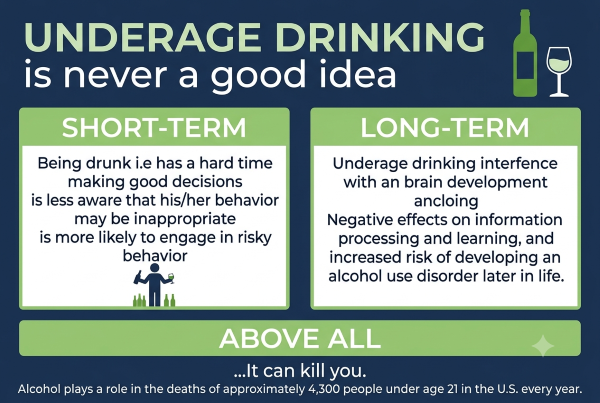
Underage drinking carries risks that go beyond legal trouble, affecting brain development, decision-making, and long-term health. These risks are often underestimated.
Known risks include:
- Impaired brain development during critical growth years
- Higher risk of alcohol-related accidents and injuries
- Increased likelihood of developing alcohol use disorder later
- Greater risk of risky sexual behavior or academic decline
- Interference with emotional regulation and mental health
The CDC reports that underage drinking contributes significantly to preventable injuries and deaths among youth each year, including motor vehicle crashes and alcohol poisoning.
100% Confidential Support is Available 24/7
No matter what you’re going through, you’re not alone. Our dedicated team is here to provide a safe, judgment-free space where you can talk openly and honestly. Whether you need emotional support, resources, or just someone to listen.
We’re here for you—completely confidential and always respectful of your privacy. Call us today!
When Underage Drinking Becomes a Bigger Problem
Occasional underage drinking, while illegal, doesn’t automatically mean addiction. But certain patterns signal it’s becoming something more serious that deserves attention.
Expert Advice: Talk openly with teens about alcohol risks before problems ever start.
Watch for escalating patterns, secrecy, or drinking used specifically to cope with stress, anxiety, or emotional pain.
Signs of Alcohol Use Disorder in Teens
Recognizing alcohol use disorder in a teen or young adult early can make treatment far more effective. The signs often look different than they do in adults.
Warning signs include:
- Drinking to cope with stress or emotions
- Secretive behavior around alcohol use
- Declining grades or withdrawal from activities
- Mood swings or increased irritability
- Continued drinking despite legal or family consequences
100% Confidential Support is Available 24/7
No matter what you’re going through, you’re not alone. Our dedicated team is here to provide a safe, judgment-free space where you can talk openly and honestly. Whether you need emotional support, resources, or just someone to listen.
We’re here for you—completely confidential and always respectful of your privacy. Call us today!
Treatment Options for Underage Drinking
Effective treatment for underage or young adult drinking typically combines therapy, family involvement, and education rather than punishment alone. Addressing the underlying reasons for drinking matters as much as stopping the behavior itself.
Helpful treatment options include:
- Individual therapy to address underlying stress or anxiety
- Family therapy to rebuild communication and trust
- Group therapy with peers facing similar challenges
- Education on alcohol’s effects on the developing brain
- Dual-diagnosis treatment when other mental health concerns are present
Get Help for Underage Drinking Today
Solutions Healthcare connects families across Central Florida with a trusted network of treatment centers, including Palm Coast Treatment Solutions, DeLand Treatment Solutions, and Florida Atlantic Coast Treatment Solutions, each offering evidence-based care for alcohol use and co-occurring mental health needs.
Our residential treatment programs and alcohol addiction treatment services provide structured, compassionate support for young people and their families navigating early alcohol use.
What makes our network different:
- Multiple licensed facilities across Central Florida
- Family-inclusive treatment planning
- Dual-diagnosis care for co-occurring mental health conditions
- Individualized treatment instead of a one-size-fits-all program
- A calm, supportive environment for real healing
If underage or early drinking has become a family concern, you don’t have to navigate it alone. Call Solutions Healthcare at (386) 866-3600 or visit our contact page to get started.
FAQs
What is the legal drinking age in Florida?
The legal drinking age in Florida is 21. People under 21 generally cannot legally purchase, possess, or consume alcoholic beverages. While a few narrow exceptions exist for certain employment and educational activities, they do not permit general underage drinking or recreational alcohol use.
Can you drink in Florida at 18?
No. Turning 18 does not make it legal to drink alcohol in Florida. The state’s minimum legal drinking age remains 21 for purchasing, possessing, and consuming alcoholic beverages, regardless of whether someone is considered a legal adult for most other rights and responsibilities.
Is there a parental exception to Florida’s drinking age?
No. Florida does not provide a broad legal exception allowing parents to give alcohol to their underage children, even inside a private home. Unless a specific legal exception applies, individuals under 21 are generally prohibited from possessing or consuming alcoholic beverages throughout the state.
What happens if a minor is caught with alcohol in Florida?
A minor found possessing alcohol in Florida may face criminal charges, fines, community service, possible jail time, and mandatory suspension of driving privileges. The exact penalties depend on the circumstances, prior offenses, and whether additional alcohol-related violations or criminal charges are involved.
What is the penalty for a first underage drinking offense?
A first underage alcohol offense is generally charged as a second-degree misdemeanor in Florida. Penalties may include fines of up to $500, up to 60 days in jail, probation, community service, and suspension of the offender’s driver’s license under certain circumstances.
What is the penalty for a second underage drinking offense?
A second underage alcohol offense is generally treated more seriously and may be charged as a first-degree misdemeanor. Potential penalties include fines of up to $1,000, up to one year in jail, probation, and longer driver’s license suspension depending on the specific circumstances.
Why is the legal drinking age 21 instead of 18?
The minimum drinking age of 21 reflects research showing the brain continues developing into the mid-twenties. Delaying alcohol exposure helps reduce alcohol-related crashes, injuries, and the long-term risk of developing alcohol use disorder or other substance-related health problems later in adulthood.
Are there any legal exceptions to Florida’s drinking age?
Yes. Florida law includes limited exceptions allowing individuals 18 and older to handle or serve alcohol while working in licensed establishments or participate in approved educational tasting programs. These exceptions are narrow and do not authorize general underage alcohol consumption.
Can underage drinking lead to addiction later in life?
Yes. Research consistently shows that people who begin drinking during adolescence have a greater likelihood of developing alcohol use disorder as adults. Earlier alcohol exposure can affect brain development, increase risky behaviors, and make future dependence more likely than delaying alcohol use.
What are signs a teen’s drinking has become a problem?
Warning signs include drinking to cope with emotions, declining grades, secrecy, mood changes, risky behavior, frequent intoxication, and continuing to drink despite negative consequences at home, school, or with friends. Early professional evaluation can help prevent more serious alcohol-related problems from developing.
Does underage drinking affect college or job opportunities?
Yes. Underage drinking charges may create a criminal record that can affect college admissions, scholarships, financial aid eligibility, professional licensing, military service, and future employment opportunities. The long-term impact depends on the offense, legal outcome, and an individual’s overall record.
Where can I get help for underage drinking in Florida?
Solutions Healthcare provides family-centered addiction treatment for adolescents and adults throughout its Central Florida network. If you are concerned about underage drinking, call (386) 866-3600 for a confidential assessment, insurance verification, and information about personalized treatment and family support services.
Medical Disclaimer: This blog is for informational purposes only and is not a substitute for professional medical, mental health, or legal advice; please consult a qualified provider or attorney, or contact Solutions Healthcare for personalized guidance.