
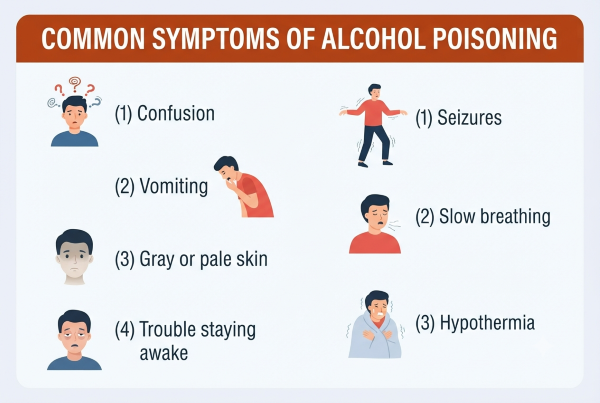
What are signs of alcohol poisoning? Alcohol poisoning is a life-threatening medical condition that can lead to vomiting, confusion, irregular and slow breathing, seizures, blue/pale skin tone, hypothermia (low body temperature), and unconsciousness. Call 911 right away if you think that someone has alcohol poisoning and do not wait for him or her to “sleep it off.
Alcohol poisoning is not just an overindulgence in booze. If the question is what does alcohol poisoning look like, it’s useful to have the warning signs to hand so you may be able to save someone’s life. Alcohol poisoning occurs when an individual consumes large quantities of alcohol, which causes one’s breathing, heart rate, body temperature, and consciousness to become slow or cease to function. It is possible to avoid permanent brain damage and death if alcohol poisoning is recognized in time and treated as soon as possible.
Key Takeaways
- Alcohol poisoning is a serious medical condition and must be treated right away.
- Signs are slow or stopped breathing, unconsciousness, seizures, and repeated vomiting.
- Don’t assume that they’ll “sleep it off.
- If alcohol poisoning is suspected, contact 911 immediately.
- Never leave the person alone or make him/her vomit.
- Regardless of the person’s apparent improvement afterwards, professional medical evaluation is essential.
What Does Alcohol Poisoning Look Like?
Just as many people think they are “very drunk,” they might be suffering from alcohol poisoning. But alcohol poisoning is much more serious.
Someone suffering from alcohol poisoning might:
- Become extremely confused
- Be difficult or impossible to wake up
- Vomit repeatedly
- Have seizures
- Control their breathing, make it very slow or hold their breath between breaths.
- Look white, blue or grey
- Lose consciousness
If a person exhibits these symptoms (assuming it is an emergency!), Every minute matters.
What Is Alcohol Poisoning
Alcohol poisoning is when there is so much blood alcohol in the blood that the body’s main life processes are affected.
Alcohol poisoning can impact you in ways that a hangover can.
- Breathing
- Heart rate
- Body temperature
- Gag reflex
- Consciousness
These changes can be life-threatening if not treated immediately.
Acute Alcohol Poisoning
Acute alcohol poisoning is caused by drinking a quantity of alcohol that is harmful in a brief time period. Blood alcohol is allowed to accumulate while they are drinking, and it only leaves the body slowly.
Critical Signs Of Alcohol Poisoning
Severe symptoms of alcohol intoxication:
The most harmful symptoms are:
- Mental confusion
- Inability to stay awake
- Continuous vomiting
- Seizures
- Fewer than 8 breaths per minute of breathing (slow breathing).
- Breaths taken more than 10 seconds apart.
- Blue or light-colored lips and skin.
- Low body temperature
- Loss of consciousness
These warning signs are all too common and should never be overlooked.
If someone cannot be awakened, immediately call 911.
Symptoms Of Alcohol Poisoning
Different people experience different symptoms, depending upon such factors as age, weight, health, and amount of alcohol ingested.
Common symptoms include:
- Poor coordination
- Slurred speech
- Severe confusion
- Vomiting
- Slow heartbeat
- Slow breathing
- Cold, clammy skin
- Bluish skin color
- Unresponsiveness
The intensity of the symptoms can get even worse after the person has stopped drinking, as alcohol can still pass into the blood.
How Much Alcohol Causes Alcohol Poisoning
There’ll be no set number. This depends on weight, sex, tolerance, food consumption, medication use, and the rate of consumption of alcohol. However, drinking large quantities of alcohol in a single session, five or more alcoholic beverages in a two-hour period for men and four or more for women, increases the risk considerably. It increases even more when combined with opioids or sedatives. The best way to do this is to steer clear of excessive drinking to begin with.
Alcohol Poisoning BAC Level
The alcohol in the blood rises to a level known as the alcohol poisoning BAC Level.
Blood alcohol content (BAC) is the amount of alcohol found in someone’s blood.
Alcohol poisoning can’t be diagnosed based on a person’s BAC, though the levels tend to be high when someone has serious symptoms. Their symptoms are evaluated by medical personnel with their alcohol exposure in mind.
If they have life-threatening symptoms, someone with a lower BAC still may need emergency treatment.
What Does Alcohol Poisoning Look Like On The Skin
But the skin will frequently tell the tale.
Possible changes include:
- Pale complexion
- Blue lips
- Gray skin tone
- Cold skin
- Clammy feeling
- Excessive sweating
This is an indication that the heart is not maintaining good blood flow and demands urgent emergency medical attention.
What Does Alcohol Poisoning Do To The Body
It lowers the collagen in the brainstem responsible for controlling respiration and heart rate. This can reduce your breathing to a dangerous level, drop body temperature, and turn off your gag reflex, increasing the chances of choking on vomit. If not treated, it may result in permanent brain damage or death.
What Does Alcohol Poisoning Feel Like The Day After
People frequently experience fatigue, confusion, an upset stomach, and dizziness in addition to a headache and dehydration the following day. It’s not a normal hangover. Still, it requires medical attention if symptoms of confusion, chest pain, or persistent vomiting persist beyond the following day.
How Long Does Alcohol Poisoning Last?
The length of time will vary according to the following:
- Amount of alcohol consumed
- Individual metabolism
- Overall health
- Timeliness of response to treatment
Symptoms may improve in hours after emergency treatment. But for very severe cases, hospitalization, intensive monitoring, or more extended recovery times may be required.
How To Know If I Have Alcohol Poisoning
If you or people around you notice any critical signs such as confusion, vomiting, slow or irregular breathing, cold clammy skin, or difficulty staying conscious, it is an emergency. Do not “wait and see” to see if additional symptoms appear. It always pays to call for help when in doubt.
If you are concerned about your drinking or that of someone you love, you can’t go through it alone. Saying “no” to alcohol is not an easy task, and with real treatment options, Solutions Healthcare can help. Call now to speak to someone who will be able to assist.
How To Cure Alcohol Poisoning
There is no home remedy or cure for it. Cold showers, coffee and a stroll don’t help and can worsen the situation. There is no single real answer other than a 911 call, preventing the person from choking and transporting the victim to emergency services.
Alcohol Poisoning Treatment
Alcohol poisoning treatment in the emergency room includes the use of IV fluids, oxygen, monitoring heart and breathing, and, in extreme cases, a breathing tube. Blood glucose and electrolytes are also tested, as they can plummet during an overdose.
Once the crisis has subsided, the next step will be the treatment of the drinking pattern that caused the crisis, and this will help ensure that it does not happen again.
Get Help Before Alcohol Becomes Dangerous
Alcohol poisoning will happen only once, and it can be a sign of risky drinking. When you can’t control the drinking, professional assistance can make all the difference.
Solutions Healthcare offers understanding-centered, evidence-based treatment for people struggling with alcohol abuse and addiction as well as substance use disorders. From assessment and outpatient support to a unique recovery plan, our experienced team is at your service.
To talk with a compassionate individual about your health concerns, contact the Call Solutions Healthcare team today. With early intervention, you can hopefully avoid further emergencies and work towards long-term recovery.
Frequently Asked Questions
What are the five signs of alcohol poisoning?
The most common warning signs include confusion, repeated vomiting, slow breathing, seizures, and unconsciousness. Any of these symptoms should be treated as a medical emergency because alcohol poisoning can quickly become life-threatening.
How long after drinking does alcohol poisoning set in?
Alcohol poisoning can develop while someone is still drinking or after they stop. Alcohol continues entering the bloodstream from the stomach, meaning symptoms may worsen even after the last drink.
What are the three stages of alcohol poisoning?
Although alcohol affects people differently, severe intoxication often progresses from confusion and poor coordination to unconsciousness, then life-threatening breathing and circulation problems requiring immediate emergency medical treatment.
Do I have alcohol poisoning or a bad hangover?
A hangover usually causes headache, nausea, and fatigue while allowing a person to stay awake and respond normally. Alcohol poisoning involves confusion, slow breathing, unconsciousness, seizures, or inability to wake someone.
How to fix alcohol poisoning?
There is no home remedy. Immediate emergency medical care is the only safe treatment. Call 911, keep the person on their side if unconscious, stay with them, and never let them simply sleep it off.
What can be mistaken for alcohol poisoning?
Drug overdoses, diabetic emergencies, head injuries, strokes, seizures, severe infections, and low blood sugar may resemble alcohol poisoning. Because symptoms overlap, emergency medical evaluation is always recommended.
How much alcohol is enough to cause alcohol poisoning?
There is no fixed number of drinks. Risk depends on body size, age, sex, drinking speed, food intake, medications, and individual tolerance. Rapid binge drinking greatly increases the likelihood of alcohol poisoning.
Why do I feel ill 3 days after drinking?
Lingering dehydration, sleep disruption, inflammation, electrolyte imbalance, or other medical issues may contribute. Persistent vomiting, confusion, chest pain, or severe weakness should be evaluated by a healthcare professional promptly.
Is mild alcohol poisoning an emergency?
Yes. Symptoms can worsen rapidly because alcohol continues entering the bloodstream even after drinking stops. When alcohol poisoning is suspected, immediate medical evaluation is the safest choice.
Disclaimer
This article is intended for educational purposes only and should not replace professional medical advice, diagnosis, or treatment. Alcohol poisoning is a life-threatening medical emergency. If you suspect someone has alcohol poisoning, call 911 immediately or seek emergency medical care without delay.
References
- National Institute on Alcohol Abuse and Alcoholism (NIAAA). Understanding the Dangers of Alcohol Overdose. https://www.niaaa.nih.gov/publications/brochures-and-fact-sheets/understanding-dangers-of-alcohol-overdose
- Centers for Disease Control and Prevention (CDC). Alcohol and Public Health. https://www.cdc.gov/alcohol/
- Substance Abuse and Mental Health Services Administration (SAMHSA).