
If you’ve ever known someone who has struggled with addiction, you’ve likely seen more than just the drug use. Perhaps they appear emotionally withdrawn, forgetful, worried or unable to manage behaviors that were previously under their control. These changes are not simply a matter of willpower.
Drug Addiction can have a great effect on the brain and nervous system. A substance affects those nerve cell communications and in certain ways, both how the brain feels pleasure and how the body responds to stress over time. These changes may impact just about any aspect of a human being’s physical and mental well-being.
Many families who are looking for the answer to the question ‘Does Drug Addiction Affect the Nervous System? ‘ want to know why it is that their loved one appears to be different or why it’s so hard to stop using drugs. The bright side is that even though addiction can damage, healing and recovery are possible with the appropriate treatment and support.
Knowing how addictions influence the nervous system is a crucial beginning to finding healing and establishing a route to recovery.
Does Drug Addiction Affect The Nervous System?
Yes, Drug Addiction directly affects the nervous system by changing how the brain and nerve cells communicate. Most addictive substances alter neurotransmitters, which are chemical messengers responsible for thoughts, emotions, movement, memory, and behavior.
The nervous system consists of two major parts:
- Central Nervous System (brain and spinal cord)
- Peripheral Nervous System (nerves throughout the body)
When drugs enter the body, they interfere with normal communication pathways within these systems. Over time, repeated drug use can cause long lasting neurological changes that affect decision making, emotional regulation, and physical health.
According to the National Institute on Drug Abuse (NIDA), addictive substances can change brain circuits involved in reward, stress, learning, and self-control, leading to compulsive drug-seeking behaviors.
The necessary advice is getting assistance at Solutions Healthcare
Drug Addiction And Brain Communication
Drug Addiction disrupts the brain’s natural communication network. Normally, neurons send signals using neurotransmitters that help regulate mood, motivation, and behavior.
Common neurotransmitters affected by addiction include:
- Dopamine
- Serotonin
- GABA
- Glutamate
- Norepinephrine
Many drugs trigger large releases of dopamine, creating intense feelings of pleasure. Over time, the brain adjusts by producing less dopamine naturally or reducing the number of dopamine receptors.
As a result, individuals may experience:
- Reduced motivation
- Depression
- Emotional numbness
- Cravings
- Difficulty experiencing pleasure
This process helps explain why addiction becomes increasingly difficult to overcome without professional treatment.
100% Confidential Support is Available 24/7
No matter what you’re going through, you’re not alone. Our dedicated team is here to provide a safe, judgment-free space where you can talk openly and honestly. Whether you need emotional support, resources, or just someone to listen.
We’re here for you—completely confidential and always respectful of your privacy. Call us today!
Drug Addiction Effects On The Brain
Drug Addiction can physically change the structure and function of the brain.
Areas commonly affected include:
Prefrontal Cortex
This region controls:
- Decision making
- Impulse control
- Planning
- Judgment
Damage to this area may lead to risky behaviors and poor decision-making.
Limbic System
This system regulates:
- Reward
- Motivation
- Emotions
Addiction often strengthens reward pathways associated with drug use while weakening healthy sources of pleasure.
Hippocampus
The hippocampus plays a role in:
- Learning
- Memory
- Emotional processing
Chronic substance use may impair memory formation and cognitive function.
Research published by the National Institutes of Health shows that addiction can alter brain regions responsible for learning, memory, judgment, and behavioral control.
Contact Solutions Healthcare
Battling with Drug and Alcohol Addition? Remember, you are not alone and we are here to help you!
Drug Addiction And The Peripheral Nervous System
Drug Addiction does not only affect the brain. The peripheral nervous system can also suffer significant damage.
The peripheral nervous system controls:
- Sensation
- Muscle movement
- Organ function
- Pain perception
Some substances may damage peripheral nerves directly, leading to symptoms such as:
- Numbness
- Tingling
- Burning sensations
- Muscle weakness
- Poor coordination
Long term alcohol misuse, opioids, and certain stimulants have all been linked to nerve damage and neurological complications.
Drug Addiction Withdrawal Symptoms
Withdrawal occurs when the nervous system attempts to function without the substance it has become dependent upon.
Because drugs alter brain chemistry, the nervous system often struggles to regain balance during early recovery.
Common withdrawal symptoms include:
- Anxiety
- Depression
- Insomnia
- Irritability
- Sweating
- Tremors
- Muscle aches
- Cravings
Different substances produce different withdrawal experiences.
Substance | Common Withdrawal Symptoms |
Alcohol | Tremors, anxiety, seizures |
Opioids | Pain, nausea, sweating |
Cocaine | Fatigue, depression, cravings |
Benzodiazepines | Panic, insomnia, seizures |
Methamphetamine | Fatigue, mood changes |
Medical supervision is often recommended because certain withdrawal symptoms can become dangerous.
The Substance Abuse and Mental Health Services Administration (SAMHSA) notes that withdrawal management is often a critical first step in addiction recovery.
Drug Addiction Mental Health Effects
Drug Addiction and mental health are closely connected. Changes in the nervous system can significantly affect emotional well-being.
Common mental health symptoms include:
- Anxiety
- Depression
- Mood swings
- Panic attacks
- Irritability
- Emotional instability
Some individuals develop co-occurring mental health disorders that require specialized treatment.
When addiction and mental health conditions occur together, treatment outcomes improve when both issues are addressed simultaneously.
100% Confidential Support is Available 24/7
No matter what you’re going through, you’re not alone. Our dedicated team is here to provide a safe, judgment-free space where you can talk openly and honestly. Whether you need emotional support, resources, or just someone to listen.
We’re here for you—completely confidential and always respectful of your privacy. Call us today!
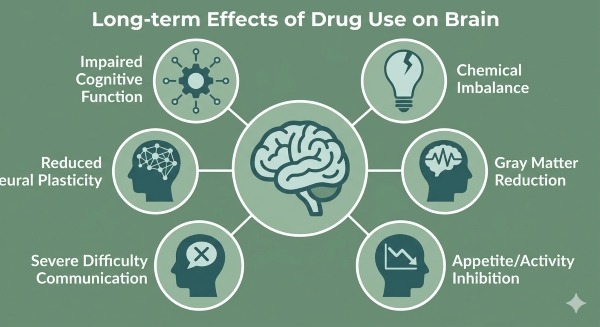
Drug Addiction Long-Term Risks
Long-term Drug Addiction can increase the risk of serious neurological and physical health complications.
Potential risks include:
- Cognitive impairment
- Memory problems
- Stroke
- Seizures
- Peripheral neuropathy
- Sleep disorders
- Mood disorders
- Increased overdose risk
The severity of these complications often depends on:
- Substance type
- Length of use
- Frequency of use
- Genetics
- Overall health
Early intervention can help reduce the risk of permanent damage.
Drug Addiction Recovery Timeline
The nervous system has an incredible ability to heal, but recovery takes time.
First Week
Many individuals experience:
- Acute withdrawal symptoms
- Emotional instability
- Sleep disturbances
- Strong cravings
First Month
Some improvements may include:
- Better sleep
- Improved concentration
- Reduced cravings
- More stable mood
Three To Six Months
Individuals often notice:
- Improved memory
- Better emotional regulation
- Increased energy
- Stronger coping skills
One Year And Beyond
Many neurological functions continue improving with sustained recovery, healthy habits, and ongoing treatment.
Research on neuroplasticity suggests the brain can form new neural connections during recovery, supporting long term healing after addiction.
Overcoming the neurological grip of addiction requires specialized care. Contact Solutions Healthcare right now to explore our supportive recovery plans.
100% Confidential Support is Available 24/7
No matter what you’re going through, you’re not alone. Our dedicated team is here to provide a safe, judgment-free space where you can talk openly and honestly. Whether you need emotional support, resources, or just someone to listen.
We’re here for you—completely confidential and always respectful of your privacy. Call us today!
Drug Addiction Recovery Steps
Successful recovery often involves more than simply stopping drug use.
Step 1: Professional Assessment
A comprehensive evaluation helps identify:
- Substance use patterns
- Mental health conditions
- Physical health concerns
- Treatment needs
Step 2: Medical Detox
Medical Detox provides a safe environment for managing withdrawal symptoms.
Step 3: Evidence-Based Therapy
Therapeutic approaches may include:
- Cognitive Behavioral Therapy (CBT)
- Dialectical Behavioral Therapy (DBT)
- Motivational Interviewing
- Trauma Therapy
Step 4: Relapse Prevention
Long term recovery plans often focus on:
- Trigger management
- Healthy coping skills
- Support systems
- Lifestyle changes
Step 5: Ongoing Support
Recovery is an ongoing process that benefits from continued accountability and support.
Drug Addiction Family Impact
Addiction affects entire families, not just the individual using substances.
Family members may experience:
- Chronic stress
- Anxiety
- Financial difficulties
- Relationship strain
- Emotional exhaustion
Education and family therapy can help loved ones better understand addiction and participate in the recovery process.
Strong family support often improves treatment engagement and long-term recovery outcomes.

Drug Addiction Treatment Solutions
Healing from Drug Addiction requires addressing both the physical effects on the nervous system and the emotional challenges that accompany substance use disorders. At Solutions Healthcare, individuals and families throughout Central Florida can access compassionate, evidence-based treatment designed to support long-term recovery.
SHC offers a comprehensive continuum of care, including addiction treatment, mental health services, dual diagnosis treatment, outpatient programs, medication management, and individualized therapy. Their clinical team utilizes proven approaches such as Cognitive Behavioral Therapy, Dialectical Behavioral Therapy, trauma-informed care, and relapse prevention planning to address the root causes of addiction.
What makes Solutions Healthcare is different; it’s their commitment to personalized care. Every treatment plan is tailored to the individual’s unique needs, helping clients heal physically, emotionally, and mentally while building a strong foundation for lasting recovery.
Ready to learn how professional treatment can help rewrite neural pathways and restore brain health? Contact Solutions Healthcare today.
FAQs
Does Drug Addiction permanently damage the nervous system?
Some nervous system damage caused by long-term substance use may be lasting, particularly after years of heavy addiction. However, many neurological functions can improve significantly with sustained recovery, proper treatment, healthy lifestyle changes, and ongoing support. The extent of recovery varies depending on the individual and substance involved.
Which drugs cause the most nervous system damage?
Several substances can significantly affect the nervous system when misused over time, including methamphetamine, cocaine, opioids, alcohol, and benzodiazepines. These drugs may alter brain function, damage nerve pathways, and contribute to long-term cognitive, emotional, and physical health problems when addiction remains untreated.
Can the brain recover from addiction?
Yes. The brain has an ability called neuroplasticity, which allows it to adapt and form new neural connections during recovery. Although healing takes time, many people experience improvements in memory, concentration, emotional regulation, and decision-making abilities as they maintain sobriety and participate in treatment.
Why does addiction affect decision making?
Addiction changes brain regions involved in judgment, impulse control, motivation, and reward processing. These neurological changes can make it more difficult to evaluate consequences, resist cravings, and make healthy decisions. Over time, substance use may become prioritized over responsibilities, relationships, and personal wellbeing.
What is peripheral neuropathy?
Peripheral neuropathy is damage to nerves outside the brain and spinal cord. It often causes symptoms such as numbness, tingling, burning sensations, pain, or muscle weakness. Long-term alcohol use and certain drugs can increase the risk of developing nerve damage and related neurological complications.
How long does it take the nervous system to recover?
Recovery timelines vary based on the substance used, duration of addiction, overall health, and treatment participation. Some improvements occur within weeks or months, while others may take years. Many people continue experiencing gradual neurological healing and functional improvement throughout long-term recovery and sustained abstinence.
Can addiction cause anxiety and depression?
Yes. Addiction often alters brain chemistry in ways that contribute to anxiety, depression, mood instability, and emotional distress. These symptoms may develop during active substance use or emerge during recovery. Treating both addiction and mental health concerns together generally leads to stronger and more lasting outcomes.
Are withdrawal symptoms related to the nervous system?
Yes. Withdrawal symptoms occur because the nervous system is adapting after becoming dependent on a substance. As the body attempts to restore balance, individuals may experience anxiety, irritability, sleep disturbances, tremors, mood changes, or other physical and psychological symptoms that vary by substance.
Does addiction affect memory?
Many addictive substances can negatively affect memory, learning, attention, and concentration, particularly with prolonged use. Cognitive difficulties may become noticeable during active addiction and early recovery. Fortunately, some memory and thinking abilities often improve over time through sobriety, treatment, and healthy lifestyle practices.
Is professional treatment necessary?
Professional treatment is not always required for every individual, but it significantly improves recovery outcomes for many people. Treatment addresses the physical, emotional, and psychological aspects of addiction while providing medical care, therapy, relapse prevention strategies, and support that can strengthen long-term recovery success.
Can family members help during recovery?
Yes. Family members often play a valuable role in recovery by providing encouragement, accountability, and emotional support. Family education and therapy can improve communication, reduce conflict, and help loved ones better understand addiction. Healthy family involvement is frequently associated with stronger long-term recovery outcomes.
What is dual diagnosis treatment?
Dual diagnosis treatment addresses both substance use disorders and co-occurring mental health conditions at the same time. Because these issues often influence one another, integrated treatment can improve symptom management, reduce relapse risk, and help individuals build healthier coping strategies for lasting recovery and emotional wellbeing.
References
- National Institute on Drug Abuse (NIDA) – Drugs, Brains, and Behavior: The Science of Addiction
- National Institutes of Health (NIH) – Neurobiology of Addiction
- National Institute of Neurological Disorders and Stroke
- Mayo Clinic – Drug Addiction Overview
- Cleveland Clinic – Substance Use Disorders
- American Psychological Association – Addiction and Recovery
- Centers for Disease Control and Prevention – Drug Overdose Prevention
This content is for informational purposes only and does not constitute medical advice or a clinical recommendation. For a personalized assessment, please consult a licensed mental health professional. To learn more about evidence-based mental health and addiction treatment in Florida, visit shc.health or call (386) 866-3600.