
In This Blog
- When rehab may become a viable option
- Signs that show more support is needed
- How rehab is good for young adults and adolescents
- Emotional problems that parents are likely to face
- The role that family plays in recovery
- How to be confident about treatment options
There are not more decisions that are challenging to a parent to take than the choice whether his or her son/daughter should be rehomed or not. Concern is likely to accumulate more, according to disparities in conduct, temper, morbidity or relations. When it comes to parents on the one hand, they might want to wish that everything will get better and on the other hand, they might be afraid that by waiting they will aggravate something.
Rehab does not deal with punishment and failure. It is a systematic recovery support that is supposed to help in putting the individuals on their feet once again and a coping mechanism of substance use patterns and behaviors when they are put in a secure and enabling atmosphere.
At the very least, a wisdom on the timing when the rehab could be a valid option could come in handy to the families involved in informed and humane decision-making.
When is Rehab Worth Considering?
Rehab can be a correct choice in case of a person who has begun to use substances enough to disrupt his or her daily life, health, safety or emotional well-being. This is grounded on patterns and effects not a single instance.
Common situations of referring to rehab are:
- The further consumption of the substance when it is subjected to negative outcomes.
- Impairment in stopping or decreasing its use.
- Limiting the emotional or mental well-being.
- Awkwardness within the family or surpassing something within the strength of work.
Rehab can provide order and support when the attempts underway at outside of the treatment facility suddenly are not sufficient.
Expert Advice: “Early intervention through rehab improves long-term outcomes for young adults.”
Signs That a Higher Level of Support May Be Needed
Slow changes are normally experienced by the parents before they see the situation as serious. These indicators may be regarded as a wake-up call that help is in more demand.
Area Affected | Common Warning Signs |
Behavior | Isolation, being secretive, mood swings |
Health | Sleep changes, appetite changes, frequent illness |
Responsibilities | Missed school, work, or commitments |
Emotions | Anxiety, being irritable and emotionless |
Safety | Risk-taking or decreased judgment |
Not every sign means that there is a need for rehab; however, trends in different areas can mean that there is a need for professional support.
Contact Solutions Healthcare
Battling with Drug and Alcohol Addition? Remember, you are not alone and we are here to help you!
How Rehab Helps Sons and Daughters Recover
Rehab, too, must provide time off and other items, also. It provides an organized environment of therapeutic powers, emotional regulation and everlastingness.
Key aspects of rehab include:
- Patterns-based therapeutic support for addiction.
- In order to overcome emotional challenges, behavioral health care.
- Benevolence and support of fellow humans.
- Life after treatment recovery planning.
The prison helps the person to be in rehabilitation without the hassles or demands of their daily living.
FACT: Family involvement significantly improves recovery outcomes and reduces relapse risk.
Addressing Common Parental Concerns
The parents will probably develop anxieties towards the process of rehab because they think it will be so much or will be stigmatized. In fact, the current rehabilitation programs are founded on dignity, respect and personal care.
Some of the concerns normally raised by parents would be:
- Fear of labeling or judgment
- Fear of being upset in education or employment.
- Conscience because of sending a child away.
- Uncertainty about outcomes
It is not a permanent separation from rehab. It is a long-term well-being step that is a temporary one.
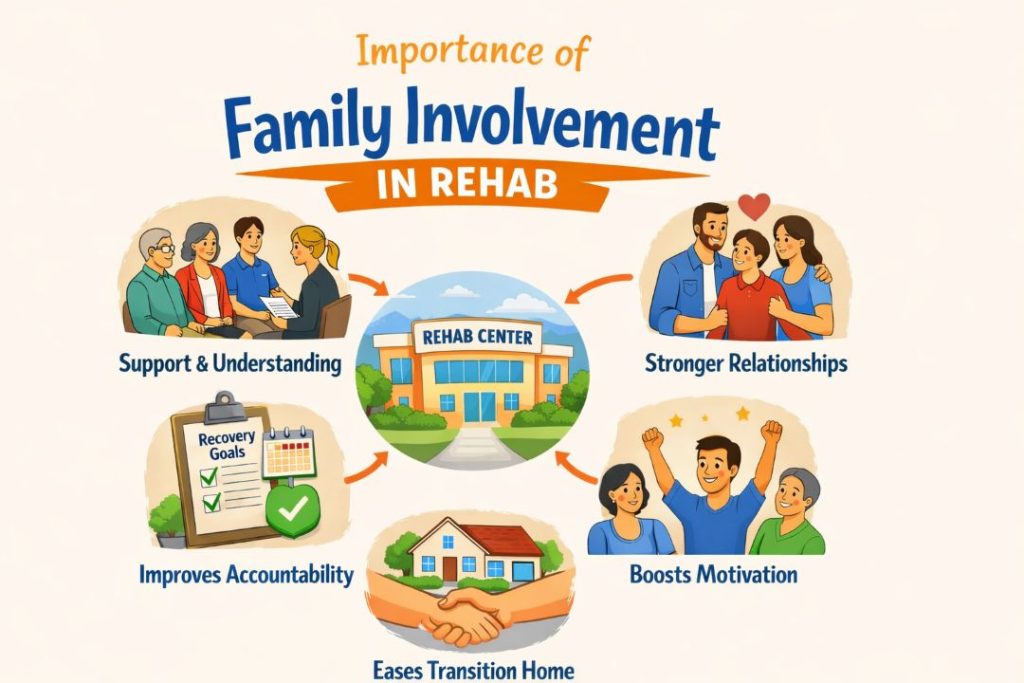
The Importance of Family Involvement
Engagement of family is very essential to recovery. Healthy communication, family boundary setting and education will often be promoted through rehab programs.
Family Role | How It Supports Recovery |
Education | Induces better understanding for substance use |
Communication | Reduces conflict and misunderstanding |
Boundaries | Encourages accountability and safety |
Support | Reinforce the progress once treatment has been done |
Speak with Solutions Healthcare for family-Focused Recovery Guidance
How to Start the Conversation About Rehab
Rehab is scary to talk about. The conversations that tend to be more effective are non-judgmental and calm conversations, concerned and not control-focused conversations.
Helpful approaches include:
- A moaning of some behaviours.
- Dividing the responsibility/ultimatums.
- Adequate concern with support and safety.
- Promotion of professional appraisal.
The collaborative tone has a better opportunity of being open and interactive.
A professional opinion, maybe, when it comes to early-age rearing, it can be a complex matter that is not easy to navigate.. Solutions Healthcare can experience the sense of being in a family, make some painful decisions and provide recovery in the form of evidence-based therapeutic provision to the drug and alcohol problems. Families are now seeking to pursue knowledge and understanding in a clear and illuminated way and understand with the help of programs that are tailored to each individual.
Get compassionate Rehab Guidance from Solutions Healthcare Today
Medical Disclaimer: This blog is for informational purposes only and is not a substitute for professional medical advice.
Key Takeaways
- Rehab is a culture of support, not a culture of punishment
- Continued use of substances and deterioration in emotional state is sometimes an indication for the need of rehab
- Rehab offers structure, therapy and treatment planning
- Family involvement leads to improved treatment outcomes
- Early support is likely to lead to better long term stability.
- Early support often leads to better long-term stability
- Professional guidance to help parents make informed decisions
Addiction Recovery and Rehab FAQs
At what point does someone need to go to rehab?
Rehab is typically needed when a person’s substance use becomes compulsive and uncontrollable, leading to a “Substance Use Disorder” (SUD). Key indicators include an inability to quit despite wanting to, severe withdrawal symptoms, and the use of substances interfering with work, health, or family life.
What is the success rate of going to rehab?
While “success” varies, research indicates that professional treatment programs have success rates of 40–60% for maintaining long-term sobriety. However, success is often cumulative; after 5 years of continuous recovery, the risk of relapse drops to less than 15%, which is comparable to the general population.
Who should go to rehab?
Rehab is for anyone whose quality of life is diminishing due to addiction. This includes those experiencing physical dependence (tolerance/withdrawal), those who have failed at self-directed attempts to quit, or individuals with “dual diagnosis”, where addiction co-exists with mental health issues like depression or anxiety.
Does rehab change a person?
Yes, rehab aims to “rewire” the brain’s reward system. Through therapy, the brain’s prefrontal cortex (logic and control) begins to regain function, helping a person move from a “survival mode” of seeking drugs to a state of emotional stability, better decision-making, and a restored capacity for natural joy.
What are 5 signs of an addiction?
- Tolerance: Needing more of the substance to get the same effect.
- Withdrawal: Feeling physically or mentally ill when stopping use.
- Loss of Control: Using more than intended or being unable to stop.
- Neglected Responsibilities: Falling behind at work, school, or home.
- Social Isolation: Withdrawing from loved ones or hobbies to use in secret.
What is the most common reason people go to rehab?
The most common primary driver for rehab admission is Alcohol Use Disorder, followed by opioid and stimulant use. Psychologically, the top reason people seek help is the need for a safe medical detox and the desire to escape the “cycle of relapse” that occurs when trying to quit alone.
Would you like me to help you find more information on the different types of rehab programs, such as inpatient versus intensive outpatient (IOP) care?
References
- National Institute on Drug Abuse (NIDA) – Principles of Effective Treatment
- Substance Abuse and Mental Health Services Administration (SAMHSA) – Family Support
- National Institute on Alcohol Abuse and Alcoholism (NIAAA) – Treatment Overview
- Centers for Disease Control and Prevention (CDC) – Substance Use and Families