
Key Takeaways
- Hydrocodone is a prescription opioid used for moderate to severe pain.
- Hydrocodone Side Effects can range from mild discomfort to dangerous complications.
- Long-term or improper use increases the risk of dependence and overdose.
- Hydrocodone Abuse often develops quietly and escalates over time.
- Treatment works best when started early and tailored to the individual.
Learning about the Hydrocodone Side Effects and Abuse of this drug is one of the methods a person, prescribed to use it or not, must be informed about or the relatives, who may be worried about the appearance of the person taking this medication. Hydrocodone can be used as well in the treatment of pain, but when misused, it is really harmful. Education about its effects on the body, abuse red flags, and referral can be a life-saving aspect. The guide is written in a clear and practical form, like an interview with a most wise friend who is interested in your safety.
What is Hydrocodone?
Hydrocodone is an authorized opioid analgesic. It is combined with acetaminophen and it is also known by such brand names as Norco or Vicodin. It is an opioid, and the functioning of this receptor is effective by attaching to the receptors that exist in the brain and the vertebral column, it modifies the level of the pain signal.
Hydrocodone, despite its effectiveness, also acts on the involved rewarding and pleasurable parts of the brain. That is why its chances of being abused are significantly greater than most non-opioid analgesics have.
Why is Hydrocodone Prescribed?
Doctors prescribe Hydrocodone to offer short-term pain relief following surgery, injuries, or serious health conditions. In other cases, it may be used in long term intensive medical treatment in instances of pain that are chronic.
Its administration in the most accurate manner can help people to work and recuperate. Increasing the dose is prone to revisiting issues in the case where the pill is increased instead of relying on the prescriptions or using it to avoid stress or to escape it at all.
Get expert guidance and compassionate support for recovery through Solutions Healthcare addiction treatment programs today
Hydrocodone Side Effects
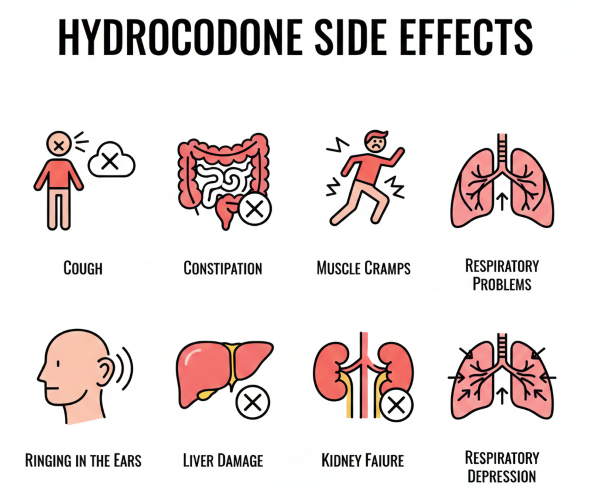
The Hydrocodone Side Effects are not widespread, although its effects are prevalent even in the localities where the drug is prescribed. Others experience only slight effects but such disorders can fade away as the body gets used to them. However, some do not fade away or get better as time goes by.
Hydrocodone does not tend to cause medical reactions; on the contrary, the drug is usually used almost at the end of the treatment method. The common Adverse reactions that Hydrocodone provokes are
- Drowsiness or fatigue
- Lightheadedness or light-headedness.
- Nausea or vomiting
- Constipation
- Headache
Such effects may interfere with normal functioning, such as driving or even in working. Regular side effects of hydrocodone are not to be overlooked but need to be disclosed to a health practitioner.
Adverse Effects of Hydrocodone
More adverse effects can be felt, especially when higher doses or even over time are administered. Moreover, they are not only uncomfortable but also dangerous.
These are the side effects that might occur:
- Slowed or shallow breathing
- Low blood pressure
- Misunderstanding or lost cognition.
- Mood change e.g. feeling irate or depressed.
- Liver damage (i.e. acetaminophen overdose).
Urgent medical assistance is vital in case any of the above symptoms have been experienced.
Hydrocodone Abuse
The Abuse of Hydrocodone takes place when the medication is used in a way that is not prescribed, as in higher dosages, more frequent use or without any prescriptions. The procedures of the abuse can begin without any intentions, especially when you get used to it, and the first dose is no longer effective.
The Abuse of Hydrocodone red flags could include the following:
- Leaking out a roll of prescription.
- Shopping on behalf of the doctors, or in a buying spurt of refills.
- The drug is concerned with emotions rather than pain.
- Differences in sleeping style, behavior or peer association.
Hydrocodone Abuse may bring about physical dependency and addiction as time goes on.
Mixing Hydrocodone with Other Substances
The outcome of combining hydrocodone with other drugs is a high risk. Alcohol, benzodiazepines (Xanax or Valium) and other opioids also prevent the central nervous system.
Substance mixing may lead to:
- Complications with extreme breathing.
- Loss of consciousness
- Increased overdose risk
The majority of fatal overdoses of hydrocodone include the combination of it with alcohol or tranquilizers at dosages that would be deemed typical.
Symptoms of Hydrocodone Overdose
A healthcare crisis is an overdose. The skill of being aware of the symptoms makes one save lives.
The following symptoms can manifest themselves by overdose of Hydrocodone:
- The lips and fingernails of a terrorist are black-purple or dark-green.
- Failure to respond or sanity.
- Gurgling or choking sounds
- Pinpoint pupils
Call an ambulance in the instance of the suspicion of an overdose. As long as the opioids overdoses are timely, Naloxone has the ability to reverse them.
Reclaim your life with effective addiction treatment programs and professionals at Solutions Healthcare right now
Benefits of Opiate Addiction Treatment
The treatment of the opiate addiction process is not only based on the abandonment of the drug use but also on health, stability, and confidence building. The professional treatment is not only concerned with the physical dependence, but the underlying factors that also cause the misuse.
Benefits include:
- Safe, supervised detox
- Reduced risk of relapse
- Physical and psychological health services.
- Long-term recovery planning
Through proper care, it is all a question of recovery.
Hydrocodone Addiction Treatment
Hydrocodone addiction must be treated individually. In the treatment plan at Solutions Healthcare, the medical care for the detox, therapy and follow-up recovery can be recommended.
It is possible to help people with the use of evidence-based approaches:
- Manage withdrawal safely
- Students acquire triggers and behaviors.
- Acquire coping skills of suffering and stress.
- Restore relations and usual functions.
When administered early, treatment is pertinent when it is administered prior to the development of drastic consequences.

Take the Next Step Toward Help
It is unnecessary to wrestle with it by yourself, so long as you or someone around you is wrestling with the use of hydrocodone. Solutions Healthcare offers a sensitive service that is understanding in nature to locate you wherever you are.
Make the call to Solutions Healthcare today, talk to a caring professional, and select the treatment options.
Disclaimer
This content is for educational purposes only and is not intended to replace professional medical advice, diagnosis, or treatment. Always consult a qualified healthcare provider regarding medication use or substance-related concerns.
Frequently Asked Questions (FAQ)
What are the side effects of hydrocodone?
Hydrocodone commonly causes drowsiness, nausea, constipation, dizziness, and headaches. More serious side effects include slowed breathing, confusion, and low blood pressure, especially with high doses or long-term use.
What three signs and symptoms are common indicators of opiate use?
Common indicators include pinpoint pupils, drowsiness or nodding off, and slowed speech. Behavioral changes like secrecy, mood swings, and neglecting responsibilities may also signal opiate use.
What does hydrocodone make you feel like?
Hydrocodone can create pain relief, relaxation, and a sense of calm or euphoria. Some people also feel sleepy or mentally foggy, which can increase the risk of misuse over time.
What are the symptoms of a Norco overdose?
A Norco overdose may cause slow or stopped breathing, extreme drowsiness, blue lips or nails, unconsciousness, and choking sounds. Immediate medical attention is essential.
What are the three main side effects of opioids?
The three main opioid side effects are respiratory depression, constipation, and sedation. These effects become more dangerous with higher doses or when combined with other depressants.
What is the peak effect of hydrocodone?
Hydrocodone typically reaches peak effects within 1 to 2 hours after oral use. During this time, pain relief and side effects are strongest, increasing overdose risk if misused.
Sources
- National Institute on Drug Abuse (NIDA)
- U.S. Food and Drug Administration (FDA)
- Substance Abuse and Mental Health Services Administration (SAMHSA)