
When you hear the words “opioids” and “opiates,” these terms may sound like they are used interchangeably, and often they are. It’s an easy mistake to make, but understanding the difference can help you understand a prescription, someone you’ve known taking a medicine and a fear of dependence.
Opioids and opiates are not the same: Opioids are any substance, natural, synthetic, or semi-synthetic, which binds to the opioid receptors; opiates are natural substances in opium poppy plants which bind to opioid receptors. To put it simply, all opiates are opioids, but not all opioids are opiates. These are real threats and they are present in these types of risks: dependence, misuse, overdose; all pose a real threat if not used properly.
This isn’t a trivia question; it’s applicable when looking at the risk of different drugs and when reflecting on the medical classification of a drug.
Read on to learn what opioids are, what opiates are, the kinds of opioids and why opioids and opiates are addictive in the first place.
Concerned about opioid or opiate use in your family? Call Solutions Healthcare
What Are Opioids?
The term opioid refers to any chemical that activates opioid receptors, specific binding sites on nerve cells throughout the body. Opioids fall into three categories: natural, synthetic, and semisynthetic.
Opioid receptors, once activated, slow down pain signals traveling through the body, which is the primary reason these medications are used for pain management.
Types of Opioids
Types of opioids are generally grouped by how they’re produced, which affects both their chemical makeup and how they’re classified.
Natural opioids (also called opiates) come directly from natural sources, discussed further below.
Synthetic opioids are made entirely from human-made materials in a lab. Common examples include:
- Fentanyl tablets and patches
- Methadone
- Meperidine
- Tramadol
- Buprenorphine
Semisynthetic opioids are made using natural opioid products, like morphine, combined with lab processing. Common examples include:
- Hydrocodone/acetaminophen
- Oxycodone
- Oxycodone/acetaminophen
- Hydromorphone
- Oxymorphone
What Are Opiates?
Opiates are chemicals that come directly from natural plant material, specifically the opium poppy plant. Two opiates commonly available as prescription medications are morphine and codeine.
Because opiates come from a natural source rather than a lab, they represent the original category from which the broader term “opioid” expanded over time.
Opioids vs. Opiates: What’s the Difference?
The core opioids vs. opiates difference comes down to origin. Opioids include natural, synthetic, and semisynthetic substances, while opiates refer only to the natural ones.
Category | Includes | Examples |
Opiates | Natural substances only | Morphine, codeine |
Synthetic opioids | Lab-made materials | Fentanyl, methadone, tramadol |
Semisynthetic opioids | Natural opioids processed further | Oxycodone, hydrocodone |
Fact: All opiates are opioids, but not all opioids are opiates technically.
Not sure which category a specific medication falls into? Solutions Healthcare can help you understand it.
Are Opioids the Same as Opiates?
Not exactly. An opiate is technically a type of opioid, but the reverse isn’t true. Prescription medications like morphine and codeine are opiates, while medications like oxycodone or methadone are opioids but not opiates.
This is why the terms get used interchangeably so often in everyday conversation, even though they aren’t precisely the same thing medically.
Are Opioids and Opiates Controlled Substances?
Yes, all opioids, including opiates, are classified as controlled substances in the United States. This legal classification exists specifically because of their documented potential for physical and psychological dependence.
Being a controlled substance means these medications are subject to stricter prescribing, dispensing, and monitoring requirements than non-controlled medications. Pharmacies track quantities closely, prescriptions typically can’t be refilled without a new prescription from a provider, and many states use prescription drug monitoring programs to flag patterns that could indicate misuse.
This classification isn’t unique to illicit use. It applies equally to a legitimate prescription for post-surgical pain or a long-standing opiate medication like morphine, which is exactly why even appropriately prescribed opioids and opiates come with real oversight built into how they’re dispensed.
What Do Opioids and Opiates Have in Common?
Opioids and opiates share three major similarities that matter more than their technical classification differences.
Both can:
- Lower feelings of pain in the body
- Cause serious side effects
- Lead to misuse and dependence
When used for a short period exactly as prescribed, both are generally considered safe. Risk increases significantly when instructions aren’t followed closely.
Why Are Opioids and Opiates Addictive?
Opioids and opiates are addictive because activating opioid receptors triggers a release of dopamine, the brain chemical responsible for feelings of pleasure.
This dopamine surge is a major reason opioids and opiates carry addiction risk, since the brain remembers the pleasurable feeling and seeks out the experience again, reinforcing continued use.
Understanding this mechanism helps explain why dependence can develop even when someone starts with a legitimate prescription.
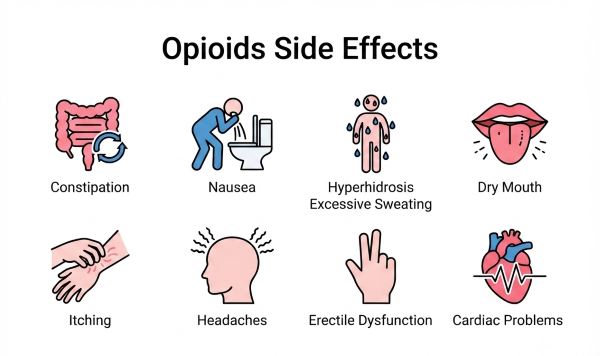
Side Effects of Opioids and Opiates
Side effects of opioids and opiates range from mild to serious, even with appropriate short-term use.
Common side effects include:
- Brain fog
- Drowsiness
- Constipation
- Nausea
More serious risks include dependence, opioid use disorder, and opioid overdose, particularly when medications aren’t taken exactly as prescribed.
Over 100,000 overdose deaths occurred in the U.S. in 2021, and more than 80% of them involved opioids, underscoring how significant this risk remains even with legal, prescribed medications.
Expert Advice: Never mix opioids with alcohol, benzodiazepines, or sleep medications together ever.
Safety Best Practices for Opioid and Opiate Use
Following a few key safety practices can significantly reduce risk for anyone prescribed an opioid or opiate.
Helpful safety practices include:
- Take medications only exactly as prescribed
- Use the lowest effective dose for the shortest time possible
- Share a full medication list with your pharmacist and provider
- Avoid alcohol entirely while taking opioids or opiates
- Keep naloxone on hand, since it’s now available over the counter
Higher doses of opioids carry a significantly greater risk of misuse and overdose, and even short-term use of just a few days can lead to dependence, making dosage and duration important safety considerations.
Not sure how to have this conversation with a loved one’s doctor? Solutions Healthcare can help.
Get Help Today At Solutions Healthcare
Solutions Healthcare connects individuals and families across Central Florida with a trusted network of treatment centers, including Palm Coast Treatment Solutions, DeLand Treatment Solutions, Florida Atlantic Coast Treatment Solutions, and Orlando Treatment Solutions, each offering evidence-based care for opioid and opiate dependence.
Our residential treatment programs provide medically supervised support for individuals recovering from opioid or opiate use, guided by licensed clinicians throughout every stage of recovery.
What makes our network different:
- Multiple licensed facilities across Central Florida
- Medically supervised detox and tapering when appropriate
- Dual-diagnosis treatment for co-occurring mental health conditions
- Family-inclusive treatment planning
- Individualized care instead of a one-size-fits-all program
If opioid or opiate use has become difficult to manage, you don’t have to face it alone. Call Solutions Healthcare at (386) 866-3600 or visit our contact page to get started.
FAQs
What are opioids?
Opioids are a class of natural, synthetic, and semisynthetic drugs that bind to opioid receptors in the brain and body. They are primarily used to relieve pain but can also produce feelings of relaxation and euphoria, which contributes to their potential for misuse and dependence.
What are the types of opioids?
Opioids are generally divided into three categories: natural opioids, known as opiates; semisynthetic opioids, such as oxycodone and hydrocodone; and synthetic opioids, including fentanyl and methadone. Each type acts on opioid receptors but differs in origin, potency, and clinical use.
What are opiates?
Opiates are naturally occurring opioid drugs derived directly from the opium poppy plant. Common examples include morphine and codeine, both of which have been used for decades to treat pain and, in some cases, suppress coughing under medical supervision.
What’s the difference between opioids and opiates?
The key difference is that opiates are naturally derived from the opium poppy, while opioids include all substances that act on opioid receptors, including natural opiates, semisynthetic medications like hydrocodone, and fully synthetic drugs such as fentanyl and methadone.
Are opioids the same as opiates?
No. While every opiate is considered an opioid, not every opioid is an opiate. The term opioid includes natural, semisynthetic, and synthetic substances, whereas opiates refer only to drugs that come directly from compounds found in the opium poppy plant.
What do opioids and opiates have in common?
Both opioids and opiates relieve pain by activating opioid receptors throughout the body. They can also cause similar side effects, including drowsiness and constipation, and both carry a significant risk of tolerance, dependence, addiction, and potentially life-threatening overdose when misused.
Why are opioids and opiates addictive?
Opioids and opiates increase dopamine activity in the brain’s reward system, producing pleasurable effects that reinforce repeated use. Over time, the brain adapts to their presence, leading to tolerance, physical dependence, cravings, and an increased risk of developing opioid use disorder.
What are common side effects of opioids and opiates?
Common side effects include drowsiness, constipation, nausea, dizziness, brain fog, and slowed reaction time. More serious risks include respiratory depression, physical dependence, addiction, and overdose, especially when opioids are combined with alcohol, benzodiazepines, or other sedating substances.
How can I safely use a prescribed opioid or opiate?
Take the medication exactly as prescribed, use the lowest effective dose for the shortest necessary period, avoid alcohol and other sedatives, store medication securely, and discuss naloxone availability with your healthcare provider in case of accidental overdose or emergency situations.
Can opioid or opiate dependence be treated?
Yes. Effective treatment often includes medically supervised detoxification, medication-assisted treatment, individual counseling, behavioral therapies, and ongoing recovery support. With appropriate care and long-term follow-up, many people successfully manage opioid dependence and achieve lasting recovery.
Where can I get help for opioid or opiate dependence in Florida?
Solutions Healthcare provides treatment for opioid use disorder and co-occurring mental health conditions throughout its Central Florida network. Call (386) 866-3600 to learn more about available treatment options, levels of care, insurance coverage, and personalized recovery support services.
Medical Disclaimer: This blog is for informational purposes only and is not a substitute for professional medical or mental health advice; please consult a qualified provider or contact Solutions Healthcare for personalized guidance.