
Key Takeaways
- Adderall is a prescription drug that is not an opioid but a non-opioid stimulant and acts on different brain pathways.
- The two drugs are controlled substances under Schedule II and hence the strict actions of the DEA.
- Opioids are mainly applied in the treatment of pain and Adderall treats narcolepsy and ADHD.
- Adderall is also highly addictive and prevalent with dismal health outcomes that also include cardiovascular disease, dependency and mental effects.
Whether you have ever asked yourself, “Is Adderall an opioid? or not, you are not alone. The misunderstanding of one type of drug with another is far more widespread among people who use prescription drugs frequently. The easy answer to this is no, Adderall is not an opioid. However, one should be aware of what Adderall is, its mode of action, and the difference between this drug and opioids to make sure that individuals who take this medication live with it or have a loved one using it do not fall into the misconception concerning this substance.
Adderall is an amphetamine salt drug that is a prescription-grade stimulant. A Schedule II controlled substance is a drug which can be misused. Unlike the opioids that unite to opioid receptors, which determine the perception of pain and regulate mood, Adderall connects to the central nervous system by means of increasing the levels of dopamine and norepinephrine. The mechanism of action of opioids is absolutely different and opioids and stimulants such as Adderall are pharmacologically different.
This misconception is normally widespread owing to the fact that the two groups of medications are controlled substances and they cannot easily be utilized without taking part in rigorous practices; they also influence the operations of the brain. Medical sources posit that Adderall is FDA-approved to be used in the treatment of ADHD and Narcolepsy, and opioids are mainly used to treat pain.
What is Adderall?
Adderall is a potent amphetamine, a type of stimulant capable of stimulating the central nervous system and putting one in a state of alertness. Adderall may seem paradoxical as far as those which are affected with attention deficit hyperactivity disorder (ADHD) are involved. It helps to upgrade the attention span, relaxation, and overall vigor as opposed to increased hyperactivity. The reason behind this is that the response that the ADHD brains have to the medication of stimulants is not identical to that of the normal brains.
It comprises of amphetamine combined with salts of amphetamine i.e. amphetamine and dextroamphetamine combined. With proper usage and supervision, Adderall has the potential to positively impact focus and concentration, together with impulse control in people with ADHD. It is also prescribed to Narcolepsy, which is a sleeping disorder of the excessive sleepiness in the day.
Adderall is a drug that is now under the Drug Enforcement Administration (DEA) in Schedule II as the Controlled Substances Act, such as cocaine and morphine, as the drug is easily abused and may cause various types of addiction. The dragging is characterized as a classification of a drug that has already been put into clinical use with high scores in terms of abuse potential.
The number of individuals who misused prescription stimulants such as Adderall, aged 12 and above, is estimated at 5.1 million in 2020. Thousands of students, athletes and even non-ADHD professional individuals who have Adderall to make them more focused, energetic or productive are involved as well and this habit has horrible health consequences. The secret to achieving the benefits and the risk it may potentially involve is that Adderall is not an opioid but rather a powerful stimulant.
Long-Term Effects of Adderall
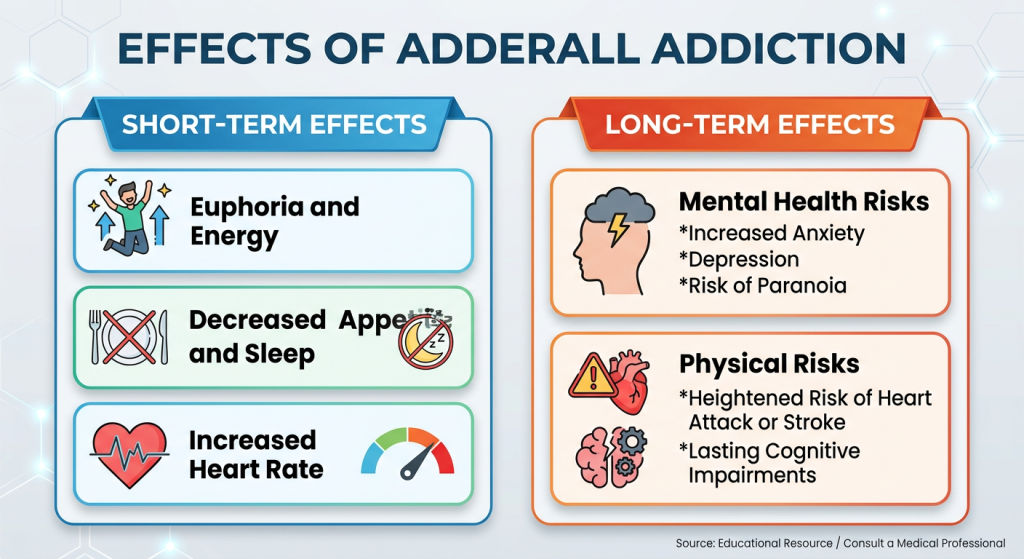
Although Adderall can be used to promote improved mental performance, long-term use, or excessive use of the substance can lead to adverse effects on mental and physical health. The long-term stimulation of the central nervous system can cause permanent alterations in brain activity and well-being.
Possible lasting side effects of misuse of Adderall include:
- Impaired nerve cells in the brain.
- Further risk of seizures.
- Development of psychotic symptoms
- Increased stroke.
- Cardiovascular damage and abnormal heart rhythms.
It should be stressed that such serious effects are normally linked to misuse or abuse, not with appropriate medical use under the supervision of professionals. Nonetheless, even those professed to be used might be perilous to those with already existing heart-related conditions or to those who have a mental illness.
Short-term Side Effects of Adderall
Besides the long-term dangers, there are short-term side effects that Adderall can produce, which can be characterized by mild nuisances to more severe health issues. These effects tend to be dose-dependent and differ in individuals.
Adjustable side effects in the short term are common and include:
- Restlessness and anxiety
- Problem falling or remaining asleep.
- Headaches
- Dizziness or lightheadedness
- Visual disturbances
- Sexual dysfunction or loss of sexual desire.
- Hallucinations or paranoia
- Existing mental health problems worsening.
Less frequent but more serious reactions may involve rapid heartbeat, chest pains, and a life-threatening increase in body temperature. These symptoms should be attended to with immediate medical attention.
Adderall Abuse and Risks
It is necessary to be aware of the danger of abusing Adderall because of the frequent cases
among young adults and students. Adderall is dangerous when not used under the supervision of a doctor or when taken in larger quantities than prescribed. Misuse can easily result in dependence and addiction, even in people who did not object to such use previously.
Prior to taking Adderall, it is important to consider the risks associated with it and trigger serious health problems. To illustrate this point, taking Adderall with alcohol or opioids will cover the effects that each substance has on the body, making it more probable to overdose. On the same note, when Adderall is used together with other stimulants (e.g. methamphetamine, cocaine or ecstasy), the stimulant effect will increase and pose a high risk of severe complications, including brain damage, liver damage, heart attack and stroke.
Ready to Learn More?
At Solutions Healthcare, we believe in empowering people with accurate information about medications and addiction. Whether you’re concerned about Adderall use, seeking treatment for addiction, or simply want to understand these drugs better, our team is here to help.
Call Solutions Healthcare at your convenience for a confidential consultation. We offer flexible treatment options and accept most major insurance plans.

Symptoms of Adderall Overdose
It is important to know the symptoms of an Adderall overdose, as it can save lives.
Amphetamine toxicity may manifest in acute symptoms, which worsen rapidly. In case you or one near you exhibits any of the following signs, get medical help at once:
Parched tongue and excessive thirst.
- High body temperature is dangerous.
- Dilated pupils
- Strained or fast breathing.
- Increase in energy and hyperactivity.
- Pain or ache in the chest.
- Extremely high heart rate.
- Confusion or disorientation
- Extreme hyperactivity
- Psychotic symptoms, such as hallucinations.
How Does Adderall Work in the Brain?
In order to see the differences between Adderall and opioids, it is necessary to analyze the effects of the drug on the brain. Adderall raises the levels of two neurotransmitters dopamine and norepinephrine. These chemicals are crucial in attention, motivation, and executive functioning.
There is the possibility that with ADHD, the brain is not able to control such neurotransmitters as efficiently. Adderall is used to normalize the state and to enhance concentration and willpower.
Conversely, the opioids are linked to the opioid receptors, both in the brain and in the body, and the greatest effects on these are generally on the perception of pain, mood and reward systems.
Due to their nature of acting on completely different biological systems, Adderall and opioids have different effects, risks, and medical applications. This is the basic distinction underlining the fact that Adderall is not an opioid but rather a stimulant.
Take Control of Your Health Today
Do you have any Adderall misuse or addiction issues or is it a loved one? Solutions Healthcare is a provider of all-encompassing and caring treatment plans designed to meet needs. Our qualified staff comprehends how badly a stimulant addiction may be developed and is committed to long-term recovery.
Contact Solutions Healthcare today to arrange a free and private meeting. Our staff is prepared to help you achieve a healthier future.
Immediate Actions for Adderall Overdose
Take immediate action in the event that the patient has overdosed on Adderall or is acutely intoxicated. Lifesaving measures taken in a short time will save lives:
As much as possible, keep the person alive and alert.
Following breathing and the level of consciousness.
When the individual turns unresponsive, roll him on his side so as to avoid choking.
Stay with the victim and provide emergency services with the information about the substance, time and quantity taken.
The effects of overdose are acute, and most of them are very dangerous, especially high blood pressure and life-threatening heart arrhythmias, stroke, severe agitation, panic attacks, rhabdomyolysis (breakdown of muscle), serotonin syndrome, seizure, coma and death. With the assistance of immediate medical care, they can be avoided.
Treatment for Adderall Addiction
Addiction to adderall is a severe health issue that may occur within a short period of time and necessitates medical care. Due to its effect on the reward system in the brain, even the first legitimate prescription may lead to a physical and a psychological addiction of long-term use, though it may have been given to prevent negative reactions.
Behavioral therapies that deal with the causes of substance use are usually a part of successful treatment. Evidence-based approaches include:
Cognitive Behavioral Therapy (CBT) in order to transform negative thoughts and behaviors. One-on-one therapy to identify the triggers and come up with coping skills.
Accountability and Connection Peer Support and Policies.
8There are also co-occurring mental health disorders such as depression or anxiety that should be treated. Life skills education to enhance everyday living and strength.
Adderall withdrawal may involve the following: depression, drowsiness and loss of pleasure (anhedonia). This stage can also be provided with necessary support by professional treatment and help individuals to recover safely and sustainably.
Ready to Learn More?
At Solutions Healthcare, we believe in empowering people with accurate information about medications and addiction. Whether you’re concerned about Adderall use, seeking treatment for addiction, or simply want to understand these drugs better, our team is here to help.
Call (386) 866-3600 Solutions Healthcare at your convenience for a confidential consultation. We offer flexible treatment options and accept most major insurance plans.
Disclaimer
This content is for informational and educational purposes only and should not be considered medical advice, diagnosis, or treatment. Always consult a qualified healthcare provider for guidance regarding medications, substance use, or mental health concerns.
Frequently Asked Questions
Is Adderall an opioid drug?
No. Adderall is a prescription stimulant containing amphetamine salts. It works on the central nervous system by increasing dopamine and norepinephrine. Opioids work on entirely different receptors and are primarily used for pain management, not attention or focus.
What class of drugs are Adderall?
Adderall is classified as a Schedule II controlled stimulant medication. It contains a combination of amphetamine and dextroamphetamine salts, making it a powerful psychostimulant used primarily to treat ADHD and narcolepsy under medical supervision.
What drugs are considered opioids?
Opioids include prescription medications like morphine, oxycodone, hydrocodone, and methadone, as well as illegal drugs like heroin. They bind to opioid receptors and are used primarily for pain relief. Common prescription opioids include OxyContin and Vicodin.
Is Adderall classified as a narcotic?
No. While Adderall is a Schedule II controlled substance, it’s not classified as a narcotic. Narcotics typically refer to opioid drugs. Adderall is categorized as a stimulant. However, both are controlled drugs due to abuse potential and require prescriptions.
Is Adderall similar to Oxycodone?
No. Oxycodone is an opioid painkiller, while Adderall is a stimulant for ADHD. They differ completely in how they work, their effects, and their medical uses. Both are controlled substances, but they’re in different drug classes.
What is classed as an opioid?
Opioids are drugs that bind to opioid receptors and include both natural substances (derived from the opium poppy plant) and synthetic medications. Examples include morphine, codeine, heroin, fentanyl, methadone, and prescription painkillers like Vicodin and OxyContin.