
If you or a loved one have begun taking Suboxone, you may have found that it’s far more regulated than other prescriptions. Special Documentation, Special Prescribers, Careful Monitoring. This is not a coincidence, and knowing why can help to explain the process.
Yes, Suboxone is a Schedule III controlled substance, which is an FDA classification of a special prescription drug that can only be prescribed by a licensed clinician who is federally qualified. Physicians must obtain a specific ID number to be able to prescribe Suboxone, and this number must be included on all prescriptions, as part of the Suboxone REMS Program. Schedule III drugs have a lower level of substance use disorder risk than Schedule I or II drugs, but a higher risk than Schedule IV or V.
It’s not a red flag classification. It’s a testament to the actual therapeutic benefits of Suboxone and the actual supervision of its use.
Continue reading to learn about what Suboxone is, its uses, and when Suboxone might appear in a drug test.
Have questions about Suboxone treatment? Call Solutions Healthcare
What is Suboxone?
Suboxone is a combination medication containing buprenorphine and naloxone, used to treat opioid use disorder. Buprenorphine eases cravings and withdrawal, while naloxone is included specifically to discourage misuse.
The two ingredients play very different roles. Buprenorphine is a partial opioid agonist that activates opioid receptors just enough to prevent withdrawal and reduce cravings, without the intense euphoria of full opioids like heroin or oxycodone, giving it a lower overdose risk even at higher doses. Naloxone, meanwhile, stays largely inactive when Suboxone is taken as directed under the tongue, only triggering withdrawal if someone tries to dissolve and inject it, which is exactly why this combination is considered safer and less prone to misuse than buprenorphine alone.
Suboxone is available as a sublingual film or tablet, and dosing is typically adjusted gradually under a provider’s supervision to find the right balance between symptom relief and side effects.
What is Suboxone Used For?
Suboxone is used to treat opioid use disorder as part of a broader medication-assisted treatment approach.
Suboxone treatment supports:
- Reducing opioid cravings
- Easing withdrawal symptoms
- Lowering the risk of relapse
- Supporting long-term recovery alongside therapy
Why is Suboxone Schedule III?
Suboxone’s Schedule III classification reflects a real, if moderate, potential for misuse, balanced against its significant medical value in treating opioid use disorder.
Schedule 3 controlled substances carry a lower risk for developing a substance use disorder than Schedule 1 and 2 drugs, but a higher risk than Schedule 4 and 5 drugs, and are typically prescribed for illnesses, injuries, and the management of addiction.
Fact: Suboxone requires a special DEA-registered prescriber under a federal program nationwide.
Not sure why your provider needed special certification to prescribe Suboxone? Solutions Healthcare can help explain it.
Suboxone Side Effects
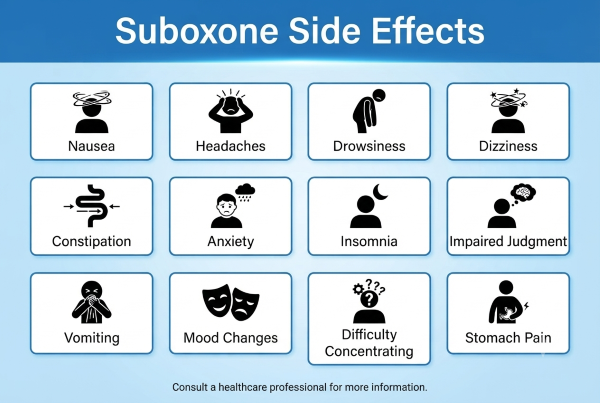
Common side effects of Suboxone tend to be mild, especially once the body adjusts to treatment.
Common side effects include:
- Headaches
- Nausea
- Constipation
- Sweating
- Insomnia
- Mild drowsiness
Most people notice side effects most strongly during the first few days or weeks of treatment, particularly during the induction phase when the dose is still being adjusted. For many, these effects ease noticeably as the body adapts to the medication.
Less common but more serious side effects can include liver problems, hormonal changes, or breathing difficulties, especially if Suboxone is combined with alcohol, benzodiazepines, or other sedating medications.
Expert Advice: Always fill Suboxone prescriptions only through a licensed, qualified provider directly.
Suboxone Treatment: What to Expect
Suboxone treatment typically begins with an induction phase, where a patient starts the medication once early withdrawal symptoms have set in, followed by ongoing dose adjustments guided by a qualified provider.
Suboxone blocks the effects of full opioids, such as heroin, fentanyl, or morphine, for at least 24 hours, and in some people, this blocking effect can last up to 72 hours.
Treatment usually continues alongside counseling or therapy, since medication alone doesn’t address the behavioral and emotional patterns tied to opioid use disorder.
Suboxone Withdrawal
Suboxone withdrawal symptoms are generally milder than full opioid withdrawal, though stopping suddenly without medical guidance still isn’t recommended.
Common withdrawal symptoms include:
- Muscle aches
- Anxiety and irritability
- Insomnia
- Nausea
- Cravings
A medically supervised taper significantly reduces discomfort compared to stopping abruptly. During a taper, a provider gradually lowers the dose over weeks or months, giving the body time to adjust at each step. This approach not only eases physical symptoms but also gives patients more time to strengthen the coping strategies and support systems that help prevent relapse once the medication is fully discontinued.
Psychological symptoms, including low mood, anxiety, or difficulty sleeping, can sometimes persist even after physical withdrawal symptoms resolve. Ongoing therapy during and after tapering can help address these lingering effects and support long-term stability.
Why Would Suboxone Show Up on a Drug Test?
Suboxone only shows up on a drug test if the specific panel being used tests for buprenorphine or its metabolites, or for naloxone. Standard drug panels don’t automatically include these substances.
Suboxone will not cause false positives for other opioids, since buprenorphine is chemically distinct from drugs like heroin, oxycodone, or morphine, and breaks down into different byproducts entirely.
If you’re taking Suboxone as prescribed, a legitimate prescription is generally protected, and disclosure isn’t required for most standard employment testing.
Not sure what a specific test result means for your situation? Solutions Healthcare can help you understand it.
Is Suboxone the Same as an Opioid?
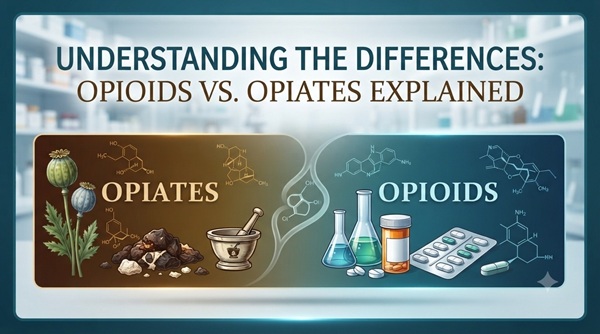
Suboxone contains buprenorphine, which is technically an opioid partial agonist, meaning it activates opioid receptors moderately without producing the same high as full opioids like heroin or oxycodone.
This is an important distinction. While buprenorphine is chemically an opioid, its effects and risk profile are meaningfully different from full opioids, which is exactly why it’s used to treat opioid use disorder rather than contributing to it.
Get Help Today at Solutions Healthcare
Solutions Healthcare connects individuals and families across Central Florida with a trusted network of treatment centers, including Palm Coast Treatment Solutions, DeLand Treatment Solutions, Florida Atlantic Coast Treatment Solutions, and Orlando Treatment Solutions, each offering evidence-based care for opioid use disorder.
Our residential treatment programs provide medically supervised Suboxone treatment and tapering support, guided by licensed clinicians throughout every stage of recovery.
What makes our network different:
- Multiple licensed facilities across Central Florida
- Medically supervised medication-assisted treatment
- Dual-diagnosis care for co-occurring mental health conditions
- Family-inclusive treatment planning
- Individualized care instead of a one-size-fits-all program
If you have questions about Suboxone or need support with opioid use disorder, you don’t have to sort it out alone. Call Solutions Healthcare at (386) 866-3600 or visit our contact page to get started.
FAQs
Is Suboxone a controlled substance?
Yes. Suboxone is classified as a Schedule III controlled substance under federal law. This classification reflects its accepted medical use for opioid use disorder while recognizing a moderate potential for misuse and dependence, requiring a prescription from a licensed healthcare provider.
What is Suboxone?
Suboxone is a prescription medication containing buprenorphine and naloxone that is used to treat opioid use disorder. Buprenorphine helps reduce withdrawal symptoms and cravings, while naloxone discourages misuse by triggering withdrawal if the medication is injected instead of taken as directed.
What is Suboxone used for?
Suboxone is prescribed to help people recover from opioid use disorder by reducing cravings, easing withdrawal symptoms, and lowering the risk of relapse. It is most effective when combined with counseling, behavioral therapy, and other recovery support services as part of medication-assisted treatment.
Why is Suboxone Schedule III?
Suboxone is classified as a Schedule III controlled substance because it has recognized medical benefits while carrying a lower misuse potential than many full opioid medications. Its buprenorphine component helps treat opioid addiction, and naloxone reduces the likelihood of misuse through injection.
What are Suboxone side effects?
Common Suboxone side effects include headache, nausea, constipation, sweating, insomnia, dizziness, dry mouth, and mild drowsiness. Most side effects improve as treatment continues, although serious symptoms such as breathing difficulties or allergic reactions require prompt medical attention and evaluation.
What does Suboxone treatment involve?
Suboxone treatment usually begins with an induction phase to safely manage opioid withdrawal, followed by dose adjustments to find the most effective maintenance dose. Ongoing treatment commonly includes counseling, behavioral therapy, regular medical follow-up, and relapse prevention planning for lasting recovery.
What is Suboxone withdrawal like?
Suboxone withdrawal is generally less severe than withdrawal from full opioid agonists but can still be uncomfortable. Symptoms may include muscle aches, anxiety, insomnia, sweating, nausea, irritability, and cravings, making a medically supervised taper the safest approach when discontinuing treatment.
Why would Suboxone show up on a drug test?
Suboxone is not detected on standard five-panel drug tests. It only appears when a laboratory specifically orders testing for buprenorphine or its metabolites, which is common in medication-assisted treatment programs, healthcare settings, or expanded drug screening panels.
Can Suboxone cause a false positive for other opioids?
No. Suboxone does not typically cause false-positive results for other opioid medications because buprenorphine produces unique metabolites. Laboratories use confirmatory testing to distinguish buprenorphine from other opioids, making inaccurate opioid-positive results from Suboxone use highly unlikely.
Is Suboxone technically an opioid?
Yes. Buprenorphine, the primary active ingredient in Suboxone, is an opioid partial agonist. Unlike full opioid agonists, it activates opioid receptors only partially, helping reduce cravings and withdrawal symptoms while producing a lower risk of euphoria, respiratory depression, and misuse.
Do I need to tell my employer I take Suboxone?
In most situations, no. A legally prescribed Suboxone prescription is generally protected under privacy laws, and routine employment drug testing does not automatically screen for buprenorphine. Disclosure may only be necessary for certain safety-sensitive positions or employer-specific requirements.
Where can I get help with Suboxone treatment in Florida?
Solutions Healthcare provides medication-assisted treatment and comprehensive care for opioid use disorder across its Central Florida network. Call (386) 866-3600 to learn about available treatment programs, insurance options, admissions, and personalized support for long-term recovery.
Medical Disclaimer: This blog is for informational purposes only and is not a substitute for professional medical or mental health advice; please consult a qualified provider or contact Solutions Healthcare for personalized guidance.