
Perhaps you’ve heard others say someone has an “alcoholic personality” or perhaps you are wondering if some of your own personality features or those of a loved one suggest you have something else going on. It’s a familiar saying, but the message is much more complex than it is written out there.
Alcoholic personality is a term that is often used to describe a group of behaviors and emotional responses that frequently occur in people who have alcohol problems, such as impulsivity and inability to cope with stress and defensiveness. The concept that there is one “type” of personality that is responsible for alcoholism has been abandoned by the majority of research. Rather, many of these characteristics seem to be fostered and/or exacerbated by alcohol use, rather than being present prior to that use.
Continue reading to learn about the personality traits of alcoholics and what the alcoholic’s mind and body typically manifest over time when consuming alcohol.
Recognizing these patterns in yourself or someone you love? Call Solutions Healthcare
Is Alcoholic Personality Disorder a Real Diagnosis?
No, alcoholic personality disorder is not a recognized clinical diagnosis. The term gets used casually, but there is no official mental health classification by that name.
Clinical research has largely abandoned the idea of a single “addictive personality” defined by specific traits, since addiction affects people across a wide range of backgrounds and personality types.
What is officially diagnosable is alcohol use disorder, a medical condition with specific criteria related to drinking behavior, not personality traits.
Fact: The “alcoholic personality” is not a recognized clinical diagnosis in medicine.
Common Alcoholic Personality Traits
While there’s no fixed “alcoholic personality,” certain traits and patterns show up repeatedly among people struggling with alcohol use.
Commonly described traits include:
- Impulsivity or difficulty pausing before acting
- Low tolerance for stress or discomfort
- Defensiveness when drinking is questioned
- Difficulty maintaining consistent follow-through
- Minimizing or rationalizing drinking behavior
Research following people over time has found that many personality traits associated with alcoholism appear to be a consequence of drinking rather than a cause, challenging the older assumption that a specific personality “predisposes” someone to alcoholism.
Not sure if what you’re noticing points to a deeper issue? Solutions Healthcare can help you sort it out.
What is the Mindset of an Alcoholic Person?
The mindset commonly associated with alcohol use disorder often centers around using alcohol as the primary way to manage stress, emotions, or discomfort. Over time, this coping pattern can become deeply ingrained.
Common mindset patterns include:
- Viewing alcohol as the main solution for stress or anxiety
- Underestimating how much or how often they drink
- Feeling unable to relax or socialize without alcohol
- Believing they have more control over drinking than they actually do
Alcoholic Personality Symptoms to Recognize
Recognizing alcoholic personality symptoms often means noticing a pattern rather than a single behavior. These signs tend to build gradually over time.
Symptom Category | What It Can Look Like |
Emotional | Defensiveness, irritability, denial |
Behavioral | Drinking to relax daily, hiding consumption |
Social | Withdrawing from non-drinking activities |
Cognitive | Rationalizing or minimizing drinking |
Even functioning individuals who maintain jobs and relationships can show these patterns quietly beneath the surface.
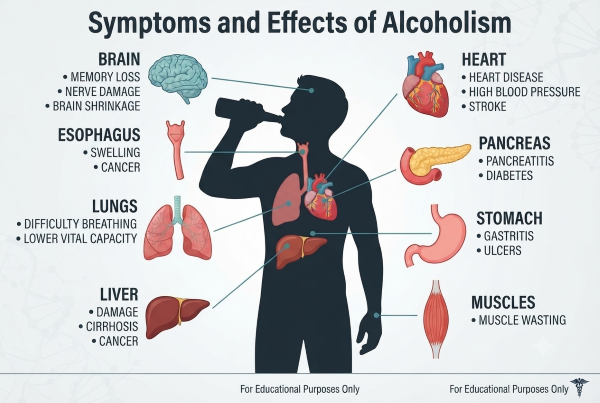
How Alcohol Affects the Brain
Alcohol significantly affects brain chemistry, which is part of why certain behavioral patterns develop and persist over time. Repeated use reshapes how the brain responds to stress and reward.
Chronic alcohol use gradually reinforces addictive behaviors by altering brain chemistry, making it progressively harder to stop even when someone recognizes the harm it’s causing.
Common brain-related effects include:
- Impaired judgment and decision-making
- Reduced impulse control
- Changes in mood regulation
- Memory and concentration difficulties
How Alcohol Affects the Body
Alcohol’s effects on the body extend well beyond the brain, impacting nearly every major organ system over time with regular heavy use.
Common physical effects include:
- Liver damage, including fatty liver and cirrhosis
- Increased blood pressure and heart strain
- Weakened immune system function
- Digestive issues and nutrient deficiencies
- Disrupted sleep quality
Risk Factors Linked to Alcoholic Personality Type
Certain risk factors make some people more susceptible to developing patterns associated with alcohol use disorder, though none of these guarantee it will happen.
Known risk factors include:
- Family history of alcoholism or addiction
- Early age of first alcohol use
- Underlying anxiety, depression, or trauma
- Limited coping skills for managing stress
- Social environment and peer drinking habits
Expert Advice: Focus on behavior patterns, not personality labels, when seeking help for someone.
Growing Up With an Alcoholic Parent
Growing up in a household affected by alcoholism can shape someone’s emotional patterns well into adulthood, even if they never develop a drinking problem themselves. This is a distinct experience from the “alcoholic personality” itself, but the two are closely connected.
Adults who grew up with a parent affected by addiction often experience recognizable patterns, including impulsive decision-making, difficulty with follow-through, a tendency toward isolation, and a strong need for approval from others.
Common patterns among adult children of alcoholics include:
- Difficulty trusting or maintaining stable relationships
- Overreacting to changes outside their control
- Feeling responsible for others’ emotions
- Struggling to identify their own role in conflicts
- Higher personal risk of developing substance use issues
Recognizing these patterns can be an important step toward breaking generational cycles of alcohol use.
Get Help for Alcohol Use Today
Solutions Healthcare connects individuals and families across Central Florida with a trusted network of treatment centers, including Palm Coast Treatment Solutions, DeLand Treatment Solutions, Florida Atlantic Coast Treatment Solutions, and Orlando Treatment Solutions, each offering evidence-based care for alcohol use and co-occurring mental health needs.
Our residential treatment programs and alcohol addiction treatment services provide structured, compassionate support for individuals and families navigating alcohol use, without judgment or labels.
What makes our network different:
- Multiple licensed facilities across Central Florida
- Dual-diagnosis treatment for co-occurring mental health conditions
- Family-inclusive treatment planning
- Individualized care instead of a one-size-fits-all program
- A calm, supportive environment for real healing
If these patterns feel familiar in your own life or a loved one’s, you don’t have to sort it out alone. Call Solutions Healthcare at (386) 866-3600 or visit our contact page to get started.
FAQs
What is an alcoholic personality?
“Alcoholic personality” is a non-medical term often used to describe certain behavioral patterns that may develop in people with alcohol use disorder. While these traits can be common, they aren’t unique to alcoholism and don’t define everyone with the condition.
Is alcoholic personality disorder a real diagnosis?
No. There is no recognized mental health diagnosis called alcoholic personality disorder. The official clinical diagnosis is alcohol use disorder (AUD), which is based on patterns of alcohol use and its impact on daily functioning.
What does “alcoholic personality” actually mean?
The phrase generally refers to behaviors and emotional patterns that may accompany problematic drinking, such as defensiveness, impulsivity, or relying on alcohol to cope with stress. It does not describe a distinct personality type or medical condition.
What are common alcoholic personality traits?
People with alcohol use disorder may show traits such as impulsiveness, low frustration tolerance, defensiveness, denial of drinking problems, mood swings, and difficulty following through on personal or professional responsibilities.
What is the mindset of an alcoholic person?
Many people with alcohol use disorder begin to rely on alcohol as their primary way of coping with stress, difficult emotions, or daily challenges. They may also minimize the amount they drink or underestimate its effects on their health and relationships.
What are alcoholic personality symptoms to watch for?
Possible warning signs include becoming defensive about drinking, hiding or minimizing alcohol use, withdrawing from friends or family, making excuses for drinking, and continuing to drink despite negative consequences.
How does alcohol affect the brain?
Alcohol slows communication between brain cells, impairing judgment, decision-making, memory, and impulse control. Over time, repeated heavy drinking can alter brain chemistry, making it increasingly difficult to regulate mood and control alcohol cravings.
How does alcohol affect the body?
Long-term alcohol use can damage the liver, heart, digestive system, and immune system while disrupting sleep and increasing the risk of several chronic health conditions, including certain cancers and cardiovascular disease.
Is there a specific “alcoholic personality type”?
No. Research has found that some personality traits may be associated with a greater risk of alcohol misuse, but there is no single personality profile that predicts or defines alcohol use disorder.
What risk factors are linked to alcoholic personality traits?
Several factors can increase the risk of developing alcohol use disorder, including a family history of addiction, early alcohol use, untreated mental health conditions, ineffective coping skills, chronic stress, and environmental influences.
Can growing up with an alcoholic parent affect personality?
Yes. Children raised in households affected by alcohol misuse may develop challenges such as difficulty trusting others, emotional insecurity, people-pleasing behaviors, or problems with healthy boundaries. These patterns are responses to their environment rather than inherited personality traits.
Where can I get help for alcohol use in Florida?
Solutions Healthcare provides treatment for alcohol use disorder and co-occurring mental health conditions across its Central Florida network of facilities. Call (386) 866-3600 to learn more about available treatment options.
References
- American Addiction Centers: 10 Common Personality Traits of Adult Children of Alcoholics
- National Institute on Alcohol Abuse and Alcoholism: Alcohol’s Effects on Health
- National Institute on Alcohol Abuse and Alcoholism: Family History and Genetics
- American Psychiatric Association: What Is Alcohol Use Disorder?
- Mayo Clinic: Alcohol Use Disorder
- Cleveland Clinic: Alcohol’s Effects on the Body
Medical Disclaimer: This blog is for informational purposes only and is not a substitute for professional medical or mental health advice; please consult a qualified provider or contact Solutions Healthcare for personalized guidance.