Addiction often starts as a valid prescription: an opioid for a surgical procedure, a benzodiazepine for anxiety, a stimulant for attention-deficit disorder. The medications are effective, at least at first. Then tolerance builds. The dose creeps up. The body becomes accustomed to the drug, not to feel good, but just to feel normal. But, when the realization of a fault comes, it is too late and months or years have passed and the addiction is established and severe.
If you are reading this because you know someone who has suffered from prescription drug addiction or you have, then the first thing you need to understand is that prescription drug addiction is a medical condition, not a moral failing, and it is treatable. Florida in particular has emerged as one of the best-equipped states in the nation with regard to evidence-based addiction treatment. The first step to receiving proper help is to gain the correct information.
What Is Prescription Drug Addiction?
Prescription drug addiction is a persistent and recurring brain disease that causes someone to compulsively use a prescription drug with an adverse result even when he or she wishes to discontinue.
One of the most complicated things about prescription drug addiction is that a person may use these drugs correctly for a while and then cross a line into misuse. Many people develop dependence without ever intending to misuse anything. The body adapts to the presence of the medication, withdrawal symptoms make stopping feel impossible, and what began as treatment becomes a trap.
Research Note: According to the American Medical Association’s 2025 report on substance use, opioid prescriptions have decreased 52% since 2012, falling from 260.5 million to 125.7 million in 2024. Yet opioid use disorder remains widespread, with many patients still facing barriers to evidence-based treatment, including Medication-Assisted Treatment (MAT).
Commonly Misused Prescription Drugs
Prescription drug addiction spans several drug classes, each with distinct mechanisms, symptoms, and treatment needs.
Opioid Painkillers
Opioids are the most widely discussed category of prescription drug addiction and the most deadly. Medications in this class include oxycodone and hydrocodone, morphine, codeine, tramadol, and fentanyl patches prescribed for chronic pain.
Opioids work by binding to receptors in the brain and body that regulate pain and reward. They produce powerful relief and, especially at higher doses, euphoria. Tolerance develops rapidly, meaning the same dose produces less effect over time, driving dose escalation. Physical dependence follows: the body requires the drug to function normally, and withdrawal brings severe physical symptoms when use stops.
Benzodiazepines
Benzodiazepines are prescribed for anxiety disorders, insomnia, panic disorder, seizure disorders, and alcohol withdrawal. Common medications in this class include alprazolam (Xanax), diazepam (Valium), clonazepam (Klonopin), and lorazepam (Ativan).
Benzodiazepines work by enhancing the effect of GABA, the brain’s primary inhibitory neurotransmitter, producing sedation, reduced anxiety, and muscle relaxation. They are highly effective for short-term use, but long-term use produces dependence quickly. Tolerance to the therapeutic effects develops within weeks.
Prescription Stimulants
Stimulants prescribed for ADHD and narcolepsy, including amphetamine salts (Adderall), methylphenidate (Ritalin, Concerta), and lisdexamfetamine (Vyvanse), are misused for performance enhancement, weight loss, and recreational purposes.
Stimulant misuse is particularly prevalent among young adults aged 18 to 25. Dependence produces tolerance, craving, and a withdrawal syndrome characterized by profound fatigue, depression, increased sleep, and difficulty experiencing pleasure, which can be severe and prolonged.
Sleep Medications
Non-benzodiazepine sleep medications, including zolpidem (Ambien), eszopiclone (Lunesta), and zaleplon (Sonata), sometimes called “Z-drugs,” work on similar receptors to benzodiazepines and carry similar dependence risk, despite being frequently perceived as safer. Long-term use produces tolerance and physical dependence, and withdrawal can involve rebound insomnia and anxiety.
Signs and Symptoms of Prescription Drug Addiction
Prescription drug addiction is frequently unrecognized for longer than other forms of addiction, precisely because the substances involved are legal and medically obtained.
Behavioral Warning Signs
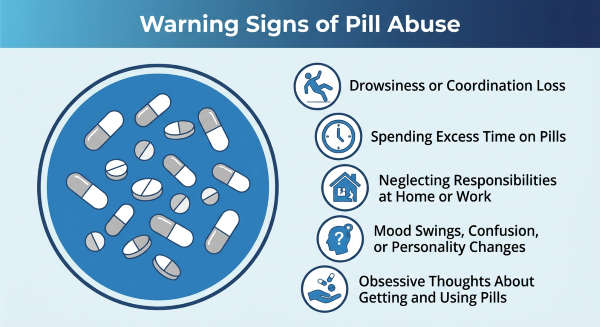
- Taking medication in larger amounts or more often than prescribed
- Running out of prescriptions early and seeking early refills
- Visiting multiple doctors or healthcare providers to obtain prescriptions (“doctor shopping“)
- Spending significant time obtaining, using, or recovering from the drug
- Hiding medication use from family members, doctors, or employers
- Continuing use despite knowing it is causing problems at work, in relationships, or with health
- Withdrawing from previously valued activities, relationships, and responsibilities
- Significant mood changes: irritability, hostility, anxiety, or euphoria tied to medication availability
- Unusual sleeping patterns: sleeping far more or far less than normal
Physical Warning Signs
- Opioids: Constricted pupils, nodding off at unusual times, slurred speech, slowed breathing, severe constipation, track marks if misuse has escalated to intravenous use
- Benzodiazepines: Drowsiness, confusion, slurred speech, poor coordination, memory problems, slowed reactions
- Stimulants: Reduced appetite and weight loss, elevated heart rate and blood pressure, insomnia, increased talkativeness, agitation, dilated pupils
Signs of Withdrawal (indicating physical dependence)
When the medication is not available or wears off earlier than expected:
- Opioid withdrawal: Muscle aches, nausea, vomiting, diarrhea, sweating, anxiety, insomnia, intense cravings
- Benzodiazepine withdrawal: Severe anxiety, tremors, sweating, elevated heart rate, seizures (in severe cases), hallucinations
- Stimulant withdrawal: Profound fatigue, hypersomnia, depression, increased appetite, difficulty concentrating, cravings
Physical dependence producing withdrawal symptoms is one of the clearest indicators that professional medical support, not willpower alone, is needed to stop safely.
Why Florida for Prescription Drug Addiction Treatment?
Florida has developed one of the most comprehensive and accessible addiction treatment ecosystems in the United States for concrete reasons beyond just the pleasant climate.
Florida was one of the states most severely affected by the first wave of the opioid crisis, partly due to the proliferation of “pill mills” in the early 2000s. The regulatory response, including the nation’s first Prescription Drug Monitoring Program (PDMP) enforcement, produced a 52.1% decline in oxycodone overdose deaths between 2010 and 2012.
Florida offers:
- A high concentration of accredited, evidence-based treatment centers spanning all levels of care
- Specialized programs for prescription drug addiction across opioids, benzodiazepines, and stimulants
- Warm climate and natural outdoor environments that support recovery and therapeutic activities year-round
- One of the most robust recovery community networks in the United States, with strong peer support, sober living infrastructure, and alumni networks
- Year-round sunlight that supports circadian rhythm regulation, sleep improvement, and mood stabilization, all of which are disrupted in addiction
- Proximity to quality medical facilities and psychiatric care for complex co-occurring presentations
What Prescription Drug Addiction Treatment Looks Like
The most effective treatment for prescription drug addiction combines medically supervised detoxification, evidence-based therapy, Medication-Assisted Treatment where indicated, and structured aftercare.
Medical Detox: The Essential First Step
For opioid and benzodiazepine dependence in particular, attempting to stop without medical supervision is dangerous and often unsuccessful. Medical detox provides:
- 24-hour clinical monitoring during the acute withdrawal period
- Medications to manage withdrawal symptoms safely and comfortably
- Medical management of complications including elevated blood pressure, seizure risk, and cardiovascular strain
- Stabilization before transitioning to the therapeutic phase of treatment
For opioid withdrawal, medications including buprenorphine (Suboxone), methadone, and clonidine are used to manage symptoms. For benzodiazepine dependence, a carefully supervised taper, often using longer-acting benzodiazepines or phenobarbital, is the medically appropriate approach. Abrupt cessation of benzodiazepines without medical management can be life-threatening.
Medication-Assisted Treatment (MAT)
Medication-Assisted Treatment uses FDA-approved medications alongside behavioral therapy to treat opioid use disorder and alcohol use disorder. For opioid addiction specifically, MAT is the gold-standard, evidence-based approach recommended by every major medical organization.
According to the AMA’s 2025 report, buprenorphine prescriptions have increased 83% over the past decade, and 2.3 million Americans received MAT for opioid use disorder in 2023. Research consistently shows that MAT significantly reduces overdose risk, reduces illicit opioid use, and improves treatment retention compared to abstinence-only approaches.
Evidence-Based Psychotherapy
Medication stabilizes the physiological dimension of addiction. Therapy addresses the psychological, behavioral, and relational dimensions that medication alone cannot reach.
Cognitive Behavioral Therapy (CBT) is the most widely researched psychotherapy for substance use disorders. It helps identify the thought patterns and behavioral triggers driving continued use, develops practical coping strategies, builds relapse prevention skills, and addresses the cognitive distortions that maintain addiction.
Acceptance and Commitment Therapy (ACT) builds psychological flexibility and reduces the experiential avoidance that drives many people to use prescription drugs. It helps people reconnect with their values and build a life that makes recovery worth maintaining.
Family Therapy addresses the relational system around the person in treatment. Prescription drug addiction profoundly affects families: it erodes trust, creates enabling patterns, and produces its own trauma for spouses, parents, and children. Family therapy both supports the person in recovery and helps heal the relationships damaged by addiction.
Group Therapy provides peer connection, shared accountability, and the powerful experience of hearing from others who have navigated similar struggles. The isolation that both drives and results from addiction is directly countered by the community of group treatment.
Comprehensive Therapy integrates multiple therapeutic modalities within a coordinated treatment plan, ensuring the full scope of each person’s needs is addressed rather than applying a single approach uniformly.
Levels of Care
Level of Care | What It Involves | Best For |
Residential Treatment | 24-hour immersive care in a structured therapeutic environment | Severe dependence, co-occurring disorders, unstable home environment, or prior treatment failures |
Intensive Outpatient Program (IOP) | Multi-day-per-week structured programming while living at home or in sober housing | Those stable enough to live outside residential but needing more than weekly outpatient |
Outpatient Treatment | Regular therapy and psychiatric appointments | Mild to moderate presentations or step-down from higher levels |
Aftercare Services | Ongoing support, alumni connection, and relapse prevention after formal treatment ends | Everyone completing higher levels of care |
Dual Diagnosis Treatment
Dual diagnosis treatment is essential for the large proportion of people with prescription drug addiction who also have co-occurring mental health conditions, because in many cases, the mental health condition came first.
Opioids are frequently misused to manage chronic pain that is partly psychological in origin. Benzodiazepines are frequently misused by people with undiagnosed or undertreated anxiety disorders. Stimulants are frequently misused by people with undiagnosed ADHD.
Drug Addiction Treatments
Solutions Healthcare provides specialized addiction treatment for the full range of prescription drug dependencies at multiple treatment centers across Central Florida:
- Prescription Drug Addiction Rehab: Comprehensive, individualized treatment for prescription drug dependence across all drug classes
- Opioid Addiction Treatment: Specialized opioid use disorder treatment including MAT, medically supervised detox, and evidence-based therapy
- Benzodiazepine Addiction Treatment: Medically managed taper, detox, and therapeutic support for benzo dependence
- Fentanyl Addiction Treatment: Specialized care for fentanyl dependence, one of the most difficult opioid use disorders to treat due to the drug’s potency and short half-life
- Meth Addiction Treatment: Comprehensive stimulant addiction treatment for methamphetamine and prescription stimulant misuse
- Cocaine Addiction Treatment: Evidence-based treatment for stimulant use disorders
- Heroin Addiction Treatment: Integrated opioid addiction care for heroin and prescription opioid crossover dependence
- Marijuana Addiction Treatment: Treatment for cannabis use disorder, often co-occurring with prescription drug misuse

Get Prescription Drug Addiction Treatment at Solutions Healthcare
Prescription drug addiction is one of the most common and most treatable conditions in behavioral health. The biggest obstacle for most people is not finding treatment that works. It is taking the first step.
Solutions Healthcare provides comprehensive prescription drug addiction rehab across Central Florida, with treatment centers in DeLand, Palm Coast, Orlando, and Melbourne. Their programs span the full continuum of care, from residential treatment for those who need intensive, immersive support to IOP and outpatient treatment for those building recovery with ongoing clinical guidance.
Their evidence-based clinical approach combines CBT, ACT, family therapy, group therapy, comprehensive therapy, and MAT where clinically indicated, all within individualized treatment plans that address the specific drug, the specific person, and the specific circumstances driving their addiction. For those with co-occurring mental health conditions, dual diagnosis treatment ensures both dimensions are treated from day one. Aftercare services sustain recovery after formal treatment ends.
Most major insurance plans are accepted.
Call (386) 866-3600 or reach out online today. The call is confidential, the admissions team is available now, and the first conversation costs nothing.
FAQs
What is prescription drug addiction?
Prescription drug addiction is a chronic brain disorder characterized by compulsive use of a prescription medication despite harmful consequences, even when the person wants to stop. It develops through tolerance, physical dependence, and the neurobiological changes that chronic drug exposure produces in reward and stress regulation systems. It is a medical condition, not a character flaw, and it responds to evidence-based treatment.
What are the most commonly misused prescription drugs?
The three most commonly misused categories are opioid painkillers (oxycodone, hydrocodone, morphine, tramadol, and fentanyl); benzodiazepines (alprazolam/Xanax, diazepam/Valium, and clonazepam/Klonopin); and stimulants (amphetamine salts/Adderall, methylphenidate/Ritalin). Each has distinct mechanisms, withdrawal profiles, and treatment needs.
How do I know if I or someone I love has a prescription drug addiction?
Key signs include taking medication in larger amounts or more frequently than prescribed, running out of prescriptions early, visiting multiple doctors to obtain prescriptions, continuing use despite obvious harm to health or relationships, physical withdrawal symptoms when doses are missed or delayed, and increasingly organizing daily life around obtaining and using the medication. A clinical assessment by a qualified addiction medicine specialist provides a definitive evaluation.
Is prescription drug withdrawal dangerous?
It depends on the drug class. Opioid withdrawal is extremely uncomfortable but rarely life-threatening in otherwise healthy adults. Benzodiazepine withdrawal is potentially life-threatening, with seizure risk in severe cases of long-term, high-dose dependence. Stimulant withdrawal is not physically dangerous but involves severe depression, fatigue, and cravings. Anyone with significant benzodiazepine dependence should never attempt to stop without medical supervision.
What is Medication-Assisted Treatment (MAT) and does it work?
MAT uses FDA-approved medications, such as buprenorphine, methadone, and naltrexone for opioid use disorder, alongside behavioral therapy to treat addiction. It is the gold-standard, evidence-based approach for opioid use disorder. Research consistently shows it significantly reduces overdose risk, reduces illicit drug use, and improves treatment retention compared to abstinence-only approaches.
Does insurance cover prescription drug addiction treatment in Florida?
Yes. The Mental Health Parity and Addiction Equity Act (MHPAEA) requires most insurance plans to cover substance use disorder treatment at the same level as other medical conditions. This includes medical detox, residential treatment, IOP, outpatient therapy, and MAT. Coverage specifics vary by plan, deductible, and network status. Solutions Healthcare’s admissions team verifies benefits quickly and confidentially as part of the initial intake conversation.
How long does prescription drug addiction treatment take?
Treatment length varies by drug class, severity of dependence, co-occurring conditions, and individual response. Medical detox typically runs 5 to 10 days. Residential treatment programs commonly run 30 to 90 days. Step-down through IOP and outpatient can extend six months to a year or more..
What is the difference between physical dependence and addiction?
Physical dependence means the body has adapted to the presence of a drug and produces withdrawal symptoms when it is reduced or stopped. This can occur with appropriately prescribed medications taken as directed. Addiction involves compulsive use despite harmful consequences, continued use even when the person wants to stop, and significant disruption to daily functioning. Physical dependence can exist without addiction, and both benefit from professional support when discontinuing the drug.
Can prescription drug addiction be treated without residential care?
For mild to moderate presentations without severe co-occurring disorders or withdrawal risk, intensive outpatient programs can be effective. For significant benzodiazepine or opioid dependence, particularly when combined with co-occurring mental health conditions, unstable living situations, or prior treatment failures, residential care consistently produces better outcomes.
Why do so many people with prescription drug addiction also have mental health conditions?
The connection is bidirectional. People with untreated anxiety, depression, PTSD, or ADHD frequently misuse prescription drugs to manage their symptoms. Substance use also causes, worsens, and mimics mental health conditions. The result is a large overlap between prescription drug addiction and mental health disorders. Integrated dual diagnosis treatment that addresses both conditions simultaneously within the same clinical team consistently produces better outcomes than treating either in isolation.
Does Solutions Healthcare offer prescription drug addiction treatment?
Yes. Solutions Healthcare provides comprehensive prescription drug addiction rehab at multiple treatment centers across Central Florida. Their programs address opioid, benzodiazepine, and stimulant dependencies through medically supervised detox, MAT where indicated, evidence-based psychotherapy, and integrated dual diagnosis care.
References
- National Institute on Drug Abuse (NIDA) — Prescription Drugs and Cold Medicines
- American Medical Association — AMA 2025 Report on Substance Use and Treatment
- National Center for Drug Abuse Statistics — Prescription Drug Abuse Statistics 2025
- CDC — Drug Overdose Deaths in the United States
- Mayo Clinic — Prescription Drug Abuse: Symptoms and Causes
- American Psychological Association — The Health Benefits of Nature
- Florida Department of Health — Substance Use Data and Statistics
- Solutions Healthcare — Prescription Drug Addiction Rehab
This content is for informational purposes only and does not constitute medical advice or a clinical recommendation. For a personalized assessment, please consult a licensed mental health professional. To learn more about evidence-based mental health and addiction treatment in Florida, visit shc.health or call (386) 866-3600.