
Key Takeaways
- The Difference Between Bipolar and Borderline Personality Disorder primarily involves how mood changes occur and what triggers them.
- Bipolar disorder involves longer mood episodes such as mania and depression that may last days or weeks.
- Borderline personality disorder often causes rapid emotional shifts triggered by relationships or environmental stress.
- Bipolar disorder is classified as a mood disorder, while BPD is a personality disorder.
- Both conditions are treatable with the right combination of therapy, medication, and supportive care.
Learning about mental health issues may be very confusing, particularly when there are overlapping symptoms. A major question that most people tend to have is the Difference Between Bipolar and Borderline Personality Disorder. Both disorders may also entail mood shifts, emotional awareness, and relationship difficulties, hence their misconceptions or misleading diagnoses. For individuals also struggling with substance use, finding a program that addresses both is critical, such as a dual diagnosis rehab in Florida.
But the Difference Between Bipolar and Borderline Personality Disorder is found in the manner mood alteration happens, triggers and duration. A mood disorder characterized by either depression or mania or hypomania is called bipolar disorder while emotional instability, fear of abandonment, and inability to sustain relationships are typical of personality disorder, specifically borderline personality disorder (BPD). These conditions can significantly impact daily life, which is why many seek professional mental health disorders treatment to find stability.
The reason why understanding the Difference Between Bipolar and Borderline Personality Disorder is important is that the method of treatment, coping mechanisms, and outcomes may vary greatly in the long term. With the correct diagnosis and professional assistance, the person having either one of these conditions can have a meaningful improvement in their quality of life. This process often begins with a comprehensive substance abuse evaluation to rule out other contributing factors.
What is Bipolar Disorder?
Bipolar disorder is a mental health disorder that entails marked mood swings, energy and activity changes and the functioning capacity. These changes of mood show in those episodes, which contain mania (or hypomania) and depression. Learning to manage these episodes is a key focus of individual therapy, where patients can develop personalized coping strategies.
According to the med Edmonds, during manic episodes, individuals may experience a heightened sense of energy, impulsivity or euphoric feelings. They can also develop thoughts of racing, elevated levels of activity, and lack of sleep. Depressive episodes on the other hand are characterized by sadness, lack of energy and lack of interest in everyday activities.
Duration of moods is one of the main factors to consider when investigating the Difference Between Bipolar and Borderline Personality Disorder. Bipolar moods are usually of days, weeks, or more and may not necessarily be occasioned by any event on the outside.
Symptoms of Bipolar Disorder
The symptoms may differ according to the type of episode a person is undergoing; manic episode, hypomanic episode or depressive episode.
Symptoms of mania are common and they include:
- Sudden behavior change of energy or restlessness.
- Reduced need for sleep
- Racing thoughts/reading fast talking
- Such risky or impulsive actions.
- Inflated self-confidence and or grandiosity
Symptoms of depression are possible and these include:
- Constant depression or desperation.
- Biological apathy.
- Fatigue or low energy
- Difficulty concentrating
- Changes in appetite or sleep
Knowing these patterns would help in better understanding the Difference Between Bipolar and Borderline Personality Disorder, particularly in determining mood cycles, over time.
Causes of Bipolar Disorder
There is no one cause for bipolar disorder. Rather it is usually acquired as a result of a mix of biological, psychological, and environmental influences.
Potential causal variables are:
Brain Chemistry:
- Neuronal Differences
- Genetic predisposition
- Major life stressors
- Environmental influences
Studies indicate that abnormalities in brain neurotransmitters that participate in regulative moods (including serotonin, dopamine and Norepinephrine) could contribute to bipolar disorder.
Is Bipolar Disorder Genetic?
Genetics seems to have a great role in bipolar disorder. Research indicates that when one has a family history of the condition, they are at risk of developing it.
Nevertheless, genetics cannot be a sole determinant of whether an individual is to develop a bipolar disorder or not. It may also develop in stressful environmental conditions, trauma, and lifestyle.
In comparing Bipolar and Borderline Personality Disorder, genetics might have a more consistent biological role in bipolar disorder than it does in BPD, but both disorders may both
have a genetic and environmental factor in their development.
Diagnosis of Bipolar Disorder
Bipolar disorder should be diagnosed through an extensive mental assessment by a licensed mental health practitioner like a psychiatrist, psychologist or a clinical therapist. Clinicians usually consider the symptoms, past medical history and the mood episode patterns.
Diagnosis may involve:
- Clinical interviews
- Mood history assessment
- Psychological evaluations
To identify other conditions that should be ruled out, medical screening is required.
The Difference Between Bipolar and Borderline Personality Disorder diagnosis should be clear as the two conditions are similar in that both may also be characterized by emotional instabilities but they should be treated differently. This is why finding an accredited rehab in Florida ensures that you receive care from qualified professionals who can make these distinctions.
What is Borderline Personality Disorder (BPD)?
Borderline personality disorder is a mental disorder that is characterized by extreme responses on emotional terms, there are irregular relationships and a fluctuating or uncertain sense of self.
Individuals who have BPD tend to have quick mood shifts particularly when faced with interpersonal stress or perceived rejection. The main characteristics of the disorder are fear of abandonment and inability to control emotions.
Although bipolar disorder has mood episodes which occur internally and go through an
extended cycle, BPD emotional swings can be a result of relationships or other environmental stressors, and this is a significant Difference between Bipolar and Borderline Personality Disorder.
Symptoms of Borderline Personality Disorder (BPD)
Borderline personality disorder influences the way one thinks, feels, and exists in the world regarding other people.
Common symptoms include:
- Intense fear of abandonment
- Uncrisis and/or intensely negative relationships
- Reactive change in mood or emotions.
- Impulsive behaviors (spending, substance use, risky decisions etc.
- A long-lasting sense of emptiness.
- Problems in managing anger.
- Self-homicidal behavior or suicidal ideation.
- Disordered or disordered self-image.
Symptoms are common in early adulthood and may influence normal functioning, personal relationships, and emotions to a great degree. Addressing these often requires a structured environment like an intensive outpatient program (IOP) in Florida to provide consistent support.
Causes of Borderline Personality Disorder (BPD)
Similar to most mental illnesses, BPD occurs as a result of biological, psychological and environmental factors.
Possible causes include the following:
- Trauma, abuse or neglect during childhood.
- Chronic invalidation or an inconsistent caregiving situation.
- Difference in brain structure/emotion regulation
- Genetic vulnerability
BPD is usually linked with traumatic experiences, especially in those encountered in early development. For this reason, trauma therapy is often a cornerstone of effective treatment.
The awareness of such aspects will assist the clinicians in improved interpretation of the Difference Between Bipolar and Borderline Personality Disorder and the development of individualized treatment plans.
Borderline Personality Disorder DSM-5
DSM-5 has provided nine criteria to diagnose borderline personality disorder. An individual has to fulfill at least five of them in order to receive a diagnosis.
These include:
- Fear of abandonment
- Uncrisis and/or intensely negative relationships
- Identity disturbance
- Impulsive behaviors
- Self-harm or suicidal tendencies are recurring.
- Emotional instability
- A long-lasting sense of emptiness.
- Intense/inappropriate anger
- Paranoia or dissociation is provoked by stress.
These diagnostic principles can assist mental health practitioners in distinguishing between BPD and other mental illnesses.
Treatment of Borderline Personality Disorder
Borderline personality disorder can be treated, and with the help of regular therapeutic assistance, most people feel significantly better.
- Popular interventions will be:
- Dialectical behavior therapy (DBT).
- Cognitive Behavioral Therapy (CBT)
- Group therapy
- Drug Therapy for specific symptoms
- Long-term psychotherapy
Treatment is aimed at the enhancement of emotional management, healthier relationship behaviors and enhancement of coping resources. Many of these evidence-based therapies are core components of a multidisciplinary approach to treating co-occurring disorders.
Need Support for Mood or Personality Disorders?
When you or somebody close to you is emotionally unstable or faced with mental issues, professional advice may change your life forever. Solutions Healthcare offers mental health care with compassion and individualized treatment approaches to ensure long-term recovery.
Contact Solutions Healthcare today for a confidential consultation and speak forward for one step towards emotional wellness.
Key Differences Between BPD and Bipolar Disorder
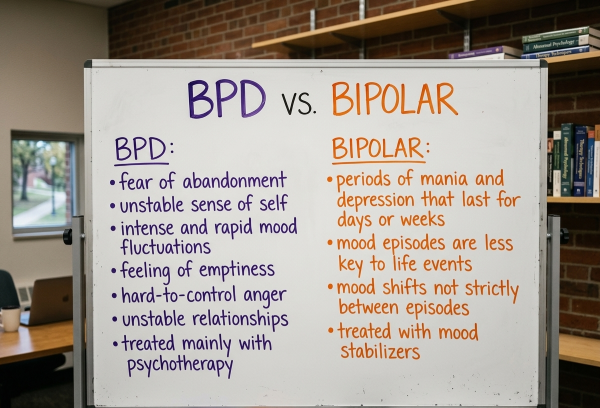
The difference between bipolar and Borderline Personality Disorder can be understood more when the main characteristics of each of the disorders are compared.
Mood Patterns
Bipolar disorder is characterized by mood episodes which last for days or weeks.
The mood swings of BPD can happen in hours and usually can be precipitated by interpersonal stress.
Triggers
Mood changes that are bipolar can have no distinct external causes.
BPD emotional responses are often associated with a stressful relationship situation or feelings of rejection.
Self-Image
Bipolar disorder does not always involve a lack of stability of identity.
BPD also incorporates a changeable self-image and self-worth.
Relationships
Individuals of bipolar disorder can experience difficulties in their mood episodes.
People with BPD have tended to be subjected to unstable and intense relationships.
These differences bring out the Difference Between Bipolar and Borderline Personality Disorder, although the two disorders share emotional intensity and emotional regulation complaints.
Treatment Approaches
The diagnoses vary in terms of treatment.
Bipolar Disorder Treatment
- Mood-stabilizing drugs.
- Antipsychotic medications
- Psychotherapy
- Training on lifestyle and sleeping.
Borderline Personality Disorder Treatment
- Dialectical behavior therapy (DBT).
- Trauma-informed therapy
- Training of emotional regulation.
- Support groups
A correct diagnosis is critical to the successful treatment of a patient with the Difference Between Bipolar and Borderline Personality Disorder because this disorder influences the course of the symptoms and treatment. Understanding these nuances is part of what makes evidence-based substance abuse treatment so effective when addiction is also a factor.

Break the Cycle, Start Your Mental Health Journey.
You do not need to go through the complicated mental health challenges all alone. The staff at Solutions Healthcare are certified professionals who offer evidence-based treatment in mood disorders, personality disorders, and emotional well-being issues.
Contact Call Solutions Healthcare and see what customized treatment you all need to start living a healthy and stable life.
Disclaimer
This article is for informational and educational purposes only and should not be considered a substitute for professional medical or mental health advice, diagnosis, or treatment. If you are experiencing mental health concerns, please consult a licensed mental health professional or healthcare provider.
Frequently Asked Questions
How to distinguish between borderline personality disorder and bipolar?
The main distinction involves how mood changes occur. Bipolar disorder features longer mood episodes such as mania or depression, while borderline personality disorder involves rapid emotional shifts often triggered by interpersonal conflict, rejection, or fear of abandonment. Treatment for these conditions, especially when co-occurring with substance use, can be found in specialized treatment for bipolar disorder and addiction in Florida.
Is my bipolar disorder actually BPD?
Only a licensed mental health professional can determine the correct diagnosis. Because symptoms sometimes overlap, clinicians evaluate mood patterns, triggers, personal history, and emotional responses over time to determine whether bipolar disorder, BPD, or another condition is present. A thorough evaluation is the first step, and you can learn more about what that entails by reading about what to expect at a Florida outpatient drug rehab, as the assessment process is similar.
What does BPD splitting feel like?
Splitting refers to seeing people or situations as completely good or completely bad. Someone with BPD may suddenly shift from idealizing a person to feeling intense anger or disappointment when they feel hurt, rejected, or misunderstood. Learning to manage these intense emotions is a key goal of dialectical behaviour therapy.
What can borderline be mistaken for?
Borderline personality disorder can sometimes be mistaken for bipolar disorder, PTSD, ADHD, or depression because symptoms like mood swings, impulsivity, and emotional distress overlap. Careful psychological evaluation helps distinguish these conditions. Many of these overlapping conditions are covered in our guide to the 7 main types of mental disorders.
What does a BPD episode look like?
A BPD episode may involve intense emotional reactions, sudden anger, fear of abandonment, impulsive behavior, or feelings of emptiness. These episodes are often triggered by relationship stress and may resolve relatively quickly compared to bipolar mood episodes. Finding a calm and supportive environment, such as a residential treatment program, can be crucial for stabilizing during these episodes.