
The process of recovery is a non-linear, complicated process that entails major modifications of the Reward system and chemistry of the brain. Some individuals make a very serious error of assuming that resuming substance use is a character failure, which is untrue according to science which demonstrates that in most cases, it is a symptom of chronic health problem. A large component of staying stable is having learned how to cope with a variety of triggers of a relapse that may present themselves in day-to-day life without any warning.
With the realization that the brain needs time to recover and reset itself, people can be able to be more compassionate towards their recovery. This guide discusses the complexity of the transition and how a treatment setting is the source of the required instruments to overcome the challenges. The initial step toward a healthier and more sustainable way of life is the identification of the early warning signs.
Expert Advice: A professional support environment will provide the necessary means to cope with complicated mental disorders.
The Science of the Brain
Addiction distorts the processing of dopamine, the chemical that gives a person a sense of pleasure and motivation. Once an individual quits using a drug, the brain could find it difficult to generate these feelings in the meantime.
Such chemical imbalance may cause very strong cravings that have nothing in common with the willingness of a person to remain sober. These physical transformations can render the road to wellness to be so hard without the help of a professional.
Understanding Relapse Triggers
The determination of certain causes of relapse is a preliminary aspect of any organized recovery program. These may be external influences, like going to some places and internal influences, like being stressed a lot.
With the understanding of these patterns, people can implement preventive measures to either eliminate or control them appropriately. A treatment environment can assist the patients to classify such risks so that their effect on day-to-day life is reduced.
FACT: Addiction alters the makeup of the brain, thus turning the recovery into a physical process.
Type of Trigger | Examples |
Emotional | Stress, loneliness, anger, or even extreme excitement +2 |
Environmental | Old neighborhoods, specific social circles, or drug-related imagery |
Physical | Chronic pain, exhaustion, or untreated illness +1 |
Social | Pressure from peers or conflict with family members +2 |
Transitioning to Supervised Support
Within a monitored environment, people are able to discover the fundamental causes of their actions without being condemned. It is a safe environment in which new skills on coping are practiced prior to going back to the day to day duties.
The Three Stages of Relapse
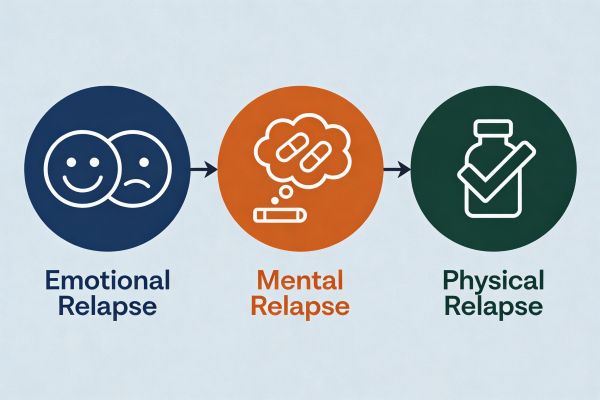
The issue of relapse is hardly an instance and more often than not it is a process that takes place in three stages. The former is emotional, with an individual with no thought of using but his or her feelings preparing the foundation to do so.
The second is the mental one, and it can be described as a tug-of-war in the mind between the desire to consume and the desire to remain sober. The last phase is the physical act, which is usually the culmination of unmanaged relapse triggering in the previous phases.
The consultation of Solutions Healthcare is critical advice.
Why Willpower is Not Enough
Using pure willpower does not take into consideration the fact that addiction is a physical condition which involves the decision making center of the brain. Old patterns are reverted when stressing the brain as a means of survival.
These responses should be rewired by professional direction to facilitate evidence-based practices. An observed environment will make sure that the person is under a support system that is not just based on self-discipline.
Warning Signs of the Mental Stage
- Glamorizing: Retrieving the good moments related to substance use in the past.
- Lying: Begins to lie to friends, relatives or support groups.
- Planning: Planning is thinking about how to use substances in a manner that they will not detect.
- Bargaining: It is a process of persuasion of oneself that a single use or use of another substance will be okay.
The Role of Professional Oversight
A support system supervised offers the objective view that is required to determine a sliding scale of behavior. Professionals will be able to notice the alterations in the routine or the mood of an individual that the latter may overlook.
With the help of recovery services, people receive access to a community that realizes the peculiarities of this transition. This group wisdom is an effective device in staying focussed in challenging times.
Developing a Prevention Plan
The successful plan does not only entail the prevention of relapse triggers but the construction of a new and satisfying way of life. This entails planning out a routine, putting sleep as a priority, and having a good social life.
Formal coaching assists one in achieving attainable objectives that foster a feeling of achievement. Such minor triumphs, cumulate to the assurance necessary to deal with bigger stressors as they present themselves.
Core Components of Stability
- Routine: It is a practice that defines the daily habits that have to be followed to minimize the difficult choices to be made.
- Connection: Do not drop out of support groups or therapy.
- Health: It is essential to focus on nutrition and hydration to contribute to a natural healing of the body.
- Education: Learning the science of the effect of different relapse triggers on the nervous system.

Integrated Recovery Services
Recovery services provide various interventions targeting the social, the mind, and the body. This combined methodology makes sure that the person is not only stopping a habit but also healing.
Continuity of care is also crucial in guaranteeing that the reintegration back to society is done in a delicate and accurate manner. The possibility of relapsing to old patterns is also minimized by having an aftercare plan.
Solutions Healthcare to discuss possibilities of supervised support.
Relapse may be considered a lesson to change a treatment regimen instead of being a cause to give up. It tends to point out a section of the recovery process that requires a closer focus or a change in style.
Professional supervision will help people to evaluate the causes of the failure and emphasize their future defense. The wellness process is a gradual process rather than a perfect one and each day in a therapeutic setting is a step towards the right direction.
Medical Disclaimer: This blog is for informational purposes only and is not a substitute for professional medical advice.
Key Takeaways
- Relapse is a common part of the recovery process for many chronic health conditions.
- Understanding brain chemistry helps remove the shame often associated with addiction and setbacks.
- Identifying emotional and environmental stressors is a critical component of professional oversight.
- Willpower alone is insufficient to overcome the physiological changes caused by long-term substance use.
- A structured treatment environment provides the tools and community necessary for sustainable lifestyle changes.
FAQs
Why does my brain still crave substances months later?
Addiction creates long-lasting changes in the brain’s reward pathways that take significant time to heal. Even after the substance is gone, certain memories can act as relapse triggers. Professional oversight helps you navigate these cravings while your brain continues its natural recovery process.
Is it a relapse if I only used it once?
Any return to substance use is considered a setback that needs to be addressed immediately with professional guidance. Viewing it as a “lapse” or “relapse” is less important than identifying the cause. Recovery services can help you adjust your plan to prevent it from happening again.
How do I handle social pressure to use?
Learning to set boundaries is a key skill developed within a supervised support system. It often involves avoiding high-risk environments and surrounding yourself with people who respect your health goals. Over time, these social relapse triggers lose their power as you build new connections.
What is the difference between emotional and mental relapse?
Emotional relapse involves poor self-care and suppressed feelings, while mental relapse involves actively thinking about using again. Both stages occur before any physical use takes place. Recognizing these stages in a treatment environment allows for intervention before a physical setback occurs.
Does a relapse mean my treatment failed?
No, a setback often indicates that the current approach needs to be modified or intensified. Many people require multiple attempts or different levels of recovery services to achieve long-term stability. Each experience provides valuable information that can be used to strengthen your future wellness plan.