Key Takeaways
- Drug addiction is a medical condition that affects brain function and behavior.
- Early recognition of the Signs of Drug Addiction can prevent long-term health consequences.
- Behavioral, physical, and emotional changes often indicate a developing substance use disorder.
- Professional treatment programs provide medical support, counseling, and recovery planning.
- Seeking help early improves the chances of lasting recovery.
Drug addiction may occur over time and in most cases, the individual and the people they love do not suspect that the situation has escalated. It is a life-changing difference when we get to know about the Signs of Drug Addiction early. Help is much more possible when a person comprehends the red flags and recognizes when he or she will need assistance and knows where to go. Addiction has an impact on the physical condition and emotional state of an individual, as well as relationships and daily duties, though appropriate therapy and help can contribute to people being in control of their lives again.
Addiction does not begin with the purpose of getting dependent on drugs to many people. It can start with the recreational habits of use, prescription drugs or trying to handle stress or emotional distress. With time, these tendencies may result in compulsive behavior. Knowing the Signs of Drug Addiction assists the family and individuals to act before the situation deteriorates.
What is Drug Addiction?
Substance use disorder is a chronic disorder that leads individuals to the compulsive pursuit and use of drugs despite the negative effects of their use. It influences the way the brain interprets reward, motivation and decision-making.
When an individual develops an addiction, he or she starts to relate drug usage with relief or pleasure. The body develops tolerance with time, such that the individual requires more or greater amounts of the substance to attain the same. This cycle is prone to dependency and bad habits.
Among the drawbacks of the diagnosis of addiction is the fact that the Signs of Drug Addiction may manifest themselves over time. Changes in behavior, mood or responsibilities may be observed by friends and family members before the individual is aware of the problem. The insight of such changes is regularly the initial move toward treatment and support.
100% Confidential Support is Available 24/7
No matter what you’re going through, you’re not alone. Our dedicated team is here to provide a safe, judgment-free space where you can talk openly and honestly. Whether you need emotional support, resources, or just someone to listen.
We’re here for you—completely confidential and always respectful of your privacy. Call us today!
Types of Drug Addiction
The number of different substances that can cause drug addiction is really high, and each of them influences the body and brain differently. Nevertheless, specific trends of dependency and compulsive usage are similar in most of the substances.
The different kinds of drug addiction are:
- Prescription drug addiction – Misuse of medications that include opioids, stimulants, or sedatives.
- Opioid addiction – Addiction to drugs such as heroin, morphine or prescription pain drugs.
- Stimulant addiction – Cocaine or methamphetamine are drugs that cause the person to gain energy, concentration and alertness.
- Depressant addiction – Drugs that slow down the brain, such as benzodiazepines or barbiturates.
- Cannabis addiction: Persistent abuse of marijuana that begins to cripple normal functioning, responsibilities, or mental comfort.
The Signs of Drug Addiction also tend to have a general pattern, even though the substances can be different, including changes in behavior, physical conditions, and emotional disturbances.
Contact Solutions Healthcare
Battling with Drug and Alcohol Addition? Remember, you are not alone and we are here to help you!
Symptoms of Drug Addiction
The dependence can have symptoms that are both physical and mental. Such symptoms tend to aggravate as early as substance use persists and tolerance develops.
There are certain typical symptoms, such as:
- Compulsive desires or needs to use drugs.
- Greater tolerance leads to a higher dose.
- Dependency symptoms in efforts to quit use of the substance.
- Changes in sleep patterns
- Sudden weight loss or gain
- Mood swings or irritability
- Inability to focus or to make choices.
- Lack of motivation or reduced performance in either work or school.
Symptoms used are not always the same based on the substance used, but these are often present with the Signs of Drug Addiction that affect regular life.
Signs of Drug Addiction
Signs of Drug Addiction can be easily traced in behavior, lifestyle change and physical health. Early identification of such signals can see individuals and families do something before the addiction gets worse.
The most frequent signs of concern are some:
Behavioral Changes
- Failure to attend to duties at work, school or home.
- Loss of pleasure in pursuits previously taken pleasure in.
- Greater details are concealed of daily activities or whereabouts.
- Individual financial crises or borrowing often.
- Drug use as a risky behavior.
Physical Changes
- Bloodshot eyes or the pupil being abnormally large.
- Uncleanliness or perceptible changes of appearance.
- Constant nosebleeds or injuries that have no clear reason.
- Shaking or tremors, or problems in coordination.
- Copious exhaustion or variations in energy.
Emotional and Psychological Changes
- Fearful, paranoid, or depressive.
- Instances of sudden mood swings or irritability.
- Social withdrawal of friends and relatives.
- Defensive upon inquiry of drug use.
- Alterations of personality or feelings.
It is possible that these Signs of Drug Addiction do not manifest overnight. They often occur over time and this is the reason why awareness and early intervention are so important.
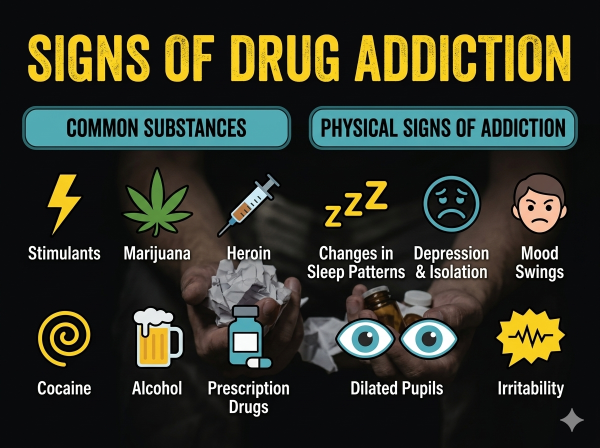
Professional assistance can certainly make a specific difference even if you or the person who loves you is going through the Signs of Drug Addiction. Early intervention would prevent severe health-related complications and assist people in starting their journey to recovery.
Drug Addiction vs. Dependence
Drug dependence and addiction are not identical even though their terms are frequently substituted.
Drug dependence develops when the body becomes used to an item, and it then starts to need it to operate normally. Withdrawal symptoms can be experienced upon the decrease or discontinuation of the drug.
Drug addiction, on the other hand is a compulsive drug-seeking behavior despite knowing the adverse effects of the drug. An individual can encounter the Signs of Drug Addiction even when he develops dependence using a prescribed medication.
The knowledge about this difference allows medical workers to choose the most reasonable treatment option, which could be medical detox, therapy, and recovery planning.
100% Confidential Support is Available 24/7
No matter what you’re going through, you’re not alone. Our dedicated team is here to provide a safe, judgment-free space where you can talk openly and honestly. Whether you need emotional support, resources, or just someone to listen.
We’re here for you—completely confidential and always respectful of your privacy. Call us today!
Drug Detox Programs Near You
Detoxification is the initial step to recovery among many. Drug detox programs offer medical assistance as the body gets rid of the toxic substances in the system.
In the detox process, the importance of medication is that the professionals keep track of the withdrawal symptoms and keep them safe.
Detox may include:
- Health compliance and observance.
- Appropriate medication-assisted treatment.
- The emotional support and counseling.
- Readiness of continuous treatment initiatives.
Since the process of getting used to not drinking can be challenging both physically and emotionally, collaborating in professional support detox programs is less risky and more helpful than trying to quit independently. Those undergoing the Signs of Drug Addiction usually feel the results of initiating recovery through a medically supported program of detox.
Call Contact Solutions Healthcare today and talk with a caring treatment specialist and know what can be done to recover. You aren’t as far away as you might think.
Treatment of Drug Addiction in Orlando
Treatment of addiction entails more than just quitting drug use. Good programs target the root causes of drug abuse and assist people in resuming healthy habits and coping mechanisms.
Solutions Healthcare treatment programs may entail:
- Personal therapy and counseling.
- Group support and group therapy.
- Cognitive Behavioral Therapy (CBT) is a form of behavioral therapy.
- Relationship and family therapy.
Having the Signs of Drug Addiction and having dealt with the issue on the professional level, individuals will be offered an opportunity to reestablish their balance, relations, and sense of meaning.
There is no universal process of recovery. Individualized treatment strategies assist people in getting the assistance they require to overcome addiction and lead a sober and a long lasting life.

First Step towards Recovery
Identifying the Signs of Drug Addiction may seem overwhelming, yet you will not have to do it by yourself. Care, expertise, and emotional support can make you or your loved one a better and healthier person in the future.
Contact Solutions Healthcare about drug detox and addiction treatment in Orlando. One of the team members is caring and he is willing to assist you in starting the recovery process.
100% Confidential Support is Available 24/7
No matter what you’re going through, you’re not alone. Our dedicated team is here to provide a safe, judgment-free space where you can talk openly and honestly. Whether you need emotional support, resources, or just someone to listen.
We’re here for you—completely confidential and always respectful of your privacy. Call us today!
Disclaimer
This content is for informational and educational purposes only and is not intended to replace professional medical advice, diagnosis, or treatment. If you or someone you know may be experiencing substance use disorder or a medical emergency, seek help from a qualified healthcare provider or contact a licensed treatment professional immediately.
Frequently Asked Questions
What are 5 warning signs of addiction?
Five common warning signs include strong drug cravings, neglecting responsibilities, sudden behavioral changes, financial problems related to substance use, and withdrawal symptoms when not using drugs. Recognizing these early indicators can help individuals seek treatment before addiction becomes more severe.
What are the 12 signs of drug addiction?
The 12 signs often include cravings, tolerance, withdrawal symptoms, loss of control, neglecting responsibilities, risky behaviors, secrecy, mood changes, social withdrawal, financial issues, health problems, and continued use despite negative consequences. These signs typically develop gradually over time.
What is suds sickness?
“SUDS sickness” generally refers to the physical and emotional effects of substance use disorder, including withdrawal symptoms, cravings, fatigue, anxiety, and irritability. These symptoms occur when the body becomes dependent on a substance and struggles to function without it.
What are the common signs and symptoms of drug addiction?
Common indicators include intense cravings, mood swings, changes in sleep patterns, neglecting responsibilities, secrecy about activities, and withdrawal symptoms. Physical signs such as bloodshot eyes, sudden weight changes, and poor hygiene may also appear as addiction progresses.
How to tell if someone is taking drugs?
Changes in behavior, unexplained financial issues, secrecy, sudden mood swings, and physical symptoms like bloodshot eyes or unusual sleep patterns can suggest drug use. Observing these warning signs early may help families encourage the person to seek professional support.
How do drug addicts behave?
People struggling with addiction may become secretive, unreliable, or withdrawn. They may prioritize drug use over responsibilities, relationships, or health. Mood swings, irritability, and defensive reactions when questioned about substance use are also common behavioral patterns.
Sources
- National Institute on Drug Abuse (NIDA)
- Substance Abuse and Mental Health Services Administration (SAMHSA) –
- American Psychiatric Association – Diagnostic and Statistical Manual of Mental Disorders (DSM-5-TR)
- Centers for Disease Control and Prevention (CDC)