
Key Takeaways
- Psychosis is a symptom, not a diagnosis
- Schizophrenia is a long-term mental health disorder
- Early warning signs often overlap, but patterns matter
- Early treatment significantly improves outcomes
- Professional evaluation is essential for accurate diagnosis
Learning Psychosis vs. Schizophrenia: Early Warning would be daunting to some extent, particularly at the onset of the conditions, where the symptoms are not clear since nothing seems to have a logical sense. These two terms are quite different, though they are used interchangeably by many people. Being aware of the difference early on could result in quicker provision of support, increased outcomes, and reduced fear by individuals and families who deal with mental health issues.
Psychosis vs. Schizophrenia
The debate on Psychosis vs. Schizophrenia tends to be confused, as in several diseases, psychosis may be experienced, not only schizophrenia. At least, psychosis is the condition when a person loses reality, and schizophrenia is a long-term psychiatric disorder that can be accompanied by psychotic experiences, which are part of a bigger picture.
This difference is essential in the workplace due to the importance of the early intervention and long-term planning.
100% Confidential Support is Available 24/7
No matter what you’re going through, you’re not alone. Our dedicated team is here to provide a safe, judgment-free space where you can talk openly and honestly. Whether you need emotional support, resources, or just someone to listen.
We’re here for you—completely confidential and always respectful of your privacy. Call us today!
What is Psychosis
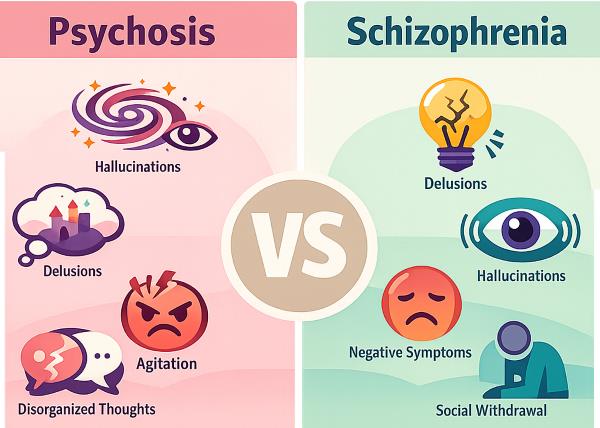
Psychosis is a disorder whereby an individual is deprived of reality. This can be hallucinations (seeing things that are not there or hearing things that are not there), or delusions (things that are strongly believed without being grounded in reality).
Psychotic disorders may be acute and induced by stress or trauma along with sleep deprivation, drug use, or illness. It is reported that, many people have one single psychotic episode, which they recover with proper treatment.
Contact Solutions Healthcare
Battling with Drug and Alcohol Addition? Remember, you are not alone and we are here to help you!
What is Schizophrenia
Schizophrenia can be described as a severe, chronic mental health condition which impairs the way of thinking, feeling and acting. It usually progresses slowly and manifests itself later in adolescence development or early adulthood.
As opposed to isolated psychosis, schizophrenia is characterized by permanent symptoms impacting the normal functioning, relationships and work or school life.
Psychosis Signs and Symptoms
Symptoms of psychosis may differ dramatically, but the typical early symptoms are:
- Hearing voices and seeing things other persons do not.
- Poor, bizarre conviction that is utterly true.
- Having disjointed or disorganized thinking.
- Suspicion or paranoia
- Close Attention/Difficulty with Concentration/Difficulty in Explicit Expression.
The symptoms can be abrupt or delayed, as far as the underlying cause is concerned.
Schizophrenia Signs and Symptoms
The typical symptoms attributed to schizophrenia are classified into three:
- Positive symptoms Hallucinations, delusions, disorganized speech
- Negative symptoms: loss of pleasure, antisocial activity, and demotivation.
- Cognitive symptoms: impaired memory, attention and decision-making.
These symptoms can last months and sometimes even years and even progress in their severity without any treatment.
100% Confidential Support is Available 24/7
No matter what you’re going through, you’re not alone. Our dedicated team is here to provide a safe, judgment-free space where you can talk openly and honestly. Whether you need emotional support, resources, or just someone to listen.
We’re here for you—completely confidential and always respectful of your privacy. Call us today!
Psychosis vs. Schizophrenia: Difference
The most significant distinction between Psychosis and Schizophrenia is in length and extent. Symptom that may happen temporarily and vanish is psychosis. Schizophrenia is a diagnosis that has constant symptoms, disability, and frequent psychotic episodes.
Not all psychotic patients become schizophrenic and to assume this may slow down any necessary treatment.
Psychosis vs. Schizophrenia DSM-5
Psychosis is defined in the DSM-5 (Diagnostic and Statistical Manual of Mental Disorders) as a set of symptoms which may be present in a variety of diagnoses. Diagnostic criteria of schizophrenia have specific criteria such as duration of the symptoms and functional impairment and exclusionary criteria such as other condition causes and substance use.
Clinicians count on these guidelines in order to arrive at careful and evidence based diagnoses.
100% Confidential Support is Available 24/7
No matter what you’re going through, you’re not alone. Our dedicated team is here to provide a safe, judgment-free space where you can talk openly and honestly. Whether you need emotional support, resources, or just someone to listen.
We’re here for you—completely confidential and always respectful of your privacy. Call us today!
Psychosis vs Schizophrenia Diagnosis
The Psychosis vs. Schizophrenia diagnosis process will take time and will have to be followed by observation and a professional evaluation. Mental clinicians examine both symptom patterns, length of periods, medical history, as well as potential causes.
A precise diagnosis is not something that occurs in one visit, it is a process that should last, and that is aimed at providing proper and quality care.
Treatment Options for Psychosis and Schizophrenia
Therapy varies depending upon the cause but may also involve:
- Antipsychotic medications
- One-on-one and family therapy.
- Cognitive behavioral therapy.
- Assistance to enhance everyday life.
- Treatment – Drug abuse should be treated where needed.
Early and regular treatment may help to hugely lower the level of symptoms and enhance the quality of life.

When to Seek Help
In case you found alterations in thought perception or behavior that disrupts normal living, do not wait any longer. The sooner the psychotic symptoms or schizophrenia are treated, the more positive are the long-term outcomes, less the relapses, and stronger the healing process.
In case you or someone who is close to you shows the early warning signs, Solutions
Healthcare is there. Exceptional medical care of goodwill by our caring mental health workers gives detailed evaluations and individual treatment plans. Make a call in our time or even ask a private consultation; it is true that early help can indeed turn everything.
Disclaimer
This content is for informational purposes only and is not intended to replace professional medical advice, diagnosis, or treatment. Always seek the guidance of a qualified mental health professional with any questions regarding mental health conditions or symptoms.
Frequently Asked Questions
How to help someone come out of psychosis?
Stay calm, supportive, and non-confrontational. Encourage professional help without arguing about their beliefs. Ensure safety, reduce stress, and help them connect with mental health services as soon as possible.
What is the 25 rule for schizophrenia?
The “25 rule” refers to the common age range when schizophrenia symptoms first appear—typically before age 25 for men and slightly later for women. Early detection during this period improves treatment outcomes.
Does psychosis ever go away?
Yes, psychosis can be temporary. Many people fully recover, especially when psychosis is caused by stress, substance use, or medical conditions and treated early with appropriate care.
What causes psychosis in the brain?
Psychosis is linked to disruptions in brain chemicals like dopamine, as well as changes in brain connectivity. Stress, trauma, genetics, and substance use can all influence these changes.
Does psychosis cause brain damage?
Psychosis itself doesn’t usually cause brain damage. However, untreated, prolonged psychosis may affect brain function over time, which is why early treatment is so important.
What is full-blown psychosis?
Full-blown psychosis involves intense hallucinations, delusions, and severely impaired thinking. A person may completely lose touch with reality and require immediate professional intervention.
What are the 7 early warning signs of schizophrenia?
Early signs often include social withdrawal, unusual thoughts, emotional flatness, difficulty concentrating, suspiciousness, sleep problems, and a decline in daily functioning.
How to tell if it’s psychosis or schizophrenia?
Psychosis is identified by symptoms, while schizophrenia involves long-term patterns and functional decline. Only a mental health professional can accurately distinguish between the two over time.
What are the early warning signs of psychosis?
Early warning signs include paranoia, changes in perception, disorganized speech, emotional changes, difficulty focusing, and withdrawing from friends or activities.
What are 5 early warning signs of mental illness?
Common early signs include mood changes, sleep disturbances, social withdrawal, difficulty concentrating, and changes in behavior that affect daily life.