
In This Blog
- Defining Alcohol Poisoning as a Medical Emergency
- Critical Signs and Symptoms to Watch For
- The Biological Impact of Binge Drinking
- Risk Factors and “Red Flags”
- The Dangers of the “Sleep It Off” Myth
- Immediate Steps for Emergency Intervention
- The Role of a Monitored Setting in Recovery
- Moving Toward Long-Term Behavioral Stability
Alcohol poisoning is one of the dangerous and even fatal effects of consuming a high level of alcohol within a short time. As the blood alcohol level (BAC) increases to deadly levels, it starts to impair the body by closing the important body systems which support life like breathing, heart rate and body heat. Alcohol poisoning is a medical emergency in comparison to an ordinary hangover and thus requires urgent medical care and supervision.
The difference between having too many and risking an overdose could be life-threatening in a social situation. Alcohol is a central nervous system suppressant and, therefore, gradually impairs the brain’s capacity to regulate the body. In the absence of a controlled environment, a person who is poisoned may soon enter a coma or lose their brain permanently.
The first step in life-saving is to understand the symptoms. It is an instructional module on the body indicators of alcohol poisoning, the science that encompasses the overdose and how specialized recovery services may be exercised to help people to control the underlying drinking habits that render them high-risk drinkers.
Expert Advice: Do not wait until a person has all the symptoms of alcohol poisoning before you seek help.
Critical Signs and Symptoms to Watch For
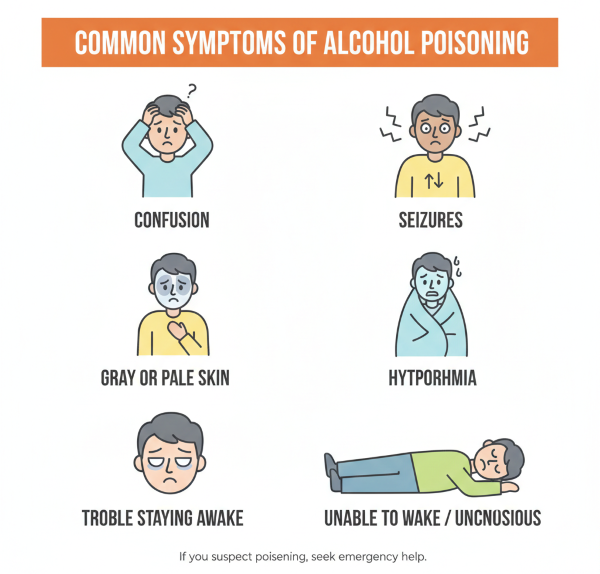
The symptoms of alcohol poisoning may be different; however, they are usually the manifestation of the insufficiency of the brain to sustain the minimal physical functions. In case you observe the following in any drinking person, it is time to call for help:
- Confusion and Stupor: The subject is awake, but he/she is not able to talk or answer.
- Vomiting: This is a dangerous symptom because the victim can choke on his vomit in case the gag reflex is disabled.
- Seizures: The electrical impairment in the brain can be caused by the high concentration of BAC.
- Slow Breathing: Fewer than eight breaths per minute or breathlessness (greater than 10 seconds between breaths).
- Blue-colored/Pale Skin: An indicator of low temperatures in the body (hypothermia) and insufficient oxygen.
- Unconsciousness: This means that one cannot be roused or faint away.
The supervised care offered by Solutions Healthcare is the guidance that is needed to overcome the consequences of an alcohol related crisis.
100% Confidential Support is Available 24/7
No matter what you’re going through, you’re not alone. Our dedicated team is here to provide a safe, judgment-free space where you can talk openly and honestly. Whether you need emotional support, resources, or just someone to listen.
We’re here for you—completely confidential and always respectful of your privacy. Call us today!
Blood Alcohol Concentration (BAC) Progression and Physical Effects
Despite the general description of the symptoms presented in the blog, this table reveals certain alterations in physiology, which occur when the level of alcohol reaches a medical crisis.
BAC Percentage Range | Physiological State | Cognitive & Physical Impact | Risk Level |
0.01% – 0.05% | Sub-clinical | Slight changes in mood; increased relaxation. | Low |
0.06% – 0.15% | Moderate Impairment | Significant lack of physical coordination; blurred vision. | Moderate |
0.16% – 0.30% | Severe Impairment | Blackouts, high risk of injury, and loss of consciousness. | High |
0.31% – 0.45% | Life-Threatening | Alcohol poisoning, suppressed heart rate; possible coma. | Critical |
0.46% + | Fatal Range | Death due to respiratory failure or cardiac arrest. | Extreme |
Contact Solutions Healthcare
Battling with Drug and Alcohol Addition? Remember, you are not alone and we are here to help you!
The Biological Impact of Binge Drinking
Alcohol poisoning is mostly linked to binge drinking: This refers to the tendency of drinking excessively, in which a male consumes five or more drinks or a woman consumes four or more drinks in 2 hours.
There is a biological failure that is caused by the increase in BAC:
- Respiratory Depression: The medulla, the breathing center of the brain, is suppressed.
- Hypoglycemia: Alcohol may lead to a low level of blood sugar that may cause seizures.
- Dehydration: Vomiting can cause a dangerous electrolyte imbalance and cardiac arrest.
Due to the internal and progressive nature of these problems, professional control is needed to normalize the body chemistry during and after the course.
The Dangers of the “Sleep It Off” Myth
Among the most harmful myths about alcohol, there is the belief that a drunkard only has to sleep it off. Actually, BAC may still increase following the drinking or passing out of the individual due to the presence of alcohol in the stomach and the intestines, which enter into the bloodstream.
It is so dangerous to leave a person in a state of sleep alone. In the absence of a monitored environment, the person would cease breathing or aspirate on vomit during sleep. In case a person is in a coma or cannot be awakened, he or she is in a medical emergency and needs close supervision.
FACT: There is no cure to alcohol poisoning since it may cause permanent brain damage or death within minutes in case the airway is obstructed or stops breathing.
Myths vs. Medical Realities of Alcohol Recovery
The table below attempts to counter such widely held false information regarding sobering up that may result in people not seeking the required professional supervision.
Common Myth | Medical Reality | Safety Requirement |
Cold Shower | A cold shower can cause a shock to the system or lead to hypothermia. | Keep the person warm and still. |
Black Coffee | Caffeine is a stimulant that can mask the depressant effects, leading to a false sense of safety. | Avoid all other substances; call for help. |
Walk It Off | Alcohol impairs coordination; walking increases the risk of falls and head injuries. | Keep the individual in a safe, seated, or side-lying position. |
Inducing Vomit | Forcing someone to vomit can lead to choking or aspiration if their gag reflex is impaired. | Only a monitored setting can safely manage digestive distress. |
Bread or Food | Once alcohol is in the bloodstream, food cannot “soak it up” or lower the BAC. | Prioritize medical intervention over food. |
Immediate Steps for Emergency Intervention
If you suspect someone has alcohol poisoning, take the following actions immediately:
- Dial 911: You should not wait until the individual makes him/herself look worse.
- Be with them: You must not leave an unconscious man alone.
- The “Bacchus Maneuver”: Turn them to their side so that they do not choke in case they are lying on their back.
- Keep Them Warm: A blanket is used to fight hypothermia.
- Give Details: Be clear with the emergency personnel about the exact and the amount of what the individual ingested.
After using the crisis as the first management tool, the individual would usually need a comprehensive care plan to work on the patterns that resulted in the overdose.
100% Confidential Support is Available 24/7
No matter what you’re going through, you’re not alone. Our dedicated team is here to provide a safe, judgment-free space where you can talk openly and honestly. Whether you need emotional support, resources, or just someone to listen.
We’re here for you—completely confidential and always respectful of your privacy. Call us today!
The Role of a Monitored Setting in Recovery
The fact that alcohol poisoning survivors are able to survive is a miracle that probably signifies the need to seek professional recovery services. A supervised environment gives the patient a secure background that he is able to cleanse as well as being monitored by the expert worker regarding his well-being and health.
Within a formal treatment setting, the clinicians can determine whether the poisoning is a single event or a larger battle with the Alcohol Use Disorder (AUD). These programs can enable people to learn how to cope healthily by offering supervised support that helps them know what triggers them and learn how to handle stress.

Moving Toward Long-Term Behavioral Stability
It is not only the physical recovery but also the behavior change that comes as a result of the process of recovering after a dramatic alcohol episode. Through the in-depth recovery programs, individuals can find out the underlying factors that lead to risky drinking and establish a healthy and safe lifestyle.
Solutions Healthcare that provides quality and affordable recovery services and professional care to people who have experienced the nightmare of alcohol. Our specialization is a well-planned treatment environment whose orientation is on emergency stabilization and long-term emotional support. By using monitored supervision in a safe environment, our clients are empowered to drop the high-risk behaviors and move into the future with stability and wellness.
Medical Disclaimer: This blog is for informational purposes only and is not a substitute for professional medical advice.
100% Confidential Support is Available 24/7
No matter what you’re going through, you’re not alone. Our dedicated team is here to provide a safe, judgment-free space where you can talk openly and honestly. Whether you need emotional support, resources, or just someone to listen.
We’re here for you—completely confidential and always respectful of your privacy. Call us today!
Key Takeaways
- Alcohol poisoning is a medical emergency caused by high blood alcohol levels.
- Key signs include slow breathing, blue-tinged skin, seizures, and unconsciousness.
- BAC can continue to rise even after the person stops drinking.
- Never leave someone to “sleep it off” if they are unresponsive.
- Professional oversight is vital for preventing complications like brain damage.
- Long-term stability is achieved through structured care and specialized recovery services.
FAQs
Is alcohol poisoning the same thing as being very drunk?
No, alcohol poisoning is a clinical overdose. While being “very drunk” involves impairment, poisoning signifies that the body’s vital systems like breathing and heart rate are beginning to shut down. This state requires immediate medical intervention and professional oversight to ensure the individual’s survival and prevent permanent organ damage.
What is the “Bacchus Maneuver,” and why is it used?
The Bacchus Maneuver involves rolling an unconscious person onto their side and tucking their limbs to keep them stable. This position is vital because it prevents the person from choking on their vomit, a leading cause of death in alcohol poisoning cases when supervised support is not available.
How long does it take for alcohol poisoning to occur?
It can happen very quickly, especially during binge drinking or “chugging” contests. Because the stomach continues absorbing alcohol after the final drink, symptoms can escalate within minutes. A monitored setting is necessary because a person’s condition can worsen even after they have stopped consuming any more alcohol.
Can you die from alcohol poisoning?
Yes, alcohol poisoning can be fatal. It causes respiratory failure, cardiac arrest, or death by aspiration. Rapid response and professional oversight are the only ways to mitigate these risks. Seeking recovery services after such an event is critical to addressing the behaviors that lead to these life-threatening situations.
What happens to the body during professional medical treatment for poisoning?
In a monitored setting, medical staff provide intravenous fluids to prevent dehydration, protect the airway to ensure breathing, and monitor blood sugar levels. This structured care is essential for managing the body’s toxic reaction to the alcohol and preventing long-term neurological or cardiovascular complications from the overdose.
Reference Links
- Mayo Clinic – Alcohol Poisoning
- NIAAA – Understanding the Dangers of Alcohol Overdose
- CDC – Binge Drinking Fact Sheet
- SAMHSA – Emergency Resources