In This Blog
- Defining Behavioral Health and Its Scope
- Behavioral Health vs. Mental Health: Key Differences
- Common Conditions Addressed in Behavioral Care
- The Connection Between Habits and Wellness
- The Importance of a Structured Treatment Environment
- How Professional Oversight Facilitates Change
- Integrated Recovery Services for Holistic Health
- Taking the First Step Toward Behavioral Stability
Mental health and behavioral health are terms that are used interchangeably when referring to personal wellness, but these two terms are different in the context of healthcare. In order to comprehend what behavioral health is properly, one should not consider the inner emotional state only but the relation between every day habits, activities, and general health. Behavioral health deals with how our behaviors including diet, exercise, substance use, and coping styles are affecting our physical and mental health.
Behavioral health is a discipline whose foundation is grounded on the fact that what we do is closely interconnected with our clinical outcomes. It is multidisciplinary and proactive and aims at determining maladaptive patterns and substituting them with health-sustaining and healthy routines. Paying attention to the behavioral component, the providers can assist people in managing chronic patients, conquering addiction, and enhancing the quality of their lives in the context of organized care and professional supervision.
Behavioral health has taken root in modern medicine in the fast world in the contemporary world. It acknowledges that health can not be simply the absence of ill health, but a state of homeostasis between the mind, the body and the environment.
Expert Advice: Behavioral change is most successful when supported by a consistent treatment environment and the guidance of clinical professionals.
Behavioral Health vs. Mental Health
While the two fields are closely linked, the distinction lies in their primary focus. Mental health primarily addresses the biological and psychological state of the mind such as brain chemistry or emotional trauma. Behavioral health, however, is a broader umbrella that includes the actions we take in response to those internal states.
- Mental Health: Focuses on the “what”the internal condition (e.g., Depression, Bipolar Disorder).
- Behavioral Health: Focuses on the “how”the outward habits and behaviors that influence or result from that condition (e.g., Substance use, eating habits, sleep hygiene).
For example, while depression is a mental health condition, the behavior of social withdrawal or neglecting self-care is a behavioral health concern. By addressing both the internal state and the external action, recovery services can offer a more complete path to stability.
100% Confidential Support is Available 24/7
No matter what you’re going through, you’re not alone. Our dedicated team is here to provide a safe, judgment-free space where you can talk openly and honestly. Whether you need emotional support, resources, or just someone to listen.
We’re here for you—completely confidential and always respectful of your privacy. Call us today!
Comparison of Behavioral vs. Mental Health Services
This table helps clarify the specific clinical approaches used for different aspects of a patient’s well-being.
Feature | Mental Health Services | Behavioral Health Services |
Primary Focus | Internal psychological and neurological states. | Observable actions and lifestyle choices. |
Typical Goal | Symptom reduction and emotional balance. | Habit modification and lifestyle stability. |
Interventions | Medication management, psychotherapy. | Behavior therapy, wellness coaching, skills training. |
Example Care | Treating a chemical imbalance in the brain. | Developing a routine to manage stress without substances. |
Oversight Need | Clinical diagnosis and psychiatric monitoring. | Professional oversight of daily routines and triggers. |
Contact Solutions Healthcare
Battling with Drug and Alcohol Addition? Remember, you are not alone and we are here to help you!
Common Conditions Addressed in Behavioral Care
Because behavioral health covers such a wide spectrum, it addresses various issues that impact an individual’s ability to function effectively. A structured care framework is often applied to manage:
- Substance Use Disorders: Addressing the habitual use of alcohol or drugs and the triggers that lead to consumption.
- Eating Disorders: Modifying behaviors related to food intake and body image.
- Chronic Disease Management: Helping individuals with diabetes or heart disease stick to necessary lifestyle changes.
- Addictive Behaviors: Such as gambling or excessive digital use, which disrupt daily functioning.
- Self-Harm: Identifying and redirecting dangerous coping mechanisms in a monitored setting.
Each of these challenges requires professional oversight to ensure the individual is safe and moving toward long-term behavioral transformation.
Solutions Healthcare provides specialized assessments to identify the behavioural patterns impacting your wellness
The Connection Between Habits and Wellness
The “behavioral” in behavioral health refers to the feedback loop between our actions and our biology. Every habit we form creates a neural pathway in the brain. When we repeat healthy behaviors like regular sleep or mindfulness we strengthen the brain’s resilience.

Conversely, maladaptive behaviors can create “short circuits” that lead to increased stress and physical illness.
A significant portion of behavioral health treatment involves “unlearning” these negative loops. This is why a monitored setting is so effective; it allows individuals to practice new behaviors in a safe, controlled space where they have immediate access to supervised support. Over time, these new actions become the brain’s “default” setting, leading to lasting change.
Core Pillars of Behavioral Health Stability
A structured care plan is built on several pillars that ensure an individual can maintain long-term wellness.
Pillar | Description | Role in Recovery |
Self-Regulation | The ability to manage emotional impulses. | Prevents reactive behaviors in high-stress situations. |
Sleep Hygiene | Maintaining consistent, high-quality rest. | Stabilizes the nervous system and improves decision-making. |
Social Connection | Engaging with a healthy support network. | Reduces isolation, which is a primary trigger for relapse. |
Nutritional Health | Fueling the body with balanced nutrients. | Supports brain health and provides sustained energy. |
Supervised Support | Access to 24/7 clinical guidance. | Provides a monitored setting for high-risk behavioral changes. |
FACT: According to the AMA, integrated behavioral health care significantly improves outcomes for patients with chronic physical conditions like heart disease or chronic pain.
100% Confidential Support is Available 24/7
No matter what you’re going through, you’re not alone. Our dedicated team is here to provide a safe, judgment-free space where you can talk openly and honestly. Whether you need emotional support, resources, or just someone to listen.
We’re here for you—completely confidential and always respectful of your privacy. Call us today!
The Importance of a Structured Treatment Environment
Attempting to change deep-seated behaviors without a plan often leads to frustration and relapse. A structured treatment environment provides the “scaffolding” necessary for success. This structure includes:
- Accountability: Regular check-ins with providers who offer professional oversight.
- Predictability: A routine that helps stabilize the nervous system and reduces the urge to engage in impulsive behaviors.
- Skill-Building: Learning new techniques for distress tolerance and emotional regulation.
- Community Support: Engaging with others who are also working toward behavioral stability.
In this monitored setting, the focus is on progress, not perfection. Every small change in behavior is a win that builds toward a healthier lifestyle.
How Professional Oversight Facilitates Change
Behavioral change is rarely linear. There will be setbacks and challenges along the way. This is where professional oversight becomes invaluable. Clinical experts can:
- Identify biological factors (like a chemical imbalance) that might be making behavioral change more difficult.
- Adjust medications to support the transition to new habits.
- Provide evidence-based therapies, such as Cognitive Behavioral Therapy (CBT), which is the gold standard for behavioral modification.
- Offer a safe monitored setting during acute phases of change.
Without this supervised support, many individuals find themselves stuck in the same cycles. With it, they have the tools and the safety net required to break free.
Solutions Healthcare offers the professional oversight needed to guide you through your unique behavioral health journey.
100% Confidential Support is Available 24/7
No matter what you’re going through, you’re not alone. Our dedicated team is here to provide a safe, judgment-free space where you can talk openly and honestly. Whether you need emotional support, resources, or just someone to listen.
We’re here for you—completely confidential and always respectful of your privacy. Call us today!
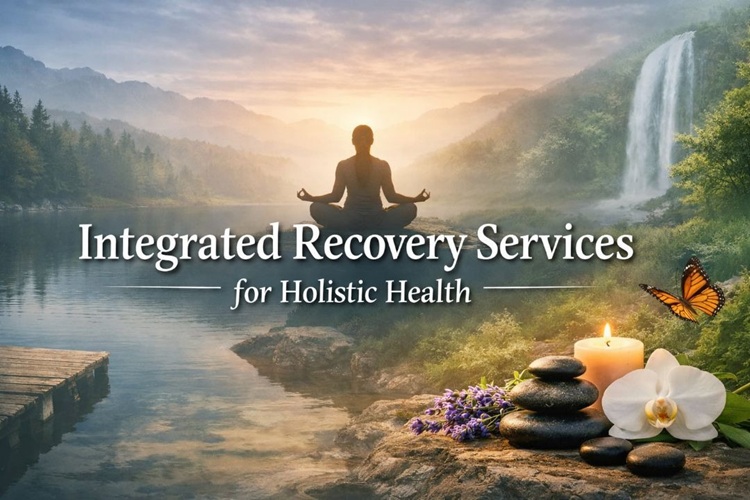
Integrated Recovery Services for Holistic Health
The most effective behavioral health programs are integrated. This means they don’t just look at one symptom; they look at the whole person. Integrated recovery services combine medical care, psychological counseling, and social support.
By addressing the social determinants of health such as stable housing, employment, and social connections, behavioral health providers ensure that the changes made in the treatment environment can be sustained in the real world. This holistic approach is what transforms a “temporary fix” into a lifetime of wellness.
Taking the First Step Toward Behavioral Stability
Understanding what behavioral health is is the first step toward reclaiming your life. It is an acknowledgment that while you may not be able to control every thought or emotion, you can gain control over your actions with the right support.
At Solutions Healthcare, we provide accessible, high-quality recovery services and professional oversight for those ready to make a change. Our approach emphasizes a structured treatment environment that balances clinical expertise with compassionate care. By offering supervised support in a safe, monitored setting, we help our clients replace maladaptive habits with life-affirming routines. We believe that with the right framework of care, everyone has the potential for a healthy and stable future.
Medical Disclaimer: This blog is for informational purposes only and is not a substitute for professional medical advice.
Key Takeaways
- Behavioral health focuses on the link between daily habits and overall physical and mental wellness.
- It differs from mental health by prioritizing outward actions and lifestyle patterns.
- Common areas of focus include substance use, eating disorders, and chronic disease management.
- A structured care framework is essential for rewiring neural pathways and forming healthy habits.
- Professional oversight ensures that behavioral changes are safe, sustainable, and evidence-informed.
- Integrated recovery services address the whole person for long-term stability.
FAQs
Is behavioral health the same as psychiatry?
Not exactly. Psychiatry is a branch of medicine focused on mental health disorders, often utilizing medication. Behavioral health is a broader field that includes psychiatry but also encompasses counseling, social work, and lifestyle management to address how behaviors impact health.
Why is a monitored setting important for behavioral health?
A monitored setting provides a safe space where triggers are minimized, and supervised support is always available. This environment is crucial for individuals who are struggling with dangerous habits or those who need a high level of accountability to start their recovery journey.
Can behavioral health help with physical illnesses?
Yes. Many physical conditions, such as obesity, heart disease, and diabetes, are heavily influenced by behavior. Behavioral health providers help patients adhere to medical plans, improve nutrition, and manage the stress that comes with chronic illness.
What is the “gold standard” for behavioral health therapy?
Cognitive Behavioral Therapy (CBT) is widely considered the most effective modality. It focuses on identifying the thoughts that lead to specific behaviors and provides actionable strategies to change those patterns within a structured care environment.
How do I know if I need behavioral health recovery services?
If your daily habits such as substance use, sleep patterns, or eating behaviors are interfering with your work, relationships, or physical health, it is likely time to seek professional oversight. A clinical assessment is the best way to determine the right level of care for your needs.
Reference Links
- American Medical Association (AMA) – Behavioral Health
- SAMHSA – Behavioral Health Integration:
- Psychology Today – What is Behavioral Health?
- Centers for Disease Control and Prevention (CDC) – Mental Health