
In This Blog
- Understanding drug detox
- Factors influencing the duration of detox.
- General withdrawal phases and timelines.
- Monitored oversight and supervised detox approaches.
- Tables that show the overview of the detox plans and withdrawal phases.
- Frequently posed queries on detox schedules.
The initial phase of formalised recovery services is drug detox, which is directed to stabilize the body as the components come off the system. The time of the detox process described is highly determined by the nature of the substance, the history of its use, co-occurring conditions, and the overall health condition.
The knowledge of the detox schedule helps the individuals and their caregivers to be ready to accept the ordered help, monitor safety, and get the perspective of the next process of recovery. As much as detox is a good process in itself, it cannot be considered a complete solution. It must be accompanied by subsequent services on recovery to address underlying behavioral and psychological aspects.
The medication employed to overcome the withdrawal issue can result in minor symptoms or serious physiological and psychological changes. Being aware of the timeline of these schedules is a sure way of making easier decisions, ensuring that individuals are able to get a sufficient amount of professional instructions at this initial, vulnerable stage.
FACT: Withdrawal duration is influenced by substance type, dosage, and overall health status.
Understanding Drug Detox
The process of addressing the withdrawal symptoms when the body cleanses the substance out is called drug detox. It concentrates on stabilization, security, and surveillance of the individual rather than surmounting the chronic behavior or mental issues concerning substance use.
Goals of Detox
- Administer management of withdrawal symptoms in a controlled setting.
- Provide systematic support and professional oversight
- Prepare individuals for continued recovery services
Detox will ensure that individuals have the chance to move into the continued program of recovery, with minimal chances of being in uncontrolled transition to withdrawal.
Learn more about structured drug detox at Solutions Healthcare
Factors Affecting Detox Duration
For each individual, it can take a long or a short time, depending on various factors that are not within the control of the individual. The awareness of these causes can be applied to design a detox in a personalised manner.
Substance Type
Different drugs respond differently to withdrawal:
- Alcohol: The acute withdrawal process is usually between 5 and 10 days; some effects of alcohol are felt even after a few weeks.
- Opioids (heroin, prescription opioids): It is a 5-14-day course of the manifestation of the acute withdrawal symptoms; post-acute symptoms may manifest themselves for some weeks.
- Benzodiazepines: Withdrawal can last for weeks or months, depending on duration and amount of usage.
- Stimulants (cocaine, methamphetamine): Usually 1–2 weeks; in the majority of cases, it is psychological withdrawal.
Frequency and Duration of Use
Long-term or heavy use can extend the detox process due to the development of physical and psychological dependence. Individuals with less usage experience typically get through the process of detox quicker.
Health Status and Co-Occurring Conditions
Pre-existing conditions, inappropriateness of the nutritional condition, or use of other substances can prolong the detox period. The recommendation that individuals with co-occurring conditions be offered professional follow-up is strongly mandated.
Age and Metabolism
Metabolism rate and age may interfere with the rate at which the body clears the substances. Young individuals are normally quicker when it comes to the processing of narcotics as compared to senior citizens or individuals with weak health.
Common Withdrawal Phases and Timelines
Withdrawal symptoms progress through phases that are identifiable, but the process could be of varying time periods based on the substance and certain individual factors.
Acute Phase
- Begins within a few hours or days after last use
- There is a hike in physical symptoms like sweating, nausea, tremors, and anxiety.
- The need to follow up on the progress by professionals is very crucial
Post-Acute Phase
- May last for several weeks
- The symptoms are primarily psychological: irritation, weakness, cravings, and sleep problems.
- Training brings about stability and reduces the risk of relapse
Recovery Transition
- Detox allows individuals to prepare for long-term recovery programs
- Professional oversight offers a safe transition and continuity of care
Estimated Detox Timelines by Substance
Substance | Acute Phase Duration | Post-Acute Symptoms | Total Detox Timeline* |
Alcohol | 5–10 days | Up to 2–4 weeks | ~2–6 weeks |
Heroin / Opioids | 5–14 days | 2–4 weeks | ~3–6 weeks |
Benzodiazepines | 2–6 weeks | Weeks to months | 4–12+ weeks |
Cocaine / Meth | 1–2 weeks | 2–3 weeks | ~3–5 weeks |
Prescription Stimulants | 1–2 weeks | 1–3 weeks | ~2–4 weeks |
*Timelines are approximated and are based on individual health, frequency of use, and monitoring by professionals.
Expert Advice: Detox timelines vary significantly depending on substance type and usage patterns.
Observation and Monitoring
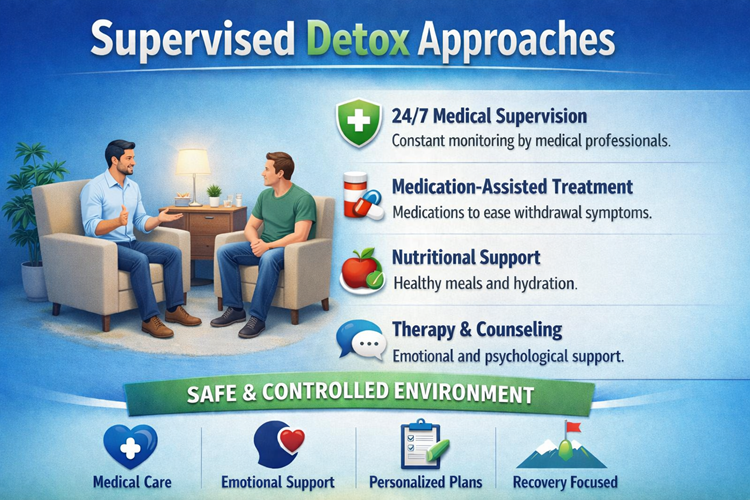
- Daily successive symptom observation
- Documentation of physical and psychological changes
- Increased action to counter unexpected complications
Structured Support Environment
- Predictable daily routines to lower stress levels
- Controlled environment to enable observation and safety
- Availability of trained professionals to respond to complications
Transition Planning
Detox centers have the propensity to make referrals for ongoing recovery services, ensuring continuity of care and reducing the chances of relapse.
Long-Term Considerations
While detox addresses immediate withdrawal symptoms, long-term recovery requires continuous engagement with organised support services. Relapse risk decreases significantly when individuals follow up detox with continued professional assistance, counseling, and systematic care.
Common Withdrawal Symptoms and Their Duration
Symptom | Typical Onset | Peak Duration | Resolution Time |
Nausea / Vomiting | 6–12 hours | 24–72 hours | 3–7 days |
Anxiety / Irritability | 12–24 hours | 3–5 days | 1–2 weeks |
Muscle aches / Tremors | 12–24 hours | 48–72 hours | 1 week |
Insomnia | 1–2 days | 3–5 days | 2–3 weeks |
Cravings | 12–24 hours | 3–5 days | Weeks (post-acute) |
Mood swings / Depression | 1–3 days | 4–7 days | 2–4 weeks |
*Symptom timelines vary by substance type, period of usage, and individual physiology.
For professional guidance on drug detox timelines and structured support, contact Solutions Healthcare
Choosing the appropriate support during detox can lead to more secure and stable outcomes. Solutions Healthcare offers structured, supervised detox services where individuals are treated under the supervision and care of professional staff. Their team prioritises continuity of care, personalized support, and informed decision-making, helping individuals take a responsible first step toward long-term recovery.
Medical Disclaimer: This blog is for informational purposes only and is not a substitute for professional medical advice.
Key Takeaways
- Detox plans vary based on the kind of drug consumed, substance use history, and individual well-being.
- Withdrawal consists of two periods: the acute and post-acute withdrawal phases.
- Detox fosters security and control of symptoms
- Detox is the initial process in the recovery process
- It is essential to establish ongoing recovery services to ensure stability in the long run
FAQs
How long does alcohol detox usually take?
Alcohol detox typically lasts 5–10 days for acute symptoms. Some effects, including sleep disturbances, irritability, and mild anxiety, can persist for 2–4 weeks. Supervised support during this period ensures safety, helps manage symptoms effectively, and prepares individuals for ongoing structured recovery services that address behavioral and environmental factors.
How long does opioid detox take?
Opioid detox generally lasts 5–14 days for acute withdrawal, while post-acute symptoms such as cravings, anxiety, and fatigue may continue for 2–4 weeks. Professional oversight and structured monitoring help manage withdrawal safely and provide continuity of care, supporting a smoother transition into longer-term recovery services and structured support programs.
Can stimulant detox be dangerous?
Stimulant withdrawal, including cocaine or methamphetamine, is mostly psychological but can include fatigue, depression, irritability, and sleep disturbances. While less physically dangerous than other substances, supervised detox ensures early intervention if complications arise and provides structured support to manage cravings, improve safety, and prepare for ongoing recovery services and stabilization.
What factors influence detox length?
Detox duration depends on substance type, dosage, frequency, and duration of use. Individual health, age, metabolism, and co-occurring conditions also influence timelines. Structured professional oversight helps monitor symptoms, ensure safety, and adjust care as needed, supporting individuals through the withdrawal phases and preparing them for ongoing recovery services and follow-up.
Is detox the same as recovery?
Detox is only the initial stabilization phase of recovery, addressing withdrawal symptoms and physical safety. Long-term recovery requires ongoing engagement with structured support, counseling, and behavioral interventions. Detox alone does not address underlying psychological or environmental factors, making continued care essential for achieving stability and minimizing the risk of relapse.
References
- National Institute on Drug Abuse
- Substance Abuse and Mental Health Services Administration
- National Institutes of Health
- Centers for Disease Control and Prevention
- PubMed