
In This Blog
- Understanding the addiction cycle
- Commonly recognized stages of addiction
- How relapse fits within the cycle
- The preoccupation and anticipation stage
- Cravings, triggers, and decision-making
- Brain processes associated with relapse risk
- Comparing relapse-prone and non-relapse stages
- Points where structured support is most effective
The cycle of addiction is commonly utilized to describe the reason why substance use patterns tend to recur with time, even after days and years of lowered or stopped use. Instead of moving in a straight direction, addiction is usually perceived as a circular process that implies alteration of behavior, motivation, and decision-making. Relapse, which is getting back into substance use after a period of abstinence or reduced use, is a relatively integral aspect of this cycle and not an incident or unexpected occurrence.
Knowledge of the stage of the addict’s cycle most related to relapse may give insight to individuals, families, and professionals interested in minimizing recurrence risk. Empirical models continuously find one step (called frequent preoccupation, anticipation, or craving) at which the relapse most often takes place. This is a phase of psychological attention to substances, heightened sensitivity to triggers, and inadequate control of impulses, even in the absence of active use.
Through exploring the entire cycle and the part that this stage plays, the relapse can be more readily explained, and the attempts to prevent it can be directed towards the cognitive, behavioral and environmental factors as opposed to the physical dependence alone.
Understanding the Addiction Cycle
The addiction cycle refers to a recurring sequence of psychological, behavioral, and neurological changes that influence substance use over time. Rather than ending once use stops, the cycle can continue through internal processes such as craving, emotional dysregulation, and impaired decision-making. These processes may persist even after prolonged periods without substance use.
Most modern frameworks describe addiction as involving both reward-seeking and stress-related mechanisms. Early stages may be driven by positive reinforcement, while later stages increasingly involve avoidance of discomfort or distress. Relapse occurs when the cycle reactivates following abstinence, often without immediate external pressure to use.
Expert Advice: Relapse risk increases most during craving and anticipation rather than during active substance use.
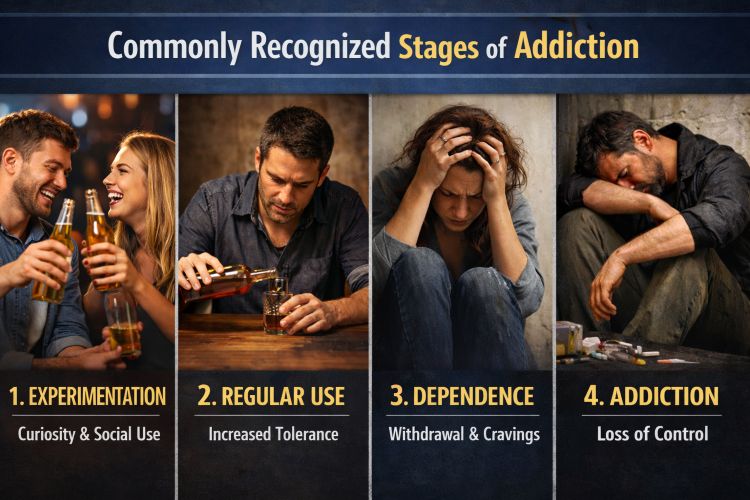
Commonly Recognized Stages of Addiction
Several authoritative models describe addiction using stages that may vary slightly in naming but share common features. One widely referenced framework groups addiction into three core stages:
- Binge or Intoxication – Substance use produces rewarding or reinforcing effects
- Withdrawal and Negative Affect – Absence of substances leads to distress or discomfort
- Preoccupation and Anticipation – Mental focus shifts toward seeking substances again
These stages are not always experienced in the same order or intensity, but they tend to reinforce one another over time. Importantly, relapse is most closely associated with the third stage rather than the initial or withdrawal stages.
Core Stages of the Addiction Cycle
Stage | Primary Characteristics | Role in Relapse |
Binge / Intoxication | Reinforcement, reward-seeking behavior | Not typically relapse-focused |
Withdrawal / Negative Affect | Discomfort, irritability, emotional strain | Can contribute indirectly |
Preoccupation / Anticipation | Craving, planning, mental fixation | Primary relapse stage |
FACT: Preoccupation and craving are strongly associated with relapse risk across substance use patterns.
How Relapse Fits Within the Cycle
Relapse is not considered a standalone failure or endpoint within addiction frameworks. Instead, it represents a re-entry into the cycle following a period of reduced or discontinued use. Relapse often begins before any substance is consumed, starting with cognitive and emotional changes that shift priorities toward use.
These early changes may include rationalizing use, underestimating consequences, or increased sensitivity to cues associated with past use. Because these processes occur internally, relapse risk can increase even when outward behavior appears stable.
Recognizing relapse as a process rather than a moment allows for earlier identification and intervention during the stages where change is still possible.
The Preoccupation and Anticipation Stage
The preoccupation and anticipation stage is consistently identified as the key element of relapse. During this phase, individuals experience heightened mental engagement with substance use, even in the absence of physical dependence symptoms. Thoughts about using may become intrusive, repetitive, or emotionally charged.
This stage often involves exposure to triggers such as stress, environmental cues, routines, or emotional states previously associated with substance use. Over time, these triggers can activate conditioned responses that increase desire and reduce resistance.
Unlike earlier stages, this phase is driven primarily by cognitive and motivational processes rather than immediate physical effects, making it a critical focus for relapse prevention strategies.
Cravings, Triggers, and Decision-Making
Cravings are a defining feature of the preoccupation stage and play a central role in relapse risk. Cravings are not simply urges; they involve measurable changes in attention, emotional processing, and impulse control. These changes can distort decision-making and increase the perceived value of substance use.
Triggers may be internal, such as stress or mood shifts, or external, such as locations, social environments, or sensory cues. When triggers are encountered repeatedly without effective coping strategies, the likelihood of relapse increases.
Importantly, cravings can occur long after physical withdrawal has resolved, reinforcing the idea that relapse prevention must address more than physical stabilization alone.
Brain Processes Associated With Relapse Risk
Neuroscience research shows that prolonged substance use can alter brain regions involved in reward processing, stress regulation, and executive function. During the preoccupation stage, reduced activity in decision-making regions may limit the ability to weigh long-term consequences effectively.
At the same time, heightened responsiveness in reward-related pathways increases sensitivity to cues linked to past substance use. This imbalance makes resisting cravings more difficult, particularly under stress or emotional strain.
These changes do not imply permanence, but they do explain why relapse risk remains elevated without structured strategies to manage anticipation and craving.
Comparing Relapse-Prone and Non-Relapse Stages
Not all stages of the addiction cycle carry the same relapse risk. Some stages reflect maintenance of use, while others mark vulnerability to returning after abstinence.
Relapse Risk by Addiction Cycle Stage
Stage | Relapse Risk Level | Key Drivers |
Active Use | Low | Use already occurring |
Withdrawal | Moderate | Discomfort and stress |
Preoccupation / Anticipation | High | Cravings, planning, triggers |
This comparison highlights why prevention efforts focus heavily on managing anticipation and cognitive engagement rather than only addressing withdrawal symptoms.
Points Where Structured Support Is Most Effective
Support strategies are most impactful when they target the preoccupation stage directly. This includes helping individuals recognize early warning signs, identify personal triggers, and develop practical coping tools for cravings.
Structured support may involve education, behavioral planning, routine stabilization, and professional oversight to help manage high-risk moments. These approaches do not eliminate relapse risk but aim to reduce frequency and severity over time.
Learn about relapse-focused support options at Solutions Healthcare
Ongoing Engagement and Relapse Prevention
Relapse prevention is an ongoing process rather than a single intervention. Continued engagement with recovery services helps reinforce coping skills and adapt strategies as circumstances change. This may include periodic reassessment, skill-building, and support network development.
Maintaining awareness of the preoccupation stage allows individuals to respond proactively rather than reactively when cravings arise.
Discuss long-term relapse prevention planning with Solutions Healthcare
Solutions Healthcare provides structured recovery services that focus on identifying relapse risk stages, managing cravings, and supporting sustained engagement. Their programs emphasize individualized planning, continuity of care, and professional oversight tailored to long-term recovery needs.
Medical Disclaimer: This blog is for informational purposes only and is not a substitute for professional medical advice.
Key Takeaways
- Addiction follows a recurring cycle rather than a linear path
- Relapse is part of the cycle, not a separate event
- The preoccupation and anticipation stage is most strongly linked to relapse
- Cravings and triggers drive decision-making during this stage
- Structured support focuses on managing anticipation and cognitive risk factors
FAQs
Which stage of addiction is most linked to relapse?
The preoccupation and anticipation stage is most closely linked to relapse because it centers on craving, mental rehearsal, and planning. Heightened sensitivity to cues, stress, and emotional triggers increases attentional bias toward substances, erodes inhibitory control, and often culminates in renewed use after a period of abstinence overall.
Why does relapse happen after abstinence?
Relapse can occur after abstinence because neurobiological and psychological processes may persist beyond detoxification. Craving circuitry, stress reactivity, habit learning, and decision-making biases can remain sensitized, while environmental cues and emotional strain reactivate patterns of use despite resolved physical dependence, especially during transitions or unstructured periods without supports in place.
Are cravings always present before relapse?
Cravings commonly precede relapse, but they are not universal or uniform. Some people experience muted urges alongside cognitive rationalizations, emotional shifts, or stress-induced narrowing of attention. Subtle changes in thinking, mood, or routine can signal vulnerability even without intense desire or consciously recognized cravings at all before resumption.
Can relapse be prevented entirely?
Relapse risk can be reduced but not eliminated, reflecting the chronic, relapsing nature of addiction. Ongoing support, skills training, and trigger management lower the probability, yet uncertainty remains. The goal is sustained risk management, early intervention, and resilience building rather than guarantees across different contexts and life stages.
How does structured support help reduce relapse risk?
Structured support reduces relapse risk by providing accountability, monitoring, and timely feedback. Programs help individuals identify early warning signs, practice coping skills, and plan responses to high-risk situations. Consistent routines and social connections buffer stress and improve decision-making during vulnerable periods, especially when motivation fluctuates or fatigue sets in.