
Key Takeaways
- Dissociative amnesia is a trauma-related memory condition, not ordinary forgetfulness
- Memory loss is often selective and linked to emotional stress
- Trauma, abuse, or extreme fear commonly trigger dissociative amnesia
- Recovery is possible with the right therapeutic support
- Treatment focuses on safety, stabilization, and gradual memory integration
Dissociative Amnesia: Why You Can’t Remember Trauma is a matter that is silently debated among many individuals after encountering tremendous or terrifying experiences. You might remember that something painful has occurred, but great masses of it are blank, untouchable, and out of reach. It is confusing, disturbing and even frightening, but it is, at the same time, a mental reaction to trauma.
Dissociative amnesia has nothing to do with weakness and denial. It is an attempt on the part of the brain to safeguard itself when emotional pain is too severe to process at once. Learning the mechanism of dissociative amnesia is usually the initial measure to healing and insight as well as recovery.
Dissociative Amnesia
Dissociative amnesia refers to a mental disorder in which a person cannot recount certain important personal details or information; this too tends to have some relation to a traumatic incident or traumatic experience. This type of amnesia is opposed to the normal lapses in memory and in some cases it would be sudden and autobiographical memory which tend to occur abruptly in reaction to bad events.
Dissociative amnesic patients can go about their daily activities yet they are at the same time unable to retrieve some memories that they have. The brain is actually disintegrating the two emerging experiences and awareness as a survival mechanism.
What is Dissociative Amnesia?
Dissociative amnesia happens when the brain prevents access to the memory that is associated with infiltrating emotions or traumatic incidents. Such memories never disappear, but are just immobilized.
The disorder is unlike the neurological memory disorders since the brain is not damaged. The difficulty is in the mechanisms of retaining the memories and retrieving them in the conditions of emotional distress.
What is Dissociative Amnesia Disorder?
The clinical diagnosis applied to the case in question is Dissociative Amnesia Disorder because memory loss had been a major problem affecting the patient in terms of his functioning, emotional health, or identity. It falls under the category of dissociative disorders and can either come by itself or concurrently with other trauma disorders.
The disorder may feature local memory loss, selective memory loss or in the worst case, identity confusion.
What is Dissociation?
Dissociation A dissociative process involving the inability of the conscious mind to be connected with thoughts, emotions, sensations or memories. Light loss is normal- e.g daydreaming or zoning out when doing routine things.
This response is more acute and defensive in trauma-related dissociation whereby it aids the brain in dealing with the emotional overload by dissociating awareness of pain.
How Dissociative Amnesia Works
The mechanism of action of dissociative amnesia is by interfering with the normal memory-processing systems of the brain. The nervous system can go into survival mode when trauma victimization happens and thus give more priority to safety first and then the integration of memory comes in afterwards.
In turn, fear or distress-associated memories might not integrate appropriately. This may be the reason that data of facts can be recalled but there is no effect on the emotional state or there is a high emotion but a vague memory.
Dissociative Amnesia Symptoms
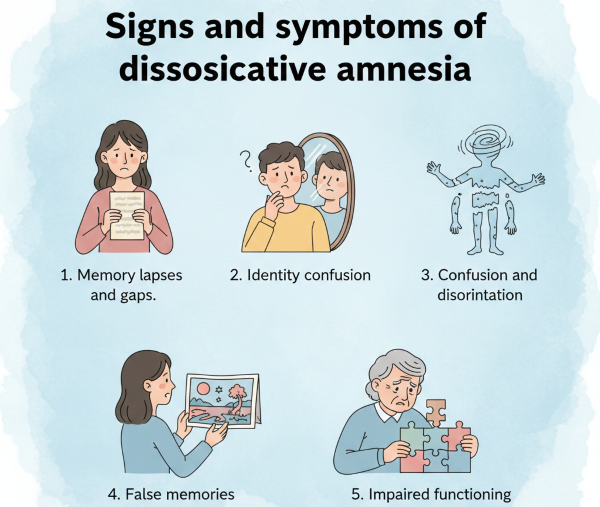
Dissociative amnesia symptoms differ but in most cases they include:
Failure to remember personal or traumatic events.
Numbing or derealization – Emotional numbness or depersonalization.
Mixed-upness over past experiences.
Missing gaps in the memory that are experienced as missing.
Fear or panic on recalling the events.
Such symptoms are also common in times of stress or reminders of the trauma.
Dissociative Amnesia Causes
Psychological trauma is the most prevalent etiology of dissociative amnesia and could include:
- Childhood abuse or neglect
- Sexual or physical assault
- Combat exposure
- Critical accidents or even natural events.
- Constant/lasting emotional stress.
Dissociation is one of the defensive mechanisms that are used by the brain when the experiences have surpassed the level of emotional tolerance.
Dissociative Amnesia Test
Dissociative amnesia does not have a single test at the laboratory. A comprehensive interview with the clients, which deals with their clinical and psychological history and the exclusion of medical etiology (brain injury, neurologic disorders or substance use) are used to diagnose it.
Professionals dealing with mental health examine the history of trauma, patterns of memory and dissociative symptoms to come up with the right diagnosis.
Dissociative Amnesia and Trauma
Dissociative amnesia and trauma are interrelated. The trauma causes the brain to be overcome by the usage of experience in the moment and results in the formation of fragmented or unreachable memory storage.
This reaction is especially widespread in childhood trauma, in which the developing brain does not have the means to cope with fear and distress securely.
Dissociative Amnesia Treatment and Recovery
The idea that is followed in dissociative amnesia therapy is on assurance trust, and gradual recovery. Application of the trauma-oriented therapy, grounding techniques and skills of emotional control is discussed as one of the most common techniques.
To recover does not mean to get memories to resurrect. Instead, it concerns the treatment of emotional stability and providing the memories to emerge by themselves at the time when the mind is free and inspired.

Take the Next Step Toward Healing
The professional support can be of great help in case dissociative amnesia has already impaired your life, relatives, and health. Solutions Healthcare is a trauma-informed care delivery approach that is compassionate to help you feel safe again once more and be connected to yourself and your story.
Or call Solutions Healthcare now and talk to an expert in mental health and start your journey to clarity and stability and a complete recovery.
Disclaimer
This content is for informational purposes only and is not intended to replace professional medical or mental health advice, diagnosis, or treatment. Always seek the guidance of a qualified mental health professional with any questions regarding your condition or care.
Frequently Asked Questions (FAQs)
Can you recover from dissociative amnesia?
Yes, recovery is possible. With trauma-informed therapy and a safe environment, many people regain access to memories or learn to live fully without needing to recall every detail.
What is the most common type of dissociative amnesia?
Localized amnesia is the most common type. It involves forgetting specific events or time periods, usually connected to trauma or extreme stress.
Is dissociative amnesia a symptom of PTSD?
Dissociative amnesia can occur alongside PTSD but is a separate diagnosis. Both conditions involve trauma, but dissociative amnesia specifically affects memory access.
How long does a dissociative amnesia episode last?
Episodes can last minutes, hours, or even years. Duration depends on trauma severity, ongoing stress, and access to therapeutic support.
What triggers dissociative amnesia?
Triggers include traumatic events, emotional overwhelm, reminders of past trauma, or sudden stress that exceeds coping capacity.
Can you remember forgotten things from dissociative amnesia?
Yes, memories may return gradually, suddenly, or partially. Recovery should happen naturally, without pressure, in a therapeutic setting.
What’s it called when you can’t remember trauma?
This experience is commonly called dissociative amnesia or trauma-related memory loss.
Why can’t I remember something traumatic happening?
The brain may block access to traumatic memories as a protective mechanism to prevent emotional overload.
How to get memories back from dissociative amnesia?
Therapy, emotional safety, and grounding techniques support memory integration. Forcing recall is discouraged and can cause distress.
Can people with did remember trauma?
Yes, people with dissociative identity disorder can remember trauma, though memories may be fragmented or held by different identity states.
How to remember repressed traumatic memories?
Working with a trained trauma therapist helps create a safe environment where memories may resurface naturally over time.