
In This Blog
- The Decision to Pursue Abstinence
- Understanding Alcohol’s Effect on the Brain
- The Importance of Professional Oversight
- The Alcohol Withdrawal Timeline
- Physical and Mental Health Benefits of Quitting
- Developing New Coping Mechanisms
- Navigating Social Situations and Triggers
- Long-Term Maintenance and Wellness
The solution to stop drinking is a life-changing decision, and the choice can be of great help to your body fitness, your mind and your relationship with your loved ones. However, to the majority of the population, it is not a simple task, and quitting is not a simple issue. Alcohol creates an impact on the central nervous system, and under the condition that an individual has a regular consumption pattern, the body and the brain will take time to accustom themselves to its absence, often requiring a specialized alcohol detox.
A successful search for sobriety is a routine with professional supervision coupled with a personal one. Anxiety can also be removed through the process of demystification of the cessation process, with the knowledge of what to expect in the initial stages, the biological changes that occur alongside the withdrawal symptoms that are likely to occur. It is a pathfinder that tries to provide a road map to those who are ready to take a step towards a substance-free life.
Quitting drinking is not a one-time thing but rather a slow process. Considering the assistance of structured management and the evidence-based approach, it will be possible to address the issues of early recovery and create a foundation of stability in the long term. It is the key to success in case you are attempting to either lose weight or to recover your life by using professional recovery services.
Expert Advice: Regular professional control would ensure the safe and stable process culminating in long-term sobriety.
Understanding Alcohol’s Effect on the Brain
Alcohol is a central nervous system depressant that increases the activity of GABA, a neurotransmitter responsible for feelings of relaxation. Over time, the brain compensates for this constant suppression by increasing the activity of excitatory neurotransmitters like glutamate. This creates a state of physiological dependence where the brain requires alcohol just to feel “normal.”
When an individual stops drinking, the brain remains in a hyper-excited state because the “brakes” provided by alcohol are suddenly removed. This imbalance is what causes the symptoms of withdrawal. Understanding this biological reality is essential for recognizing why a monitored setting is often the safest place to begin the recovery process.
The Recovery of Cognitive Function
Fortunately, the brain is very plastic. Once the alcohol is removed, the brain begins to recover the damaged neural systems and rebuild the balance between the neurotransmitters. The outcome of such a process is the improvement of memory and emotional control and the redevelopment of the ability to draw pleasure in natural rewards, which is a major focus of comprehensive therapy.
The Importance of Professional Oversight
Cold turkey quitting is literally a death sentence to individuals who have a history of heavy drinking or who have been long-time drinkers. The withdrawal of alcohol is risky in comparison to other drugs, such as seizures and a condition called delirium tremens (DTs). One of the clinical standards of care would be to identify a monitored environment during the initial phase of cessation, such as a residential treatment program.
Withdrawal causes physical pain, and employees can measure vital signs and survive in an establishment practicing treatment. With this kind of supervision, the chances of complications are very low and ensure that the person is stable. Besides, an extended treatment strategy gratifies the psychological urges, which tend to reach their highest point during the initial week of sobriety.
Phase of Support | Primary Goal | Focus Area |
Initial Stabilization | Physical Safety | Vital sign monitoring, hydration |
Structured Care | Behavioral Skills | Trigger identification, coping tools |
Long-Term Recovery | Maintenance | Community support, wellness habits |
Solutions Healthcare is another company that provides recovery services and monitored environments to people on their way.
The Alcohol Withdrawal Timeline
The reaction of the body to alcohol cessation would follow a timeline. Even though the scope of the symptoms varies based on the past of the individual, in general, the progression is predictable, making supervised care vital for safety.
6 to 24 Hours: The Early Stage
The symptoms normally take place several hours after the last drink. The former may include anxiety, hand tremors, nausea, and insomnia. At this point, the brain is only beginning to react to the withdrawal of the depressive effects of alcohol.
24 to 72 Hours: The Peak Stage
It is a period that is mostly the hardest physically. This addition of accelerated heart rate, sweat and mood swings could make the symptoms worse. There is a possibility of hallucinations or seizures occurring in extreme situations, hence the need to control the process in a controlled environment. This is why the control of the process during this peak period is so crucial.
4 to 7 Days: The Subsiding Stage
Significant severe physical symptoms begin to decrease at the end of week one. However, irritability and brain fog may persist as such psychological symptoms. It is the time when the focus is shifted from physical stabilization to the long-term behavioral moves.
FACT: The health improvements that are products of alcohol consumption, such as liver repair, can be induced in a few weeks after quitting alcohol.
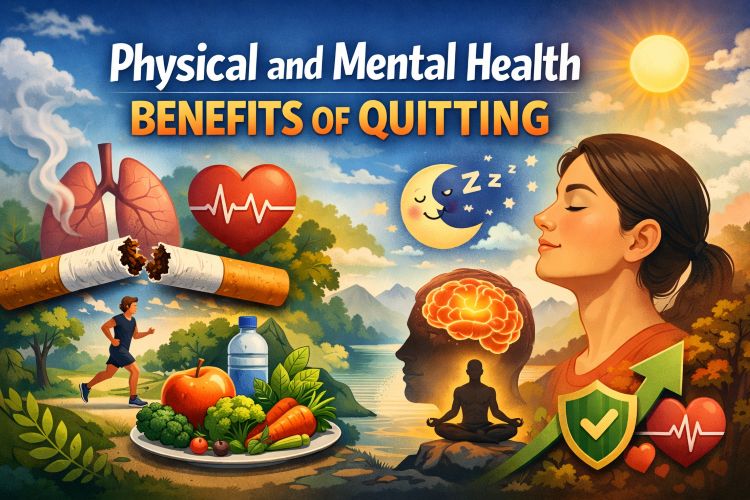
Physical and Mental Health Benefits of Quitting
The advantages of abstinence from alcohol are quick to come by and continue growing with time. The benefits of all the body systems are the removal of toxins and the restoration of natural balance, which is often supported by medication management.
- Liver Health: The liver begins to work more efficiently with fat, and inflammation is likely to decrease during the first month.
- Improved Sleep: Early recovery is coupled with insomnia, but with sobriety, in the long term, there is improved REM sleep and improved nights.
- Mental Clarity: The mental process, which is related to concentration, judgement and problem solving, is normally enhanced once the brain inflammation is off.
- Immune Function: Sobriety boosts immunity, thus making the body stronger to diseases and infection.
Besides the physical changes, the majority of people record a tremendous reduction in symptoms of anxiety and depression. The mood-controlling chemicals in the brain also get to an even footing since alcohol is a depressant, and the withdrawal of the substance leads to a balancing effect.
Developing New Coping Mechanisms
The necessity to acquire new stress and emotion coping skills is one of the biggest contributions to full-time alcohol abstinence. Alcohol, to the majority, was a crutch to come out of social anxiety or disturbed emotions. One of the pillars of the recovery services is the acquisition of skills on how to replace this habit with healthy ones, often through behavioral therapy.
- Mindfulness and Grounding: The practices may help you in the now and manage the cravings as they arise.
- Physical Activity: Exercise, in turn, is associated with the release of natural endorphins that may be employed to alleviate mood and reduce the desire to take a drink.
- Imaginative Hobbies: Hobbies are another productive thing, and they help people express themselves.
- Systematic Schedule: The conformity to a daily schedule would help in reducing the amount of decision fatigue that can lead to a relapse.
These skills are practiced on an everyday basis in a treatment setting until they have become second nature. It is a facilitating help that will facilitate the gap bridging between the moment one decides to quit and the moment when they lead a substance-free life, often starting in a partial hospitalization program.
Navigating Social Situations and Triggers
The triggers that bring a great desire to drink are people, places or things. The ability to recognize these triggers is one of the main dimensions of professional oversight. Once this is realized, individuals will manage to develop some escape plans for the threatening situations, which is a core component of outpatient treatment.
Socializing without alcohol may be awkward, but it would be possible with time. Opening up to their support network regarding their objectives helps many of them to reduce the social pressure. The change may also be made simpler by selecting the non-alcohol-related environments.
Trigger Type | Example | Strategy |
Emotional | Stress or loneliness | Call a support person, exercise |
Environmental | A specific bar or party | Avoid the location, bring a sober friend |
Social | Peer pressure to toast | Have a non-alcoholic drink ready |
In order to access recovery services and structured care, call Solutions Healthcare
Long-Term Maintenance and Wellness
To quit alcohol forever is to make a living without the need to get away. This involves being constantly maintained and practicing general wellness. It is a marathon and not a sprint, and it requires a long-term plan to recuperate, often involving aftercare servp0-[‘oices.
The professional supervision does not limit itself to the initial structured care most of the time. This can include joining support groups, one-on-one counseling, or even visiting a recovery coach. These are the resources that provide the accountability and motivation to overcome life’s pitfalls and downs without returning to alcohol consumption.
Solutions Healthcare provides low-priced recovery and professional assistance to individuals who are lost in the world of alcohol withdrawal. Our philosophy is aimed at the establishment of a properly structured treatment environment in which safety and long-term well-being are emphasized. We are closing the dependency-sustainable, life-free gap by providing supervised care and evidence-based assistance in a supervised setting.
Medical Disclaimer: This blog is for informational purposes only and is not a substitute for professional medical advice.
Key Takeaways
- Quitting alcohol involves a physiological transition that is best managed with professional oversight.
- The withdrawal timeline typically peaks within 72 hours and requires a monitored setting for safety.
- Sobriety leads to significant improvements in liver health, sleep quality, and mental clarity.
- Identifying and managing triggers is essential for preventing a return to use.
- Structured care environments provide the tools and support needed to build new coping skills.
- Long-term maintenance focuses on holistic wellness and a strong support network.
FAQs
How long does it take for the brain to heal after quitting?
The brain begins to heal almost immediately, but significant cognitive and emotional stabilization often takes several months. Neural pathways associated with reward and impulse control continue to repair themselves throughout the first year of sobriety. Professional oversight can help monitor and support this cognitive recovery as part of dual diagnosis treatment.
Is it safe to quit drinking at home?
For those with a history of heavy or daily use, quitting at home can be dangerous due to the risk of seizures or delirium tremens. A monitored setting is the recommended environment for the initial phase of cessation to ensure physical safety and manage withdrawal symptoms under professional oversight.
Why do I feel more anxious after I stop drinking?
Alcohol is a depressant that artificially calms the nervous system. When you stop, the brain experiences a “rebound” effect of excitability, which can manifest as increased anxiety. This is a normal part of the withdrawal timeline and typically stabilizes as your brain chemistry returns to its natural balance.
Can my liver fully recover after I stop drinking?
In many cases, the liver has a remarkable ability to regenerate. Early-stage inflammation and fatty liver disease can often be reversed with complete abstinence. However, the extent of recovery depends on the level of previous damage. Professional recovery services often include health monitoring to track liver improvements.
What is the most effective way to quit drinking for good?
The most effective approach usually involves a combination of a monitored setting for initial safety and long-term structured care for behavioral change. Combining professional oversight with a strong personal support network and new coping strategies provides the highest probability of maintaining long-term sobriety and wellness.