
In This Blog
- Understanding alcohol detox and its purpose
- What influences the alcohol detox timeline
- Common alcohol withdrawal symptoms
- Typical stages of alcohol detox
- Role of supervised support during detox
- Risks and limitations of unmanaged detox
- Detox as a first step, not complete recovery
- Transitioning from detox to ongoing treatment
- Key considerations when seeking detox support
Alcohol detox is the first period of the organized assistance aimed at regulating the adaptation of the body after decreasing or ceasing alcohol consumption. This is so due to the fact that excessive use of alcohol will lead to the body adapting to the existence of alcohol. Physical and psychological symptoms can come about when alcohol consumption is stopped or reduced as the body adapts to the non-existence.
There are significant differences in the alcohol detox schedule between individuals. The length of alcohol consumption, frequency, and general health, as well as dependence level, are all factors that determine the manifestations and the duration of symptoms. Knowing the general schedule and symptom patterns allow people to make sound decisions with regards to seeking relevant supervised support at this stage.
Expert Advice: Alcohol detox timelines vary widely and should be approached with structured professional oversight.
Understanding Alcohol Detox and Its Purpose
Alcohol detox is based on short-term stabilization and not long term transformation. Its main effect is to assist a person to safely overcome the withdrawal symptoms as the body gets rid of alcohol and starts to compensate. Detox does not solve the root behavioral, emotional and environmental issues that come with alcohol consumption, which are addressed through addiction treatment programs.
Since the time of detox is predetermined, it can be used within a wider treatment strategy. Strict detox set-ups focus on observation, safety, and symptom control and equip individuals to transition to the subsequent stage of recovery services, such as outpatient treatment.
What Influences the Alcohol Detox Timeline
The length and intensity of alcohol detox vary from person to person. No single timeline applies universally, and individual experiences may differ even among people with similar alcohol use histories.
Factors that influence the detox timeline include:
- Length of alcohol use history
- Average amount consumed
- Frequency of alcohol use
- Previous withdrawal experiences
- Presence of co-occurring mental health challenges
- Overall physical health
These factors help determine the level of supervised support that may be appropriate during detox.
FACT: Alcohol withdrawal symptoms can begin within hours after alcohol use decreases or stops.
Common Alcohol Withdrawal Symptoms
Alcohol withdrawal symptoms can range from mild to severe. Symptoms typically emerge because the nervous system has adapted to alcohol’s effects and needs time to stabilize.
Common symptoms may include:
- Tremors or shakiness
- Sweating
- Headaches
- Nausea
- Anxiety or restlessness
- Sleep disturbances
More severe symptoms may occur in some individuals and require immediate supervised support. Because symptom severity can escalate unpredictably, monitoring is an important component of detox services.
Typical Stages of Alcohol Detox
Alcohol detox often progresses through recognizable stages, though timing and intensity vary. These stages provide a general framework rather than a precise schedule.
Early Stage: 6–12 Hours
Symptoms may begin within several hours after alcohol intake decreases. Early symptoms often include mild anxiety, headache, nausea, and restlessness. At this stage, monitoring helps identify changes that may require additional support through a detox program.
Peak Stage: 24–72 Hours
Symptoms often intensify during this period. Tremors, increased anxiety, sweating, and sleep disruption are more common. Some individuals may experience confusion or agitation. Structured environments emphasize continuous monitoring during this stage, often provided by inpatient rehab.
Late Stage: 4–7 Days
For many individuals, symptoms begin to gradually lessen. Energy levels and sleep patterns may still feel disrupted, but physical discomfort often improves. Continued support helps manage lingering symptoms and prepares individuals for next-step treatment planning.
General Alcohol Detox Timeline Overview
Timeframe | Common Experiences | Support Focus |
6–12 hours | Mild withdrawal symptoms | Monitoring and stabilization |
24–72 hours | Peak symptom intensity | Supervised support and safety |
4–7 days | Gradual symptom reduction | Transition planning |
Role of Supervised Support During Detox
Supervised support during alcohol detox helps manage symptoms safely and reduces risks associated with withdrawal. Structured detox environments provide monitoring, symptom management, and professional oversight throughout the process.
Supervision allows for timely responses if symptoms worsen. It also provides individuals with education about what to expect and guidance on next steps. This support is particularly important for individuals with a history of severe withdrawal or co-occurring conditions.
For information about supervised alcohol detox options, contact Solutions Healthcare
Risks and Limitations of Unmanaged Detox
Attempting to detox from alcohol without supervision can carry significant risks. Withdrawal symptoms can escalate quickly and unpredictably, even in individuals who previously experienced mild symptoms.
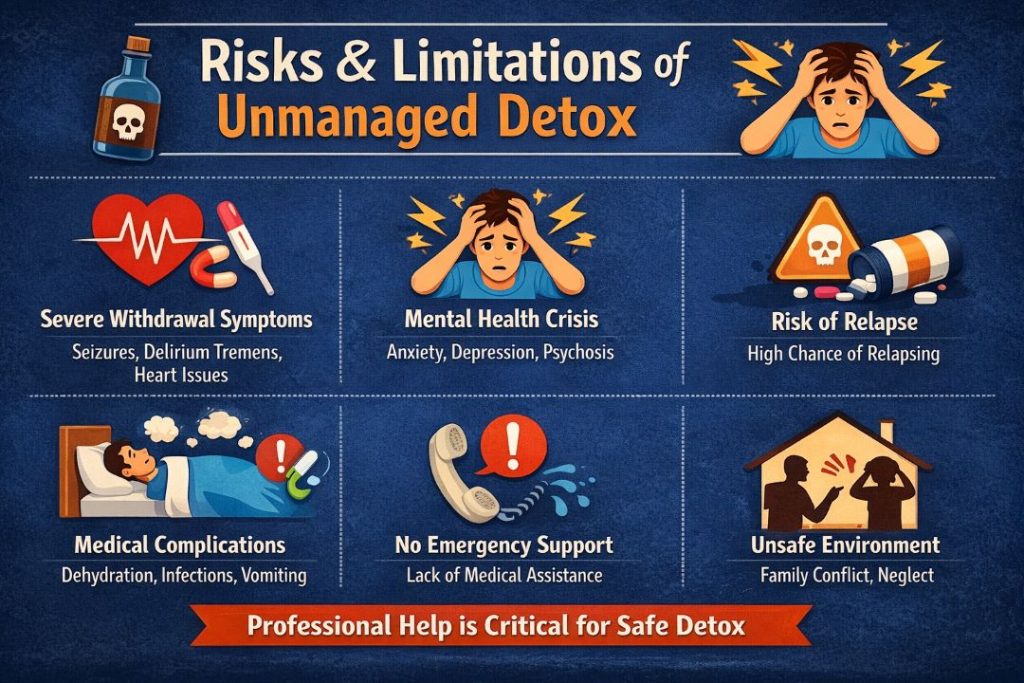
Limitations of unmanaged detox include:
- Lack of symptom monitoring
- Increased risk of complications
- No structured transition planning
- Absence of professional guidance
Because of these risks, many individuals choose supervised detox environments to support safety and informed decision-making.
Detox as a First Step, Not Complete Recovery
Alcohol detox is an important starting point, but it does not address the long-term aspects of alcohol use. Detox focuses solely on physical stabilization and does not provide the tools needed for sustained change.
Long-term recovery typically involves ongoing treatment services that address behavior patterns, coping strategies, and environmental influences. Viewing detox as one phase within a broader alcohol addiction treatment plan helps set realistic expectations.
Transitioning From Detox to Ongoing Treatment
Planning the transition from detox to ongoing treatment is a critical part of continuity of care. Without follow-up services, individuals may face challenges maintaining progress after detox ends.
Transition planning may involve:
- Enrollment in outpatient programs
- Intensive outpatient services
- Education and skills development
- Ongoing professional oversight
This continuity supports stability and helps individuals build on the foundation established during detox.
Learn how detox transitions into ongoing alcohol treatment by calling Solutions Healthcare
Key Considerations When Seeking Detox Support
Choosing appropriate detox support involves evaluating safety, structure, and follow-up planning. Transparency from providers helps individuals make informed decisions.
Important considerations include:
- Level of monitoring provided
- Experience with alcohol withdrawal
- Integration with ongoing treatment services
- Approach to transition planning
Considerations When Choosing Alcohol Detox Support
Consideration | Why It Matters |
Supervised setting | Supports safety during withdrawal |
Professional oversight | Enables timely symptom response |
Transition planning | Connects detox to continued care |
Structured environment | Maintains consistency |
Education during detox | Prepares for next treatment phase |
Solutions Healthcare provides structured alcohol detox services with supervised support and professional oversight. Detox programs emphasize safety, symptom management, and clear transition planning into ongoing treatment environments designed to support continuity of care.
Medical Disclaimer: This blog is for informational purposes only and is not a substitute for professional medical advice.
Key Takeaways
- Alcohol detox timelines vary by individual
- Withdrawal symptoms may begin within hours
- Supervised support improves safety during detox
- Detox alone does not equal recovery
- Transition planning supports long-term care
FAQs
How long does alcohol detox usually take?
Alcohol detox typically lasts several days, though timelines vary widely between individuals. Early symptoms may begin within hours, peak within two to four days, and gradually decrease over a week. Factors such as drinking history, frequency, overall health, and support level influence duration and symptom intensity during withdrawal periods.
What symptoms occur during alcohol detox?
Symptoms during alcohol detox may include tremors, sweating, nausea, anxiety, sleep disturbances, headaches, and changes in blood pressure or heart rate. Severity can range from mild to serious and may change quickly. Because symptoms are unpredictable, supervised settings help manage complications safely and promptly with appropriate monitoring support.
Is alcohol detox dangerous without supervision?
Alcohol detox without supervision can be dangerous because symptoms may escalate unexpectedly. Certain withdrawal effects require immediate medical attention and monitoring. Structured detox environments provide observation, timely response, and supportive care, reducing health risks and improving safety during the detoxification process for individuals with heavy use histories or complex needs.
Does detox treat alcohol dependence fully?
Detox does not fully address alcohol dependence. It focuses on physical stabilization and managing withdrawal symptoms only. Behavioral patterns, emotional factors, and environmental influences are not resolved during detox. Continued treatment following detox supports skill development, education, and long-term planning for sustained progress beyond initial physical stabilization phases.
What happens after alcohol detox ends?
After alcohol detox ends, individuals often move into outpatient or other structured treatment programs. These services focus on education, skill building, routine development, and planning for ongoing support. Transitioning promptly helps maintain momentum, apply coping strategies, and encourage continued engagement in recovery-focused services across different stages of care.