

In case tramadol has been causing you to feel a little off, foggy, nauseous, or simply not like yourself, you are not dreaming. And when you are attempting to determine why those side effects appear to be lingering on longer than they should, then you are posing the correct question.
What is tramadol, and why does it appear to take a different effect than other painkillers? One of the answers is that tramadol does not just one thing to your brain, and that is why quitting it may seem even more complex than some might assume.
The most common short-term side effects of tramadol include drowsiness, nausea, and dizziness that usually clear as you get used to the drug after 6 to 12 hours. The post-tramadol withdrawal symptoms are a different process and it is normally initiated 8-24 hours post-tramadol intake and last between 5-10 days, although psychological symptoms can persist longer without proper support.
This guide is a step-by-step explanation of what tramadol is actually doing, how long its side effects take, what withdrawal would look like in case you give up and when it is time to seek help.
What is Tramadol
Tramadol is a prescription opioid pain medication used to treat moderate to moderately severe pain. Unlike many other opioids, it also affects serotonin and norepinephrine, chemicals more commonly associated with antidepressants.
That dual action is part of what makes tramadol unique among painkillers.
- It binds to opioid receptors to reduce pain signals
- It also increases serotonin and norepinephrine activity in the brain
- This combination can produce mood-related effects beyond typical pain relief
“Tramadol is an opioid medication primarily used for the treatment of moderate to moderately severe pain. Unlike other narcotic painkillers, however, tramadol has antidepressant properties that enhance its pain-relieving effect.”
Have questions about tramadol use or side effects? Solutions Healthcare is here to help.
What is Tramadol Used For
Tramadol is primarily prescribed for pain that does not respond well to over-the-counter medication but does not require a stronger opioid.
Common reasons a doctor prescribes tramadol include:
- Post-surgical pain
- Chronic pain conditions
- Injury-related pain
- Pain management when other opioids carry higher risk
Because tramadol carries a lower potential for misuse than some stronger opioids, doctors sometimes reach for it first. That does not mean it is risk-free.
100% Confidential Support is Available 24/7
No matter what you’re going through, you’re not alone. Our dedicated team is here to provide a safe, judgment-free space where you can talk openly and honestly. Whether you need emotional support, resources, or just someone to listen.
We’re here for you—completely confidential and always respectful of your privacy. Call us today!
Types of Tramadol Side Effects
Tramadol side effects generally fall into two categories, physical effects tied to the opioid component and mood or cognitive effects tied to its impact on serotonin and norepinephrine.
Common physical side effects include:
- Drowsiness or sedation
- Nausea and constipation
- Dizziness
- Dry mouth
- Sweating
Common mood and cognitive side effects include:
- Feeling foggy or “off”
- Mood swings
- Anxiety or restlessness
- Confusion, especially at higher doses
Fact: An estimated 1.7 million Americans are physically dependent on tramadol, per SAMHSA data.
Contact Solutions Healthcare
Battling with Drug and Alcohol Addition? Remember, you are not alone and we are here to help you!
How Long Do Side Effects Of Tramadol Last
Short-term tramadol side effects typically fade within 6 to 12 hours for immediate-release formulations, tracking closely with the drug’s elimination from your bloodstream.
Formulation | Half-Life | Side Effects Generally Clear By |
Immediate-release | Around 6 hours | 6 to 12 hours |
Extended-release | Around 8 hours | 12 to 24 hours |
These timeframes assume a single dose taken as prescribed. Regular or higher-dose use changes how your body processes tramadol and can extend how long effects linger.
Still feeling off hours after your last dose? Call Solutions Healthcare to talk it through.
Why Do I Feel Weird After Taking Tramadol
That “weird” feeling many people describe comes from tramadol’s effect on serotonin and norepinephrine, not just the opioid receptors most painkillers target.
This dual mechanism can cause the following:
- A sense of mental fog or disconnection
- Unusual mood shifts, from unease to mild euphoria
- Heightened sensitivity to light or sound in some people
- In rare cases, symptoms resembling serotonin syndrome when combined with other serotonergic medications
“Tramadol has a unique profile because it also affects serotonin and norepinephrine, which can make withdrawal feel more emotionally and neurologically intense for some people.”
If tramadol interacts with antidepressants, migraine medications, or certain other drugs, that “weird” feeling can become a genuine medical concern. Always tell your doctor about every medication you take.
How Long Do Withdrawal Symptoms of Tramadol Last?
Tramadol withdrawal symptoms typically begin 8 to 24 hours after the last dose and resolve within 5 to 10 days for most people, though some psychological symptoms can extend beyond that window.
Withdrawal Stage | Timeframe | What Happens |
Onset | 8 to 24 hours | Anxiety, sweating, restlessness begin |
Peak | 24 to 72 hours | Symptoms are most intense |
Decline | Days 4 to 10 | Physical symptoms ease |
Lingering effects | Weeks | Mood changes, cravings may persist |
Expert Advice: Never stop tramadol abruptly. Taper gradually under a doctor’s supervision instead.
100% Confidential Support is Available 24/7
No matter what you’re going through, you’re not alone. Our dedicated team is here to provide a safe, judgment-free space where you can talk openly and honestly. Whether you need emotional support, resources, or just someone to listen.
We’re here for you—completely confidential and always respectful of your privacy. Call us today!
Side Effects After Stopping Tramadol
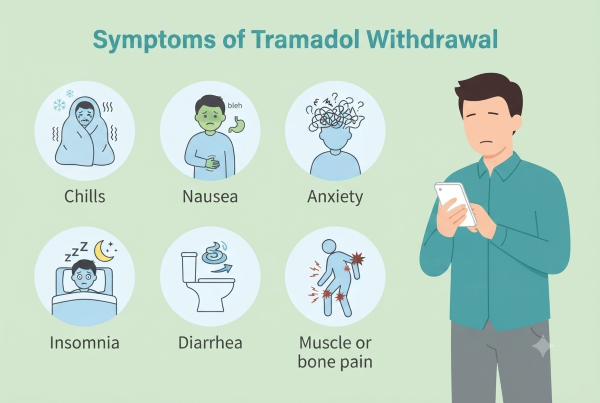
The side effects that show up after stopping tramadol are different from the short-term effects of taking a dose, and they reflect your body adjusting to functioning without the drug.
Common symptoms after stopping include:
- Flu-like aches and chills
- Insomnia
- Irritability and mood swings
- Nausea, vomiting, or diarrhea
- Cravings
“One study found that 12 percent of tramadol withdrawal cases included atypical symptoms, such as severe panic attacks, paranoia, and hallucinations.”
Because tramadol withdrawal can occasionally include these atypical symptoms, medical supervision matters more than it might for other pain medications.
How To Relieve Side Effects Of Tramadol
Relief for tramadol side effects depends on whether you are managing short-term effects from a dose or working through withdrawal after stopping.
For short-term side effects:
- Stay hydrated
- Rest until drowsiness passes
- Avoid driving or operating machinery
- Talk to your doctor if side effects feel severe or unusual
For withdrawal symptoms:
- Never stop tramadol suddenly without medical guidance
- Ask about a supervised tapering schedule
- Stay hydrated to offset nausea or diarrhea
- Reach out for medical support if symptoms feel unmanageable
Struggling to manage tramadol withdrawal on your own? Solutions Healthcare can help you taper safely.
100% Confidential Support is Available 24/7
No matter what you’re going through, you’re not alone. Our dedicated team is here to provide a safe, judgment-free space where you can talk openly and honestly. Whether you need emotional support, resources, or just someone to listen.
We’re here for you—completely confidential and always respectful of your privacy. Call us today!
How Long Does It Take for Tramadol to Clear Your System
Tramadol is generally eliminated from your bloodstream within about two days of your last dose, though it can still be detected by certain drug tests beyond that window.
Factors that affect clearance time include:
- Dosage and frequency of use
- Liver and kidney function
- Age and metabolism
- Formulation, immediate-release versus extended-release
Standard drug panels do not always test for tramadol unless specifically requested, so detection depends heavily on which test is used.
When Tramadol Side Effects Signal a Problem
Most tramadol side effects are manageable, but certain symptoms mean it is time to seek immediate medical attention rather than waiting them out.
Seek emergency care if you or a loved one experiences:
- Seizures
- Confusion or fainting
- Chest pain
- Signs of serotonin syndrome, including agitation, rapid heartbeat, and high fever
- Severe, uncontrolled vomiting
If tramadol use has become difficult to control, or stopping feels impossible without support, that is also a sign it is time to reach out for professional help.

How Solutions Healthcare Treats Tramadol Dependence
Tramadol dependence often starts with a legitimate prescription, not misuse. Solutions Healthcare understands that, and treats every client with compassion, not judgment. Your plan is built around your specific situation.
Our prescription drug addiction rehab program supports people working through dependence on tramadol and other prescribed medications. Depending on what you need, care may include our dual diagnosis program, intensive outpatient program, or outpatient treatment, often paired with individual therapy to address the bigger picture.
Reach out through our contact page or call (386) 866-3600 to speak confidentially with our admissions team.
FAQs
What is tramadol?
Tramadol is a prescription opioid pain medication with a unique dual mechanism. In addition to activating opioid receptors, it increases serotonin and norepinephrine activity, making it pharmacologically different from most other opioid pain relievers.
What is tramadol used for?
Tramadol is prescribed to treat moderate to moderately severe pain, including pain after surgery or injury and certain chronic pain conditions when non-opioid medications do not provide adequate relief.
How long do side effects of tramadol last?
Common side effects such as drowsiness, nausea, and dizziness usually improve within 6 to 12 hours after an immediate-release dose. With extended-release tramadol, side effects may last up to 24 hours as the medication is released more gradually.
How long do side effects last after stopping tramadol?
Withdrawal-related symptoms after stopping tramadol typically improve within 5 to 10 days. However, lingering symptoms such as mood changes, sleep disturbances, or cravings may persist for several weeks in some individuals.
How long do withdrawal symptoms of tramadol last?
Withdrawal symptoms usually begin within 8 to 24 hours after the last dose, peak between 24 and 72 hours, and improve substantially within 7 to 10 days. The duration varies depending on dose, length of use, and individual factors.
What are the most common types of tramadol side effects?
Common side effects include drowsiness, dizziness, nausea, constipation, headache, dry mouth, and sweating. Some people also experience anxiety, mental fog, or mood changes because tramadol affects serotonin and norepinephrine.
Why do I feel weird after taking tramadol?
Tramadol affects several brain chemicals, not just opioid receptors. Its influence on serotonin and norepinephrine can cause symptoms such as dizziness, mental fog, unusual mood changes, or a feeling of being disconnected, especially when starting treatment.
How can you relieve tramadol side effects?
Staying hydrated, getting adequate rest, and avoiding driving or other activities requiring alertness can help manage temporary side effects. If side effects are severe or persistent, speak with your healthcare provider rather than adjusting the dose yourself.
How long does it take for tramadol to clear your system?
Most tramadol is eliminated from the body within about 48 hours in healthy adults. However, detection windows on drug tests vary by test type, metabolism, liver and kidney function, and frequency of use.
Is tramadol addictive?
Yes. Tramadol has the potential to cause physical dependence and addiction, even when taken as prescribed. The risk increases with higher doses, prolonged use, or misuse beyond a healthcare provider’s instructions.
Can tramadol withdrawal be dangerous?
Although tramadol withdrawal is usually not life-threatening, it can occasionally cause serious complications, including seizures or symptoms related to serotonin imbalance. Severe symptoms require prompt medical evaluation and should not be managed alone.
When should someone seek help for tramadol dependence?
Professional help is recommended if tramadol use is becoming difficult to control, withdrawal symptoms make stopping challenging, or the medication is interfering with work, relationships, or daily responsibilities. Early treatment can improve safety and long-term recovery outcomes.
References
- SAMHSA – Substance Use Disorder Treatment
- NIDA – Prescription Opioids
- Mayo Clinic – Tramadol (Oral Route)
- Cleveland Clinic – Tramadol
- MedlinePlus – Tramadol
- DailyMed – Tramadol Hydrochloride
- DEA – Tramadol Drug Fact Sheet
- Drugs.com – How Long Does Tramadol Withdrawal Last
- Solutions Healthcare – Prescription Drug Addiction Rehab
- DEA – Tramadol Drug Fact Sheet
This information is for educational purposes only and is not a substitute for professional medical advice. Always consult a qualified healthcare provider about your specific situation, and visit Solutions Healthcare to learn more about treatment options.