
In case one of your family members has received a prescription of ketamine to treat depression or you have heard about it being abused recreationally, it is only natural to be interested in what type of drug ketamine is. There is a tendency to mix ketamine risks with opioid risks, and it can easily make an already tense situation appear even more daunting.
No, ketamine is not an opioid. It is an NMDA receptor-blocking dissociative anesthetic and a Schedule III controlled substance, which is a different mechanism of action compared to opioids such as oxycodone or fentanyl. Ketamine does not result in the same respiratory depression or the overdose risk that opioids have, but has its own risks of abuse.
In this guide, the classification of ketamine drug, its dissimilarity to opioids, the actual risks appearance, and the effective treatment of ketamine under supervision and recreational abuse are broken down.
Is Ketamine an Opioid Guideline
No, ketamine is not an opioid. Ketamine belongs to a drug class called dissociative anesthetics, and it works on an entirely different part of the brain than opioid medications do.
The key distinction comes down to mechanism:
- Opioids bind to mu-opioid receptors, reducing pain and triggering euphoria while suppressing breathing
- Ketamine blocks NMDA receptors in the glutamate system, producing dissociation, sedation, and pain relief through a different pathway entirely
“Ketamine does not bind to opioid receptors the way opioid drugs do, and it does not cause the respiratory depression associated with opioid overdose.”
Confused about how ketamine compares to opioids? Solutions Healthcare can walk you through it.
Ketamine Drug Classification
Ketamine is classified by the DEA as a Schedule III controlled substance, placing it in a different regulatory category than Schedule II opioids like oxycodone and fentanyl.
Category | Ketamine | Common Opioids |
DEA Schedule | III | II |
Drug class | Dissociative anesthetic | Opioid analgesic |
Primary receptor target | NMDA (glutamate system) | Mu-opioid receptors |
Approved medical uses | Anesthesia, treatment-resistant depression (esketamine) | Pain management |
Overdose mechanism | Rare, not respiratory in nature | Respiratory depression |
Schedule III status reflects a lower potential for physical dependence than Schedule I or II substances, though ketamine still carries a meaningful risk of psychological dependence with repeated misuse.
Ketamine Drug Types And Formulations
Ketamine is available in several forms, each used differently depending on whether the setting is medical, clinical, or illicit.
Common types include:
- IV ketamine: Administered in clinical settings for anesthesia or off-label depression treatment
- Esketamine (Spravato): An FDA-approved nasal spray for treatment-resistant depression
- Intramuscular ketamine: Used in some clinical and emergency settings
- Illicit powder or liquid ketamine: Diverted or manufactured product used recreationally, often with unknown purity
The formulation and setting matter enormously. Medically supervised ketamine treatment looks nothing like unsupervised recreational use, both in dosing and in safety monitoring.
Fact: Regular ketamine users who develop bladder symptoms often improve within months of stopping use.
Ketamine Risks With Misuse
The primary risks of ketamine come from unsupervised or recreational use, where dosing is unpredictable and the drug is often combined with other substances.
Documented risks of ketamine misuse include:
- Psychological dependence and compulsive use
- Ketamine-induced cystitis, a painful bladder condition
- Cognitive effects including memory problems and confusion
- Dissociation severe enough to impair judgment and safety
- Cardiovascular effects such as elevated heart rate and blood pressure
- Abdominal pain sometimes called “k-cramps”
“Chronic ketamine use has been associated with severe ulcerative cystitis, which may lead to bladder contracture and dysfunction, along with lower urinary tract symptoms including hematuria, urgency, and pain.”
Worried about ketamine misuse in your family? Reach out to Solutions Healthcare
Signs of Ketamine Dependence
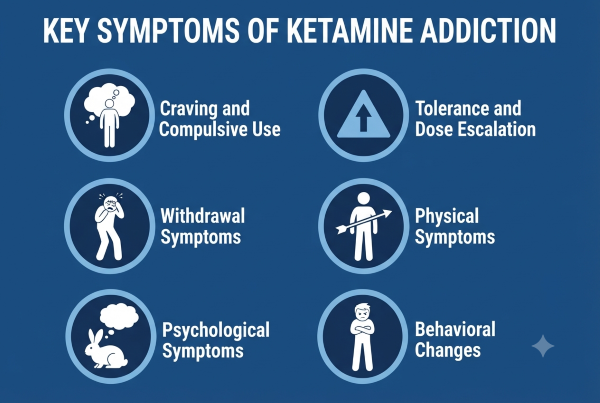
Ketamine dependence tends to develop gradually, often starting with recreational use that escalates in frequency before physical or psychological symptoms become obvious.
Warning signs to watch for include:
- Using ketamine more often or in larger amounts than intended
- Urinary symptoms such as frequency, urgency, or pain
- Withdrawing from responsibilities to obtain or use the drug
- Continued use despite bladder pain or other physical symptoms
- Difficulty stopping despite wanting to
Expert Advice: Seek medical evaluation early if urinary symptoms appear alongside regular ketamine use.
Effects Of Ketamine Treatment
When used in a supervised clinical setting, ketamine treatment for depression works quite differently than recreational misuse, both in dosing and in the therapeutic intent behind each session.
Effects of supervised ketamine treatment typically include:
- Rapid, though often temporary, improvement in depressive symptoms
- Mild dissociation during the infusion or nasal spray session
- Sedation that resolves within a few hours
- Monitoring for blood pressure and heart rate throughout treatment
“Ketamine has emerged as a promising treatment for certain mental health conditions, notably for its rapid antidepressant effects in cases of treatment-resistant depression.”
Supervised ketamine treatment is administered at controlled, sub-anesthetic doses with medical staff present, which is a very different experience from unsupervised or recreational use.
Ketamine Versus Opioids for Pain
Both ketamine and opioids can relieve pain, which is part of why people assume they belong to the same drug class, but their safety profiles differ in important ways.
- Ketamine does not typically cause respiratory depression, the primary cause of opioid overdose deaths
- Opioids carry a well-established risk of physical dependence and withdrawal
- Ketamine’s dependence risk is more psychological than physical in most cases
- Some hospitals use low-dose ketamine specifically to reduce opioid requirements after surgery
Neither drug is without risk, and understanding those differences matters for anyone managing pain or supporting a loved one through treatment decisions.
When Ketamine Use Becomes A Concern
Ketamine use crosses into concerning territory when it moves beyond a supervised medical context into unsupervised, frequent, or escalating use.
Consider reaching out for support if:
- Use is happening outside a clinical or supervised setting
- Frequency has increased over time
- Physical symptoms like bladder pain or abdominal cramping have appeared
- The person struggles to stop despite wanting to
- Ketamine use is affecting work, relationships, or daily responsibilities
Ketamine and Co-Occurring Concerns
Ketamine misuse rarely happens in isolation. It often overlaps with other substance use or underlying mental health conditions that deserve attention alongside the ketamine use itself.
Because of this overlap, effective treatment typically looks at the full picture rather than addressing ketamine use as a standalone issue, particularly when depression, anxiety, or another substance is also present.

Addiction Support At Solutions Healthcare
Questions about ketamine, opioids, and other substances often come from real concern, for yourself or someone you love. That concern matters. Solutions Healthcare helps families sort through what a substance use pattern actually means. We help you figure out what type of care fits the situation.
Our dual diagnosis program addresses substance use alongside co-occurring mental health conditions. Our prescription drug addiction rehab supports individuals working through dependence on prescribed or diverted medications. Depending on your needs, care may also include our intensive outpatient program or outpatient treatment, paired with cognitive behavioral therapy and family therapy where appropriate.
Reach out through our contact page to speak confidentially with our admissions team.
FAQs
Is ketamine an opioid?
No. Ketamine is a dissociative anesthetic that works primarily by blocking NMDA receptors in the brain, while opioids act mainly on mu-opioid receptors to relieve pain. Although both can be used in medical settings, they belong to entirely different drug classes and work through different mechanisms.
What is ketamine’s drug classification?
Ketamine is classified as a Schedule III controlled substance under the U.S. Controlled Substances Act because of its accepted medical uses and potential for misuse. Medically, it is categorized as a dissociative anesthetic and is used for anesthesia, pain management, and certain psychiatric conditions.
What are the different ketamine drug types?
Ketamine is available as intravenous (IV) and intramuscular (IM) formulations for medical use, while esketamine is an FDA-approved nasal spray for treatment-resistant depression. Outside medical settings, illicit ketamine may appear as a powder or liquid intended for recreational use.
What are the main risks of ketamine misuse?
Repeated ketamine misuse can lead to psychological dependence, memory and concentration problems, ketamine-induced cystitis, elevated blood pressure, impaired judgment, and dangerous dissociation. Using ketamine outside medical supervision also increases the risk of accidents, injury, and combining it with other substances.
What are the effects of ketamine treatment for depression?
Under medical supervision, ketamine treatment may rapidly reduce symptoms of depression, sometimes within hours, particularly in treatment-resistant cases. Temporary side effects such as dissociation, dizziness, nausea, and sedation are common but are closely monitored and usually resolve within several hours after treatment.
Can ketamine cause an overdose like opioids do?
Yes, ketamine overdose is possible, but it differs from an opioid overdose. Ketamine is less likely to cause the severe respiratory depression typical of opioids, although very high doses can lead to unconsciousness, dangerously impaired breathing, cardiovascular complications, or other medical emergencies requiring immediate treatment.
Is ketamine addictive?
Yes. Repeated ketamine misuse can lead to psychological dependence, cravings, and compulsive use despite negative consequences. While its physical dependence potential is generally lower than many opioids, frequent recreational use can still result in substance use disorder requiring professional treatment and ongoing support.
What is ketamine-induced cystitis?
Ketamine-induced cystitis is a painful bladder condition associated with chronic ketamine misuse. Symptoms include urinary urgency, frequent urination, pelvic pain, blood in the urine, and painful urination. Without treatment and cessation of ketamine use, severe cases can cause lasting bladder damage.
How is esketamine different from regular ketamine?
Esketamine is a purified form containing only the S-enantiomer of ketamine and is marketed as the FDA-approved nasal spray Spravato for treatment-resistant depression. Unlike standard ketamine, it is available only through a restricted program requiring administration and monitoring in certified healthcare settings.
Can someone be dependent on both ketamine and opioids at the same time?
Yes. Some individuals misuse ketamine alongside opioids or other substances, increasing the complexity of treatment. Integrated treatment programs that address multiple substance use disorders together with any underlying mental health conditions generally provide the strongest foundation for long-term recovery and relapse prevention.
Does supervised ketamine treatment carry the same risks as recreational use?
No. Medical ketamine treatment uses carefully controlled doses, thorough patient screening, and continuous monitoring by trained healthcare professionals. These safeguards significantly reduce many of the risks associated with recreational ketamine use, including unsafe dosing, contamination, and complications from unsupervised administration.
When should someone seek help for ketamine use?
Professional help should be considered if ketamine is being used outside a prescribed medical setting, use is increasing over time, physical or mental health symptoms are developing, or ketamine is interfering with work, relationships, finances, or daily responsibilities.
References
- DEA – Ketamine Drug Fact Sheet
- NIDA – Ketamine
- FDA – Spravato (Esketamine) Approval
- Mayo Clinic – Ketamine and Esketamine for Depression
- Cleveland Clinic – Ketamine
- PMC – Pathophysiology and Management of Ketamine-Induced Cystitis
- Drugs.com – Ketamine
- British Journal of General Practice – Ketamine Misuse: An Update for Primary Care
- SAMHSA – Substance Use Disorder Treatment
- Solutions Healthcare – Dual Diagnosis Program
This information is for educational purposes only and is not a substitute for professional medical advice. Always consult a qualified healthcare provider about your specific situation, and visit Solutions Healthcare to learn more about treatment options.