
Key Takeaways
- There is no universal timeline for becoming addicted to alcohol
- Genetics, mental health, and drinking patterns all influence risk
- Alcohol addiction develops through recognizable stages
- Early awareness can prevent long-term dependence
- Treatment works at every stage of addiction
It is one of the most frequent and most misconceived questions that appear before people when they begin to be concerned with their drinking. The actual answer is that alcohol addiction has no definite time. Some people could begin with the process in several months. In other people, it also advances gradually as years pass by. The long-term effects of alcohol on your brain, behavior, and your life as a whole is all that matters.
We have individuals at all levels of alcohol misuse at Solutions Healthcare. Others come in with a query over whether their drinking is getting out of hand. Some others have already become trapped and do not know how it went. It is a guide on how alcohol addiction develops, factors that may speed up the development, and the reasons why it can be overcome at any given time.
How Long Does It Take to Get Addicted to Alcohol?
The duration of becoming an addict to alcohol is never one size fits all because addiction is not time-dependent but rather pattern, susceptibility, and effect dependent. Others are able to consume alcohol on a social basis and take years before the problem becomes a problem. With the regular drinking of a lot of alcohol, others may develop signs of addiction in a few months.
The brain is altered with time by the influence of alcohol. As the use progresses, the brain begins to be dependent on alcohol to control mood, stress, and even sleep. Tolerance has already developed, and cravings have already developed, so the conversion to addiction has commenced. In some people who have risk factors, which may include trauma, anxiety, or depression, the process may occur quicker than anticipated.
Break free from addiction with proven therapies and caring professionals at Solutions Healthcare right now.
What is Alcohol Addiction?
Alcohol dependency or alcohol use disorder is a chronic condition that manifests itself in the inability to control, use it despite negative consequences and emotional and physical dependency. Alcohol addiction does not mean that an individual drinks day and night, or just goes at the bottom. There are still so many people who work and nurture their families and remain in relationships they struggle in silence.
The most important factor in what makes one addicted is not the amount of alcohol one drinks as compared to others but the impact that alcohol has made on your decision, health, and power to quit it when you want. As time passes, drinking turns into not as a pleasurable experience but a means to not feel uncomfortable, experience stress, or even feel pain.
How Does Alcohol Addiction Happen?
As a result of continuously reconfiguring brain reward system, alcohol addiction arises. Alcohol elevates dopamine, which is a motivation and pleasure neurotransmitter. This effect is retained by the brain and starts to desire it when one feels stressed or emotional.
The brain adapts as the drinkers continue drinking. To achieve the same feeling, it might require more alcohol to take effect and sudden withdrawal results in feeling anxious, irritated, sleepless, or body aching. At this phase, the body and mind will start collaborating in order to sustain alcohol consumption even in the presence of the consequences. This is the way humans grow addicted to alcohol without knowing what has happened to them.
Other Factors That Lead to Alcohol Addiction
Many circumstances may expose the risk and accelerate the onset of alcohol addiction:
- Genetics: Since there is a history of addiction in a family, this is more susceptible.
- Mental health: PTSD, anxiety, and depression tend to be common in the situation of alcohol misuse.
- Exposure that occurs early in life: Youthful drinking increases the long-term risk.
- Chronic stress: Alcohol will be a major coping mechanism.
- Social factors: The influence of peer pressure and sanctioned alcoholism.
All these factors do not make one addicted; however, it is easier to fall into the trap when alcohol becomes an emotional support and not a mere substance.
Stages of Alcoholism
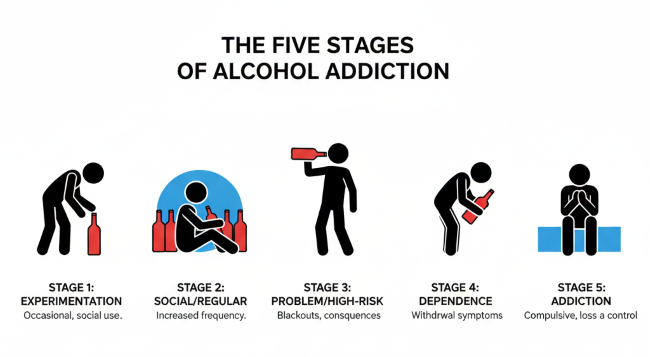
There are also stages of alcohol addiction:
- Harmless or recreational drinking – Alcohol is taken recreationally.
- Increased use – Drinking becomes more frequent or more intense.
- Dangerous alcohol abuse – Hanging in the dark, forgotten tasks.
- Dependence – Diving into alcohol in order to believe that one is normal or to relieve pain or uneasiness.
- Addiction – it is very difficult to quit, the desire to use it, and use it in spite of the damage.
All the stages may not be universal to all yet being aware of these patterns at a tender age will result in avoiding increased reliance.
Alcohol Addiction Timeline
Alcohol is not largely dependent; however, the tendencies will tend to proceed in the pattern as follows:
- Weeks, months: Tolerance is on its way.
- Months and a year: Drinking is an abortion procedure.
- 1-3 years: It may be either emotional or physical dependence.
- A few years: You may become absolutely addicted.
A few individuals are addicted to alcohol at a very accelerated rate, especially through heavy or binge drinking. And there are other ones that get slower, yet they have the same changes over time in the brain.
How to Overcome Addiction to Alcohol
There is no point of fixation that alcohol addiction cannot recover. Identifying the issue and solicitation is the most significant one. Therapy,peer support, structured outpatient care, and medical detox can be used as modes of treatment.
At Solutions Healthcare, we concentrate on the reasons as to why you needed alcohol in your life, not on quitting drinking. Treating underlying mental health issues, stress, and emotional distress is a long-lasting tool to aid long-term sobriety and not a short-term one.
You do not have to wait until everything unravels. Early intervention will save you many years of fighting and enable you to bring back sanity to your life.

Who We Treat
Solutions Healthcare is concerned with the treatment programs of alcohol consumption amongst individuals in the initial phases of difficulties with drinking, to the extent of prolonged dependency. We also specialize in providing care to patients who have other mental conditions, such as anxiety, depression, or trauma, that are normally the root causes of alcohol addiction.
We treat you as a personality, with tact, a secretive approach, and where you are, not where you think you should be.
Solutions Healthcare is interested in treatment regimens of alcohol consumption by individuals at the first stages of problems with drinking as far as to the stage of sustained dependency. Another aspect of care that we specialize in is the treatment of patients with other mental disorders like anxiety, depression or traumas which are usually the underlying causal factors of alcohol dependency.
We make you a personality, tactful, secretive and where you are, not where you believe you ought to be.
Ready to Take the Next Step?
Suppose your question to yourself is: have you excessively drunk; and this is a question on its own that is worthy of consideration. This does not mean that alcohol addiction should match a crisis in which support is checked.
However, today, you can call Solutions Healthcare and talk to an expert who has experienced what you are going through. Early recovery can help recovery be safer, more successful, and more long-term. You need to be clear, healthy, and at peace.
Disclaimer
This content is for educational purposes only and is not a substitute for professional medical, psychological, or addiction treatment advice. If you or someone you love is struggling with alcohol use, please seek support from a qualified healthcare provider.
Frequently Asked Questions (FAQ)
What does 7 days no alcohol do to your body?
After seven days without alcohol, sleep often improves, inflammation decreases, and hydration levels stabilize. Many people notice clearer thinking, reduced anxiety, and better digestion. The liver also begins repairing itself, supporting overall physical recovery.
What is the first stage of alcoholism?
The first stage of alcoholism typically involves increased tolerance and more frequent drinking. Alcohol starts playing a bigger role in relaxation or stress relief, even though serious consequences may not yet be visible.
What is the 1/2/3 rule of drinking?
The 1/2/3 rule suggests limiting alcohol to one drink per hour, two per occasion, and no more than three in one day. While helpful for moderation, it may not prevent addiction for high-risk individuals.
How do I know if I’m addicted to drinking?
You may be addicted if you struggle to stop or quit alcohol, drink more than planned, or continue despite negative effects. Cravings, tolerance, and using alcohol to cope emotionally are also strong warning signs.
What is the best thing to replace alcohol with?
Healthier alternatives include exercise, mindfulness practices, social support, creative outlets, and non-alcoholic beverages. Replacing alcohol also means addressing the emotional needs it was fulfilling.
What day is the hardest after quitting drinking?
For many people, days two to four are the hardest due to withdrawal symptoms like anxiety and irritability. Emotional cravings can last longer, which is why professional support improves safety and long-term success.
Sources
- National Institute on Alcohol Abuse and Alcoholism (NIAAA)
- American Psychiatric Association (DSM-5-TR)
- Substance Abuse and Mental Health Services Administration (SAMHSA)